
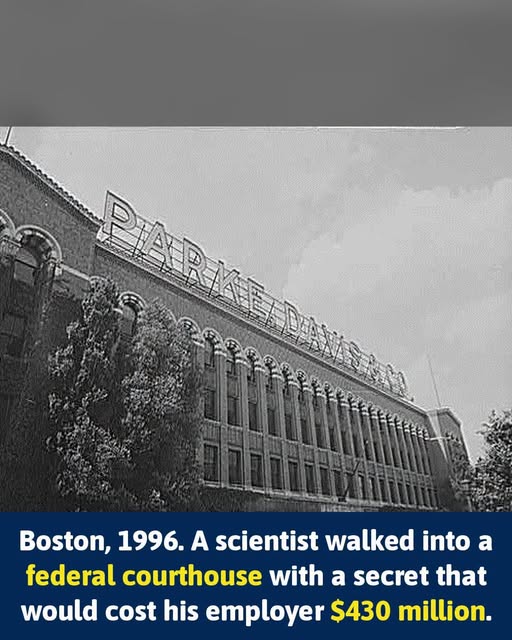
David Franklin had spent months watching his company sell a drug to patients it was never approved to treat. He had the files. He had the proof. Now he had a decision to make.
The drug was Neurontin, a brand name for gabapentin. The FDA had approved it in 1993 for one narrow purpose: controlling seizures in epilepsy patients.
That was not how Parke-Davis was selling it.
Franklin worked as a medical liaison, a scientist paid to brief doctors on the evidence behind the company’s products. Beginning in 1996, he watched colleagues and supervisors instruct sales representatives to pitch Neurontin for conditions it had never been proven to treat: chronic pain, migraines, bipolar disorder, attention disorders, and more.
This was off-label promotion. It was illegal. And it was happening systematically.
Worse, Franklin discovered the company had buried the results of clinical trials that had failed to show Neurontin worked for these conditions. Doctors making prescribing decisions were not seeing the full picture. Patients were taking a drug based on hidden science.
In 1996, Franklin filed suit under the False Claims Act, a Civil War-era law that allows private citizens to sue on the government’s behalf when federal funds are defrauded. Medicaid and other federal programs were reimbursing millions of prescriptions written on the basis of the company’s misleading claims.
The legal battle ran for eight years.
Parke-Davis was acquired by Warner-Lambert. Warner-Lambert was acquired by Pfizer in 2000, one of the largest pharmaceutical companies in the world. The lawsuit followed the merger through every corporate transformation.
On May 13, 2004, Pfizer agreed to a settlement of $430 million. It included a $240 million criminal fine, the largest ever levied against a pharmaceutical company at that time for off-label marketing. Warner-Lambert entered a guilty plea.
Franklin received a portion of the civil recovery as the original whistleblower.
Neurontin remained on the market. Gabapentin is still widely prescribed. The case did not end off-label promotion in the pharmaceutical industry. But it established a legal template: individual scientists with evidence could file, survive, and win against companies many times their size.
A microbiologist. A courthouse. Eight years of waiting.
Sometimes one person with a file cabinet and a lawyer is enough.