
Pepper Spray Is Still Illegal

One of my clients commented that a can of paint is not illegal too.
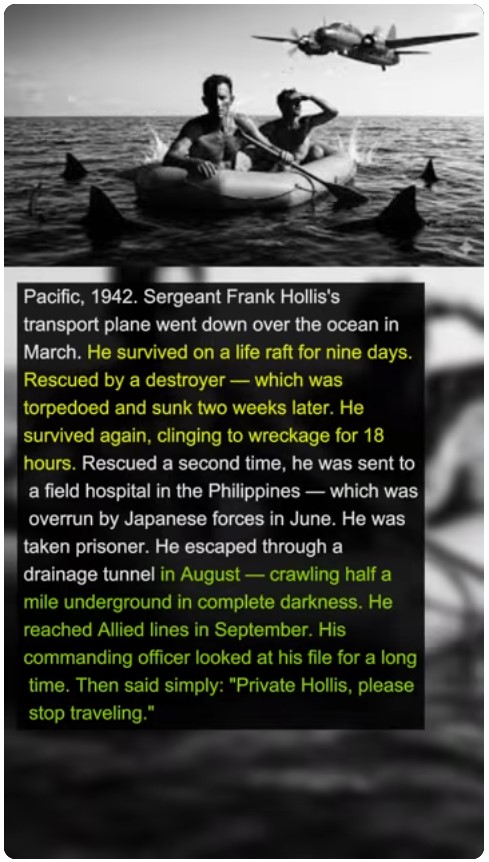
Private Hollis
Spices – Where To Use Them

On Raising Responsible Adults
Tube Watering
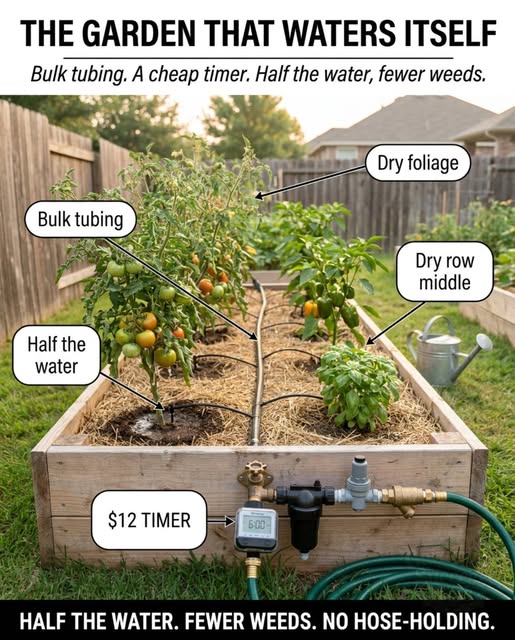
A drip system sends water straight to the roots instead of spraying it across the whole bed — and the branded kits are mostly tubing you can buy by the foot for far less. Build your own from bulk parts and it pays for itself in a season.
Because the water goes to the soil and not the leaves, foliage stays dry and there is less fungal disease, and because the row middles stay dry, fewer weeds come up to compete. Add a cheap timer and the garden waters itself early each morning, deep and slow, even while you are away. Extension trials put the savings around 30 to 50 percent over a sprinkler or hose.
A few honest notes: emitters can clog, so flush the lines and check them now and then, and drain the system before a hard freeze. The upfront cost runs higher than a bare hose, but the lower water bill and the saved time make it back.
How to build it (45 minutes, one person):
1. At the spigot, thread on a backflow preventer first, then a hose timer, a pressure reducer, and a filter. The backflow preventer keeps garden water out of your drinking supply.
2. Run 1/2-inch poly mainline down the center of each bed and pin it with stakes.
3. Punch 1/4-inch emitter line to each plant, then cap the open ends.
4. Set the timer for early morning, long and slow, two or three times a week.
5. Run it once while you watch — fix any dry spots or leaks, adjust emitters.
One Company Spent $500 Million In ONE Month ON AI Queries!
A cautionary (and very expensive) lesson on why statistics should measure quantity, quality and visibility.
Finish reading: https://www.zerohedge.com/ai/was-amazons-tokenmaxxing-fiasco-behind-claudes-500m-mystery-bill
https://www.zerohedge.com/ai/was-amazons-tokenmaxxing-fiasco-behind-claudes-500m-mystery-bill
Johnny Carson’s Life-Changing Lesson: How a 16-Year-Old Girl Revolutionized The Tonight Show
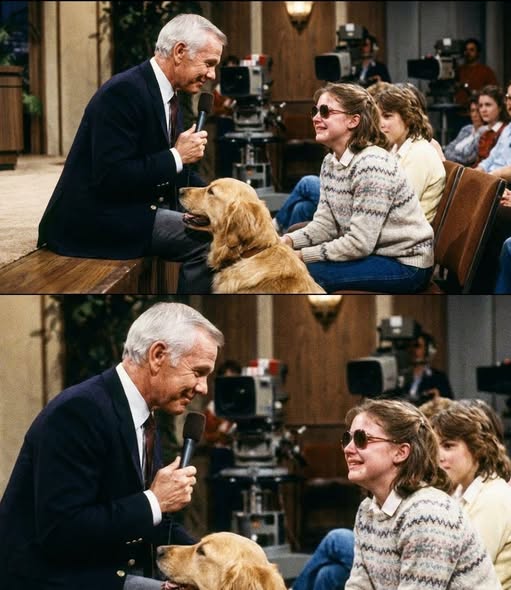
Johnny Carson asked a 16-year-old blind girl in his audience what she thought of the show. Her answer made him forget his script, stop the taping, and completely change how The Tonight Show was produced for the next decade. It was October 23rd, 1982. The Tonight Show was taping its Friday night episode at NBC’s Burbank Studios.
Johnny Carson had just finished his monologue to thunderous applause. As he settled behind his desk to begin the audience Q and A segment, his eyes swept across the crowd. That’s when he noticed something unusual in the fourth row. A beautiful golden retriever sat perfectly still at the feet of a teenage girl wearing the distinctive harness of a guide dog.
The girl wore dark sunglasses despite the indoor setting. She sat between her parents, her hands resting on the dog’s head, a peaceful smile on her face. Johnny had seen guy dogs before, but rarely at his show. Something about this girl’s serene expression amid the chaos of a television taping intrigued him. “I see we have a very special guest in the audience tonight,” Johnny said, pointing toward the fourth row.
“Young lady with a beautiful guide dog. What’s your name?” The girl turned her head toward the sound of Johnny’s voice, her smile growing wider. “My name is Jennifer Walsh, Mr. Carson. And this is Harper.” Harper’s a handsome dog, Johnny said warmly. How long have you two been together? Three years, Jennifer replied, her voice clear and confident.
Since I was 13, he’s my best friend. The audience gave a warm, oh, at this, and Johnny smiled, but what he did next would set in motion a conversation that he’d remember for the rest of his life. Jennifer, I have to ask, you’ve been in our audience for about 45 minutes now. What do you think of the show so far? It was meant as a light-hearted question, the kind Johnny asked all the time. He expected something simple.
It’s great or I love it. What he didn’t expect was the answer that would stop him mid-performance. Jennifer tilted her head thoughtfully, her hand still resting on Harper’s head. When she spoke, her voice was gentle, but carried a weight that seemed to make the entire studio hold its breath. “Mr. Carson, I think your show is wonderful. I really do. I listen to the Tonight Show every single night before bed. It’s my favorite program on television. But if I’m being completely honest, I have to tell you something. I don’t actually know what your show looks like. I don’t know what you look like. I don’t know what your guests look like or what they’re wearing or what’s happening on stage when everyone laughs, but nobody says anything. Half the time I’m laughing because everyone else is laughing, but I don’t actually know what’s funny.”
The studio went completely silent. Johnny’s prepared follow-up question died on his lips. He sat at his desk, staring at this teenage girl who’ just articulated something that had never occurred to him in 20 years of hosting.
Jennifer continued, not in an accusatory way, but with a simple matter-of-fact honesty that made her words even more powerful. “Like right now for instance, based on the silence, I’m guessing you’re doing something with your face. Maybe that eyebrow thing you do that everyone always talks about. But I don’t know. I just know it got quiet.”
Johnny was indeed doing his signature raised eyebrow expression, a gesture so famous that every comedian in America had imitated it at some point, but he’d never considered that it meant nothing to someone who couldn’t see it. “You’re right,” Johnny said quietly into his microphone, his voice uncharacteristically subdued.
“I am doing the eyebrow thing.” “See, now I know,” Jennifer said with a gentle laugh, “but usually I don’t. And don’t get me wrong, I love your show. Your jokes are brilliant. Your interviews are fascinating, and your voice is so warm and welcoming. But there’s this whole other show happening visually that I’m completely missing.”
“The physical comedy, the gestures, the faces people make. My parents try to describe things to me, but you can’t describe everything. Some nights I feel like I’m listening to a radio show that everyone else is watching as a TV show.” Johnny sat down his note cards. His producer was probably panicking in the control booth, wondering why Johnny had abandoned the plan segment. But Johnny didn’t care.
For the first time in his career, he was genuinely shaken by something an audience member had said. “Jennifer,” Johnny said, leaning forward on his desk. “I’ve been doing the show for 20 years. I’ve interviewed thousands of people. I’ve performed for millions of viewers, and in all that time, I never once stopped to think about what my show is like for someone who can’t see it.
“Most people don’t,” Jennifer said kindly. “It’s not your fault. People who can see don’t usually think about people who can’t. It’s just how the world works.”
“But it shouldn’t be”, Johnny said. And there was something in his voice, a mix of shame and determination that made the audience shift uncomfortably in their seats.
“You pay the same money for a ticket that everyone else does. You watch, or rather listen, to the same show everyone else watches. Why should you get half the experience?” Jennifer shrugged with a wisdom beyond her 16 years. “Because that’s just how TV is made, Mr. Carson, it’s a visual medium. It’s not designed for people like me.” Johnny stood up from his desk and walked to the edge of the stage, looking down at Jennifer in the fourth row.
Ed McMahon watched from his seat, having no idea what Johnny was about to do. Neither did anyone else. “What would help?” Johnny asked. “What could we do differently that would make this show more accessible to you?” Jennifer looked surprised, as if she’d never expected anyone to ask her that question, let alone Johnny Carson on live television.
Her mother, seated beside her, put a hand on her daughter’s shoulder, equally shocked. “Well,” Jennifer said slowly, “it would help if someone described what’s happening. Not everything that would be annoying and interrupt the flow, but the visual stuff that’s important. Like when you pointed at me earlier, someone could have said, “Johnny is pointing at you” so I’d know you were talking to me instead of someone near me. Or when you do physical comedy, if you just narrated what you’re doing, even briefly, I’m making a face or I’m doing this gesture or whatever. It doesn’t have to be much, just enough so I’m not in the dark, literally.” She laughed at her own joke and the audience laughed with her, but it was a different kind of laughter than the usual Tonight Show laughter.
It was the sound of people having their eyes open to something they’d never considered. Johnny nodded slowly, processing everything Jennifer had said. Then he looked directly at the camera, addressing not just the studio audience, but the millions of viewers at home. “Ladies and gentlemen, he said, I’ve just been educated by a 16-year-old girl.”
“Jennifer is absolutely right. We’ve been making this show for 20 years without considering that there might be people watching or trying to watch who can’t see what we’re doing. That ends tonight.” He turned back to Jennifer. “Would you do me a favor? Would you stay after the taping and talk to me and my producers about what we could do better? Because I don’t want you to ever have to guess what’s happening on my show again.”
Jennifer’s face lit up with a smile that seemed to brighten the entire studio. “I’d be honored, Mr. Carson.” The audience erupted in applause, and Johnny returned to his desk, but the rest of the show had a different energy. Johnny found himself naturally describing his physical actions. “I’m looking at Ed now. I’m shaking my head.”
“I’m doing an exaggerated shrug”, incorporating Jennifer’s feedback in real time. After the taping, Johnny did something unprecedented. Instead of going straight to his dressing room, he brought Jennifer, her parents, and his production team into a conference room for an hour-ong discussion about accessibility.
Jennifer explained how she experienced television. She described the frustration of loving shows but missing visual elements. She talked about descriptive audio tracks in movies. She suggested television could do something similar. Johnny listened to every word, taking notes, asking questions. His producer, Fred Dordova, initially resistant, gradually came around as he listened to Jennifer’s clear explanations.
“What you’re describing”, Fred said eventually, is basically adding a narrator to our show for visual information. “Not a narrator exactly”, Jennifer clarified, “more like occasional descriptions, just filling in the gaps. It wouldn’t have to be constant, just when something visual happens that’s important to understanding what’s going on.”
By the end of the meeting, Johnny had made a decision that would change television broadcasting across America. Starting the following week, The Tonight Show began incorporating descriptive elements. Johnny would occasionally narrate his own physical comedy or Ed McMahon would briefly describe what was happening on stage.
Gradually, it became more sophisticated. The show worked with the American Council of the Blind to develop best practices. They trained staff on when and how to describe visual elements. They experimented with different approaches, always soliciting feedback from blind viewers. Within 6 months, the Tonight Show had developed a secondary audio program, SAP, that provided audio descriptions for blind viewers.
A trained describer would narrate the visual elements in real time, filling in what Jennifer had called the gaps. But Johnny didn’t stop there. He used his influence in national platform to advocate for broader television accessibility. He testified before Congress about the importance of descriptive programming. He lobbied NBC executives to implement accessibility features across all their programming..
The moment a 16-year-old girl changed television forever.
Last Longer
Way Warmer
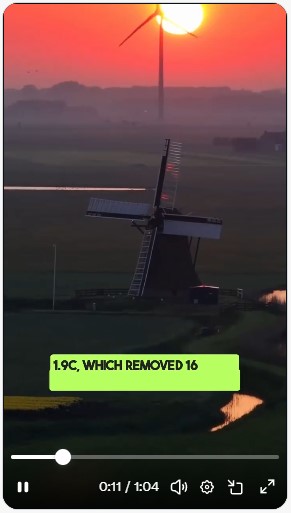
In 2016, the Netherlands Meteorological Institute adjusted temperatures at De Bilt, the country’s main climate station. Daily maximums from 1901 to 1950 were lowered by up to 1.9C, which removed 16 of 23 heatwaves from the record.
The altered data were then used to claim modern heatwaves were unprecedented.
Four researchers challenged the changes, but the institute dismissed the criticism, so the analysis went to peer review. In 2021, it was published, conclusively demonstrating the method systematically erased historical heat extremes.
Today, the Meteorological Institute has quietly changed its approach, and as a result, seven erased heatwaves have been restored, including the extreme summer of 1947.
Here again, we have a government agency caught rewriting climate history. The Netherlands Meteorological Institute erased heatwaves of the past, ignored critics, and reinstated the truth only when the evidence became impossible to ignore.
Policies were built on that manipulated record.
Dutch farmers lost livelihoods.
Industry and the wider economy paid the price.
But accountability is coming.
https://x.com/Electroversenet/status/2060375612045541411?s=20