

Peg Bracken – I Hate To Cook Book
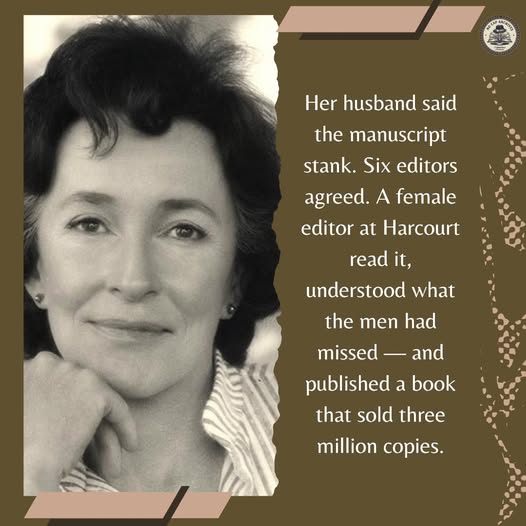
Ruth Eleanor Bracken was born on February 25, 1918, in Filer, Idaho — a small agricultural town that she left as a child when the family moved to Clayton, Missouri, a suburb of St. Louis. She was bright, dry, and not particularly interested in being decorative. She graduated from Antioch College in Ohio in 1940 with a degree in English, changed her name to Peg because it suited her better than Ruth, and went looking for work.
She found it in advertising. Portland, Oregon, where she eventually settled, had agencies that needed copywriters, and copywriting rewarded exactly the skills she had: economy of language, speed of wit, the ability to make a reader feel something in the space of a sentence. She wrote fashion copy for accounts including Jantzen swimwear and Pendleton shirts. She sat across the office from a man named Homer Groening, whose son Matt would later create The Simpsons, which tells you something about the particular quality of imagination that that Portland advertising world contained. She and Groening also produced a comic strip together called Phoebe, Get Your Man, which did not outlast the decade but proved she could sustain a narrative voice across multiple installments.
She also wrote freelance pieces for magazines — light verse, humor columns, the occasional essay. One piece for the Saturday Evening Post, titled “My Husband Ought to Fire Me,” laid out in comic detail the argument that women homemakers were essentially employed in a job for which they’d never been hired, trained, or compensated, and at which many of them performed — at best — adequately. It was funny. It was also, under the comedy, a precise description of what the domestic ideal of postwar America actually required of women and what it gave them in return.
The book came from lunch.
Bracken and a group of working women friends she called “the Hags” had fallen into the habit of meeting regularly and talking about, among other things, the specific boredom of cooking. Not the act of eating — that was fine. The obligation to produce meals three times a day, seven days a week, indefinitely, for households that expected them and rarely acknowledged them. The friends traded what Bracken called “shabby little secrets”: recipes built on canned soup and frozen vegetables and boxed mixes, shortcuts that got the family fed with the minimum expenditure of time and energy, leaving more of both for the things they actually wanted to do.
She wrote it up. Her then-husband read the manuscript and told her it stank. Six male editors at publishing houses concurred, insisting that women regarded cooking as something close to sacred and would not respond well to seeing it treated as a tedious obligation to be dispatched as efficiently as possible. The sixth rejection delivered the insight she needed: she brought the manuscript to a female editor at Harcourt Brace. The editor read it and understood immediately what the men had missed. This was not a book that insulted cooking. It was a book that told the truth about how a significant number of women experienced it — and offered them, for the first time, permission to feel that way without shame.
The I Hate to Cook Book was published in 1960 and sold approximately three million copies. It did this by being, page for page, more honest about the domestic experience of American women than almost anything else being published at the time. The recipes were real — genuinely usable, built around canned cream of mushroom soup and frozen peas and cooking wine added to the cook rather than the dish — but the voice was the point. Instructions told readers to let a dish simmer “while you light a cigarette and stare sullenly at the sink.” Another recipe opened with a suggestion that the cook take a small measure of whiskey before proceeding. The chapter introductions made the running argument that getting from cooking hour to cocktail hour was a legitimate life goal, and that anyone who disagreed was welcome to invite her over for dinner.
The New York Times, in its obituary, would eventually describe the book as having offered women “at least a taste of liberation — from the oven, the broiler and the stove” — three years before Betty Friedan published The Feminine Mystique and named the problem that Bracken had already been describing, funnier and more precisely, in a cookbook.
That comparison is worth sitting with. Friedan wrote sociology. Bracken wrote recipes. Friedan analyzed the structure that trapped women in the domestic role. Bracken handed women the tools to perform that role in twenty minutes and get out of the kitchen. They were working on the same problem from different directions, and Bracken’s version sold at least as many copies.
She became a spokesperson for Birds Eye frozen foods, which was either deeply ironic or entirely appropriate depending on how you read the endorsement. She appeared on television and radio. She followed the original with The I Hate to Housekeep Book, an etiquette guide, an appendix, a sequel. She continued writing into her seventies, her last book appearing in 1997. She died on October 20, 2007, in Portland, at the age of eighty-nine.
She is survived by her daughter Johanna, who wrote the foreword to the fiftieth anniversary edition of the book. In it, Johanna described the book’s origins as “a group of professional women who would have been much happier sipping martinis with their husbands than spending the cocktail hour in the kitchen slaving away over a hot stove.”
Her mother would have approved of the summary. It was precise, it was dry, and it contained exactly as many words as the situation required.
How to Take Perfect Dog Pics
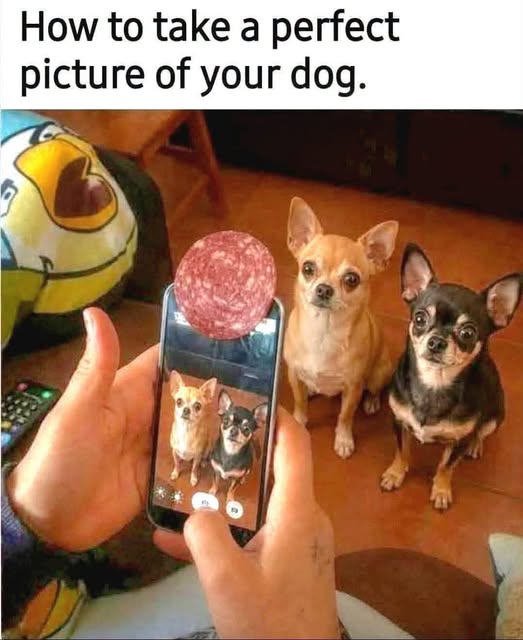
Just don’t let them jump and bite. Might make for an earlier replacement of your phone than you anticipated.
Quote of The Day
Did you know America ranks the lowest in education but the highest in drug use? It’s nice to be number one, but we can fix that. All we need to do is start the war on education. If it’s anywhere near as successful as our war on drugs, in no time we’ll all be hooked on phonics. ~Leighann Lord
What’s Your Score?

I have never collected green stamps, other than that, all ticks.
Russian Moms Response To Jean-Claude Van Damme

Isms Explained

Some good laughs from Cecile

I tried to walk like an Egyptian. Now I need a Cairo practor. Pharoah enough.
Whoever said out of sight out of mind never had a whopping big spider disappear in their bedroom.
Today I’m wearing pink to raise awareness for people like me who forget to separate their red laundry from their whites.
The invention of the shovel was ground-breaking.
Many women say their husbands never listen to them. I have never heard my wife say that.
I’m proud to say I completed a jigsaw in 1 day and the box said 3 – 5 years.
Don’t use “beef stew” as a password – it’s not stroganoff.
This Is How You Fail Exams

Life