Most gardeners know about compost — but some of the best fertilizers are already in your kitchen, hiding in plain sight.
Six household sources and what they feed:
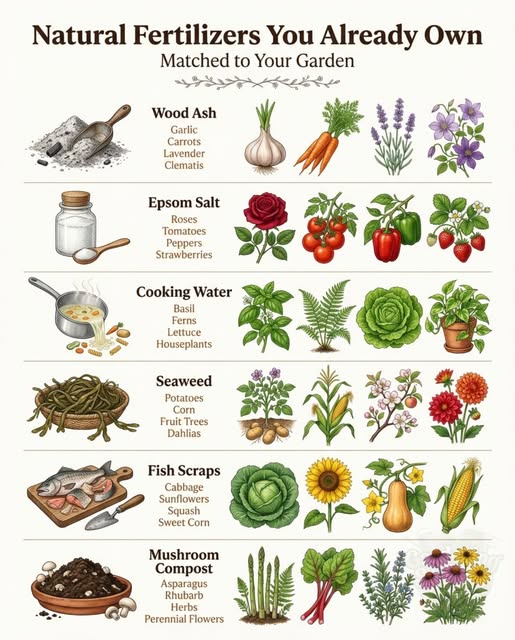
– Wood ash — rich in potassium and calcium. A light dusting around the base feeds garlic, carrots, lavender, and clematis. Avoid using it near acid-loving plants like blueberries — it raises soil pH
– Epsom salt — magnesium sulfate that supports chlorophyll production. A tablespoon per gallon of water can help roses, tomatoes, peppers, and strawberries — especially in soils that tend to run low in magnesium
– Cooking water — the starchy mineral-rich water left from boiling pasta or vegetables is a gentle liquid feed. Let it cool completely, then pour it over basil, ferns, lettuce, or houseplants
– Seaweed — fresh or dried, it delivers trace minerals that most garden soils lack. Lay it around potatoes, corn, fruit trees, or dahlias as mulch, or steep it into a liquid tea for a concentrated feed
– Fish scraps — heads, bones, and skin break down into a nitrogen-rich feast. Bury them about twelve inches deep near heavy feeders like cabbage, sunflowers, squash, and sweet corn. Deep burial keeps animals from digging them up
– Spent mushroom compost — growing medium from mushroom farms is loaded with slow-release nutrients and improves soil structure. Spread it around asparagus, rhubarb, herbs, and perennial flower beds for steady feeding all season.
Every kitchen already produces plant food. It just takes knowing which source feeds which root.