A trench filled with kitchen scraps and buried under soil becomes the richest planting row in your garden — and it costs nothing.
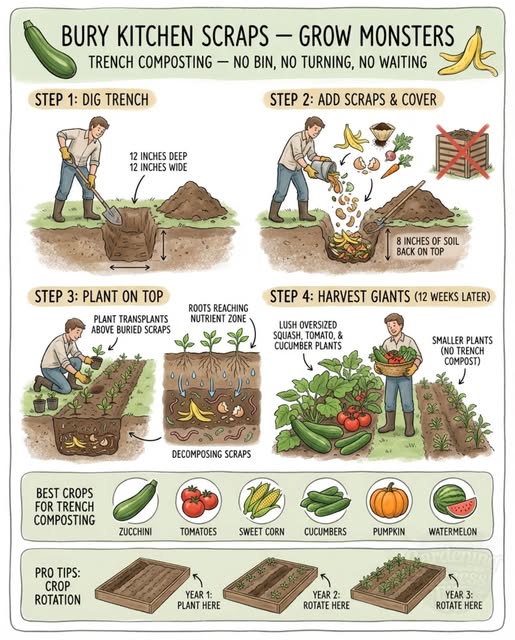
Trench composting skips the compost bin entirely. No turning. No waiting. No smell. You bury raw kitchen scraps directly in the ground, cover them with soil, and plant heavy-feeding crops on top within a few weeks.
 How to build a trench row:
1. Dig a trench about twelve inches deep and as long as your garden row
2. Fill the bottom four to six inches with kitchen scraps — banana peels, coffee grounds, eggshells, vegetable trimmings, fruit cores
3. Cover with six to eight inches of soil so the scraps are fully buried with no exposed material. Done
4. Wait two to three weeks. Earthworms find the buried scraps and begin composting underground. The trench attracts significantly more worms than surrounding soil and they produce castings that deliver nutrients exactly where roots will need them
5. Plant directly into the soil above the trench. Any heavy feeder works — squash, tomatoes, corn, cucumbers, pumpkins, and melons all thrive above a buried trench because the decomposing layer provides slow-release fertility all season
One trench absorbs months of household kitchen waste and diverts it from the landfill into your soil.
By midsummer the trench layer is fully broken down into dark crumbly humus that holds moisture like a buried sponge. The plants above it grow noticeably bigger than the same varieties in untreated soil.
Rotate your trench to a new row each year. After three seasons every row in your garden has been deep-fed — and your fertilizer costs drop to nearly nothing