(Tom: Another story about a person who could look being ridiculed by “experts” who could not or would not look and the tough progress truth makes against stiff opposition.
Truth wins in the end.
You just need to be strong enough to outlast those who cannot or will not look.)
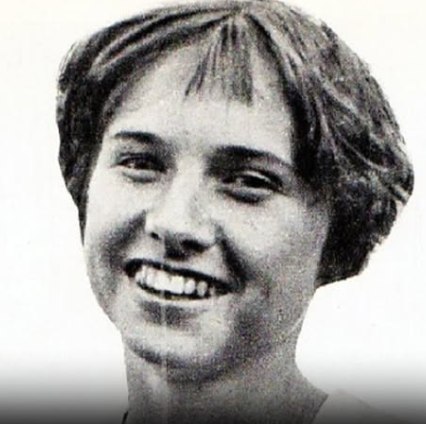
Lynn was born in 1938. Chicago Illinois. Jewish family. Smart kid. Really smart. Enters University of Chicago at 16. Younger than everyone. Doesn’t care.
Meets Carl Sagan. Future famous astronomer. Science nerds. Fall in love. Marry 1957. She’s 19. He’s 22.
Lynn gets masters 1960. Wisconsin. Then PhD 1965. Berkeley. Genetics. Cell biology. Has two kids with Carl. Dorion 1959. Jeremy 1960. Busy mom. Busy researcher.
Marriage falls apart 1964. Two brilliant scientists. Two big egos. Carl wants traditional wife. Lynn wants her own career. Doesn’t work.
1966 she gets first job. Boston University. Biology department. Age 28. Just starting out. Marries Nicholas Margulis. Takes his name.
She’s been thinking about cells for years. Something weird. Mitochondria especially. Little energy factories inside every cell. Keep us alive.
Mitochondria are weird. Have their own DNA. Separate from cell’s main DNA. Have their own ribosomes. Reproduce independently. Divide on their own schedule.
Mitochondria also look exactly like bacteria. Same shape. Same size. Same membranes. Same division method. Noticed since late 1800s. Nobody can explain it.
Russian biologist Konstantin Merezhkovsky wrote theory 1905. Maybe mitochondria used to BE bacteria. Got swallowed by ancient cells. Stuck around. Became part of cell. He got ridiculed. Theory forgotten 60 years.
Lynn rediscovered the idea. Takes it seriously. Connects the dots. Chloroplasts too. Green parts of plant cells. Also have own DNA. Also look exactly like bacteria.
She goes further. Proposes whole theory. Calls it endosymbiosis. Complex cells started simple. Then swallowed other cells. Some swallows became permanent. Those became organelles.
Every human cell contains descendants of ancient bacteria. Your mitochondria came from bacteria eaten billions of years ago. Still living inside you. Still making energy. Mind blowing.
Lynn writes it up. 1966. 50 page paper. “On the Origin of Mitosing Cells.”
Sends it to Science magazine. Biggest journal in America. Rejected. Too speculative. No direct evidence.
Sends it to Nature. Biggest journal in world. Rejected. Too weird. Too much theory.
Sends it to Cell. Rejected. Sends it to PNAS. Rejected. Sends it to Journal of Cell Biology. Rejected. Sends it everywhere. Rejected everywhere.
15 journals reject Lynn’s paper. Fifteen. Senior biologists think she’s crazy. Think she’s resurrecting debunked theory. Say mitochondria can’t be bacteria. Say evolution doesn’t work that way.
Lynn doesn’t stop. Keeps sending it. Keeps defending at conferences. Gets laughed at. Gets talked down to. Senior scientists lecture her about basic biology. Like she doesn’t know anything. Young woman. No credentials. Easy to dismiss.
Finally 1967 Journal of Theoretical Biology accepts it. Smaller journal. Less prestigious. But they publish it. Lynn is 29.
Response is devastating. Senior biologists mock the paper. Say she has no evidence. Say it’s pseudoscience. Say she’s embarrassing herself.
She goes to conferences. Gets heckled. Senior biologists interrupt her talks. Make fun of her ideas. Colleagues stop talking to her. Don’t want association with crazy theory lady.
Boston University almost denies tenure. She’s too controversial. Too unconventional. Department almost fires her. She nearly loses career over theory.
But Lynn keeps working. Keeps researching. Keeps pushing. Writes book 1970. “Origin of Eukaryotic Cells.” Expands theory. Yale University Press. Small print run.
Then things start changing. 1970s molecular biology advances fast. DNA analysis becomes possible. Scientists can compare genes. See how related they are.
Carl Woese at Illinois. Ford Doolittle at Dalhousie. Michael Gray. Several groups doing ribosomal RNA analysis.
What they find stuns everyone. Mitochondrial DNA is more similar to bacterial DNA than animal cell DNA. Chloroplast DNA almost identical to cyanobacteria DNA. Molecular evidence is unmistakable. These organelles really were bacteria.
1978 Robert Schwartz and Margaret Dayhoff do key experiment. First experimental proof. Prove mitochondria descended from specific bacteria. Alpha proteobacteria. Your mitochondria are domesticated typhus relatives.
By early 1980s endosymbiosis theory is widely accepted. Goes from crazy to mainstream in 15 years. Textbooks get rewritten. Biology courses change. Lynn was right all along.
Lynn is elected to National Academy of Sciences 1983. Age 45. Highest honor for American scientists. Vindication from peers.
She works with James Lovelock. He proposed Gaia Hypothesis. Earth is one living system. Lynn gives it biological credibility.
Moves to University of Massachusetts Amherst 1988. Distinguished Professor. Teaches until death. Students love her. Brilliant lecturer. Unconventional. Funny. Provocative.
1999 President Clinton gives her National Medal of Science. Highest science honor in America. Official recognition.
2008 Linnean Society gives her Darwin-Wallace Medal. Named after Darwin and Wallace. Lynn is in their company now.
Writes many books. Most with son Dorion Sagan. “Microcosmos” about bacterial history. “Five Kingdoms” about taxonomy. Millions of copies sold.
Argues with Richard Dawkins. Famous British biologist. Dawkins says genes compete. Lynn says cells cooperate. Different views of evolution. They debate for decades. Never agree.
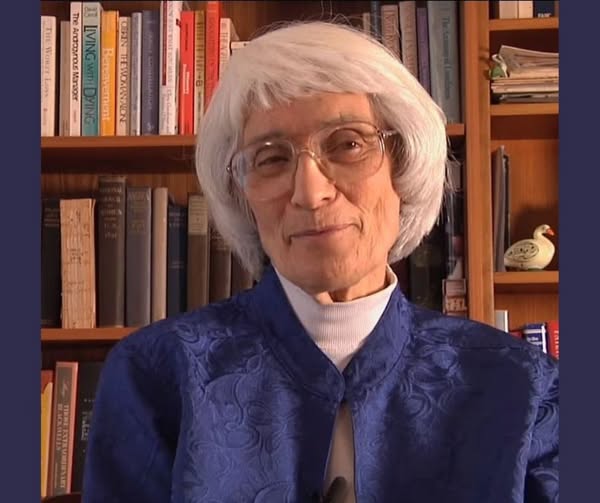
November 22 2011. Age 73. Dies at home in Amherst Massachusetts. Hemorrhagic stroke. Five days in hospital. Surrounded by family. Peaceful. After most productive controversial career in modern biology.
Think about Lynn’s story. Young woman. Age 28. Just started career. Proposes theory contradicting 50 years of science. Says cells are built from swallowed bacteria. Science world laughs. 15 journals reject her.
One journal finally publishes. Senior scientists mock her at conferences. Colleagues stop talking. Nearly loses tenure. Career almost destroyed.
She keeps working. Keeps writing. Keeps teaching. Keeps fighting. Builds the case. Builds evidence. Refuses to give up.
Molecular biology catches up. DNA evidence confirms everything. By 1980s her theory is in every textbook. Every biology student learns endosymbiosis. Every human knows we have ancient bacteria in our cells.
Evolutionary biology changes completely. Before Margulis evolution was mainly competition. Mutation. Natural selection. Survival of fittest.
After Margulis people understand cooperation too. Different organisms can merge. Become new organisms. Symbiosis drives evolution.
Medical research changes too. Understanding mitochondrial DNA revolutionizes disease diagnosis. Mitochondrial diseases. Genetic testing. Ancestry testing. All possible because we understand mitochondrial heritage. All built on Margulis’s foundation.
Her papers still cited thousands of times yearly. 50 years after publication. That’s rare. Her landmark 1967 paper still foundational. Still required reading.
2017 biology community celebrates 50 year anniversary. Special journal issues. Conferences. Tributes. Scientists who rejected her now honor her.
She’s inducted into National Women’s Hall of Fame. Posthumously. Named in lists of greatest scientists. Her tenacity becomes legendary. Story told to young scientists. Shows them how to stand up for ideas.
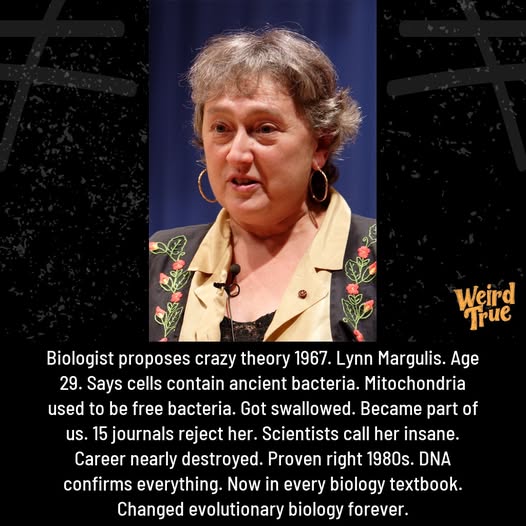
Biologist proposes theory at 29. Says cells contain ancient bacteria. 15 journals reject her. Scientists call her crazy. Nearly loses job. Keeps fighting. DNA proves her right in 1980s. Now in every biology textbook. Changed evolutionary biology forever.