
Supercalifragilisticexpialidocious
More Harm After Covid Vax Than Prev 31 Years of Vax
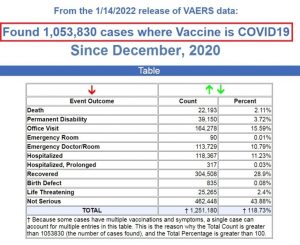
The deaths and injuries following the experimental COVID-19 “vaccines” continue at an unprecedented rate as we now enter the second year of their “emergency use authorization.” The U.S. Government updated their Vaccine Adverse Events Reporting System (VAERS) database today, and there have now been 1,053,830 cases of deaths and injuries reported to VAERS following COVID-19 experimental vaccines since they were given emergency use authorization in December of 2020. By way of contrast, there have been 914,393 cases of deaths and injuries reported to VAERS following all FDA-approved vaccines since VAERS started in 1990, through the end of November, 2020, the last month before the COVID-19 vaccines were authorized for emergency use. There have been more deaths, more permanent disabilities, and more hospitalizations following the experimental COVID-19 vaccines, than there have been following all FDA-approved vaccines for the previous 31 years COMBINED. This is the most censored news in the United States, and it is based on the U.S. Government’s own statistics.
Follow The Covid Money Trail

Innate Immune Suppression by SARS-CoV-2 mRNA Vaccinations
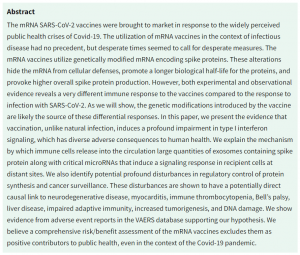
The mRNA SARS-CoV-2 vaccines were brought to market in response to the widely perceived public health crises of Covid-19. The utilization of mRNA vaccines in the context of infectious disease had no precedent, but desperate times seemed to call for desperate measures. The mRNA vaccines utilize genetically modified mRNA encoding spike proteins. These alterations hide the mRNA from cellular defenses, promote a longer biological half-life for the proteins, and provoke higher overall spike protein production. However, both experimental and observational evidence reveals a very different immune response to the vaccines compared to the response to infection with SARS-CoV-2. As we will show, the genetic modifications introduced by the vaccine are likely the source of these differential responses. In this paper, we present the evidence that vaccination, unlike natural infection, induces a profound impairment in type I interferon signaling, which has diverse adverse consequences to human health. We explain the mechanism by which immune cells release into the circulation large quantities of exosomes containing spike protein along with critical microRNAs that induce a signaling response in recipient cells at distant sites. We also identify potential profound disturbances in regulatory control of protein synthesis and cancer surveillance. These disturbances are shown to have a potentially direct causal link to neurodegenerative disease, myocarditis, immune thrombocytopenia, Bell’s palsy, liver disease, impaired adaptive immunity, increased tumorigenesis, and DNA damage. We show evidence from adverse event reports in the VAERS database supporting our hypothesis. We believe a comprehensive risk/benefit assessment of the mRNA vaccines excludes them as positive contributors to public health, even in the context of the Covid-19 pandemic.
Who Is Liable In The Covid Case?
UK Lawyer Anna de Buisseret explains.
Actual Stats Do Not Support The Fear Mongering
Great presentation of actual UK data completely disproving the entire necessity for pandemic responses.
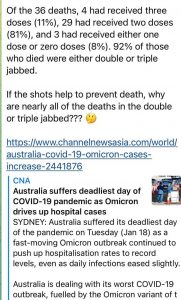
The Shots Not Preventing Deaths
Message for 2022: Three things to remember at this critical time from RFK, Jr.

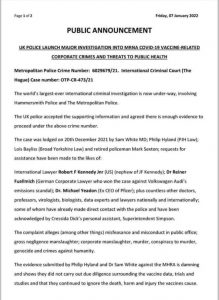
Public Announcement – UK Police Investigation