
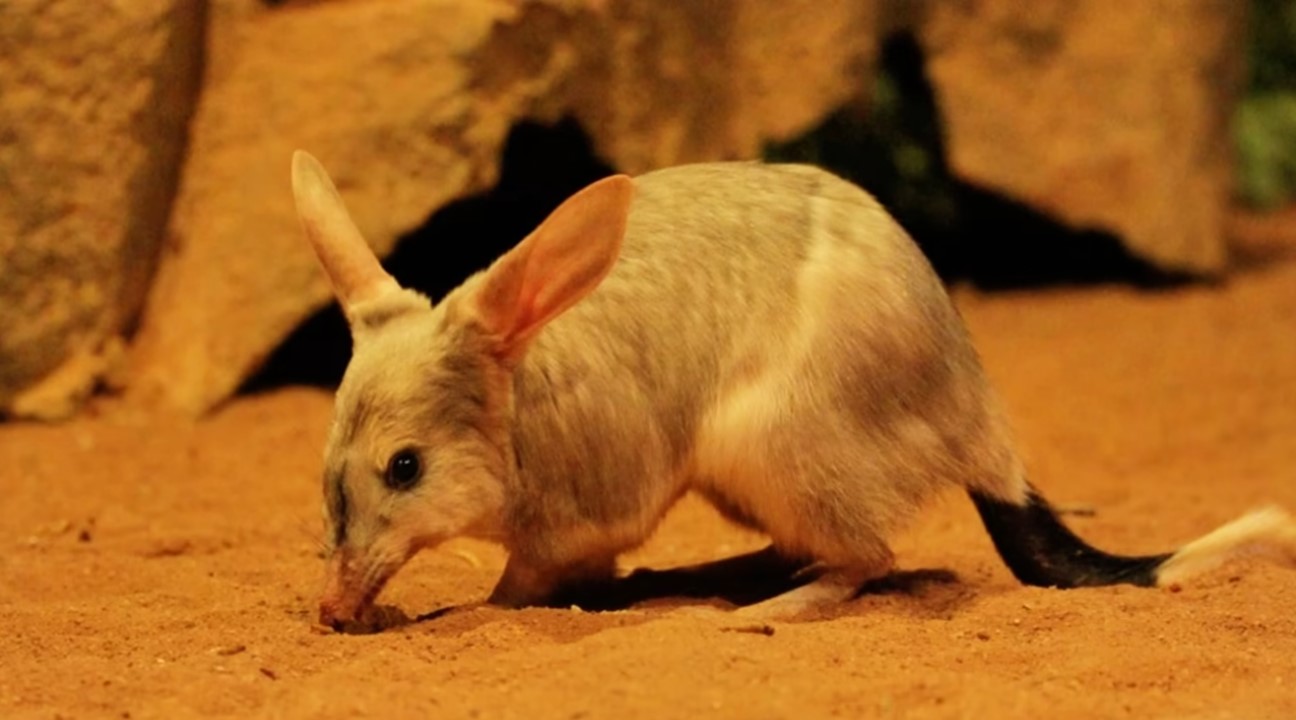
In 1912, the greater bilby disappeared from New South Wales. For more than a century, the desert looked unchanged from a distance, but beneath the surface something essential had vanished: one of Australia’s most important ecosystem engineers.
Then, in 2024, scientists released one hundred bilbies into a fenced section of Sturt National Park. What happened next surprised even the researchers studying them.
This video explores the Wild Deserts project, one of Australia’s most ambitious rewilding experiments. After decades of feral cat predation, fox invasions, rabbit overgrazing, and biodiversity collapse, ecologists reintroduced greater bilbies into a predator-managed desert ecosystem to test whether a lost ecological process could be restored.
The results appeared faster than expected. Thousands of bilby diggings transformed the soil surface, increasing water infiltration, trapping seeds, concentrating organic matter, and creating nutrient-rich patches across the landscape. Researchers documented darker soil zones, higher labile carbon levels, increased microbial activity, and measurable changes in ecosystem function within just a few years.
We break down the science behind this transformation: how bilbies act as ecosystem engineers, why their foraging pits function as natural restoration tools, and how rewilding native mammals may help rebuild Australia’s degraded arid landscapes.
• The release of one hundred bilbies into the Wild Training Zone at Sturt National Park
• The appearance of thousands of foraging pits that altered soil chemistry and water retention
• The return of ecological processes absent from the region for more than a century
This channel explores ecological restoration, rewilding, biodiversity recovery, and the hidden species quietly rebuilding ecosystems around the world.