
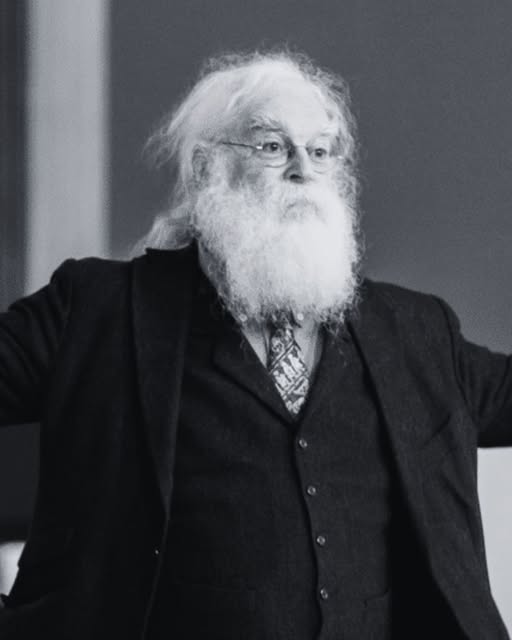
Dr. Irving Finkel is a curator at the British Museum and one of the leading living experts in cuneiform — the writing system of ancient Mesopotamia. He has translated thousands of clay tablets: contracts, prayers, grocery lists, lullabies, magic spells. He is, by all accounts, a man who has earned the right to be hard to surprise.
The tablet returned to him for full study in 2009. He spent four years translating it.
What he found was not a story.
It was a manual.
A how-to guide. The Babylonian god Enki, sympathetic to humanity, was telling a man named Atra-hasis exactly how to build an ark. Materials. Quantities. Dimensions. Methods. Sixty lines of practical Bronze Age shipbuilding instructions, written down somewhere between 1900 and 1700 BCE.
But here was the part that stopped Finkel cold.
The ark was round.
It was a giant Mesopotamian coracle — a basket-shaped river boat, the kind people in southern Iraq still used until the mid-twentieth century. The instructions called for palm-fiber rope, a wooden frame, and hot bitumen to seal it. The tablet specified a base area roughly two-thirds the size of a soccer field, with twenty-foot-high walls.
Then, near the bottom of the tablet, came the line that genuinely shocked the field.
The instruction for what to do with the animals:
“Two by two.”
For centuries, those three words had been considered a unique signature of the Book of Genesis — a phrase imprinted on every Sunday school illustration, every children’s toy, every Hollywood film about Noah.
They turned out to be a thousand years older than the Bible.
Already a fixed phrase in Babylonian when the Hebrew scribes who wrote Genesis were not yet a people.
When Finkel published his translation in 2014 in a book called ’The Ark Before Noah’, the response was immediate and enormous.
But he didn’t stop at the translation.
He wanted to know if the Babylonian instructions actually worked.
So he built the boat.
He brought the tablet’s specifications to a team of traditional shipbuilders in Kerala, India — a place where coracle construction is still practiced — and helped them construct a one-third scale replica. They followed the recipe in the clay. Palm-fiber rope. Wooden ribs. Hot bitumen.
When they put it in the water, it floated.
The Bronze Age engineering held.
Mesopotamian, Hebrew, Greek, Hindu — civilizations across thousands of miles and thousands of years all carried different versions of the same memory: that the rains came, that the rivers rose, and that someone built something that floated.
The Ark Tablet is small. It fits in a hand. It is privately owned and rarely on public display. Most people will never see it.
But for four thousand years, in a piece of dried Iraqi clay, the answer to one of the oldest questions we know how to ask sat quietly waiting:
“How do we survive when everything is lost?”
We make something that floats. We bring what we love.
And we tell the story afterward, so the next time, somebody else will know.