
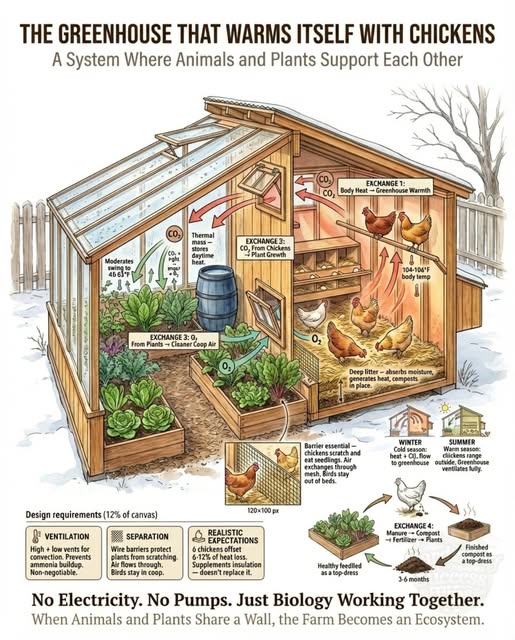
When a coop shares a wall with a greenhouse, four exchanges happen without any equipment. The chickens exhale CO2 that the plants use for photosynthesis. The plants release oxygen that circulates back to the coop. The chickens radiate enough body heat to smooth temperature swings on cold nights. And the manure composts into the fertilizer the greenhouse beds need.
No electricity. No pumps. Just a shared wall with adjustable vents.
The heat contribution is modest — it won’t replace insulation in a harsh winter, but it smooths the overnight temperature swing that kills tender seedlings. The CO2 is modest too — not commercial greenhouse levels, but enough to replenish what the plants consume in a sealed winter greenhouse.
What makes it work:
– Adjustable vents in the shared wall — open during the day for gas exchange, closed at night to trap warmth
– Wire mesh barriers so chickens can’t access growing beds. They’ll scratch up seedlings and dust-bathe in your soil if given the chance
– Deep litter on the coop floor — eight to twelve inches of straw or wood shavings that absorbs moisture, reduces ammonia, and composts in place
– Enough ventilation to prevent ammonia buildup. Chicken manure in an enclosed space harms both plants and birds without airflow
Four exchanges running continuously. The animals feed the plants. The plants clean the air for the animals.
The smartest design is letting biology work together