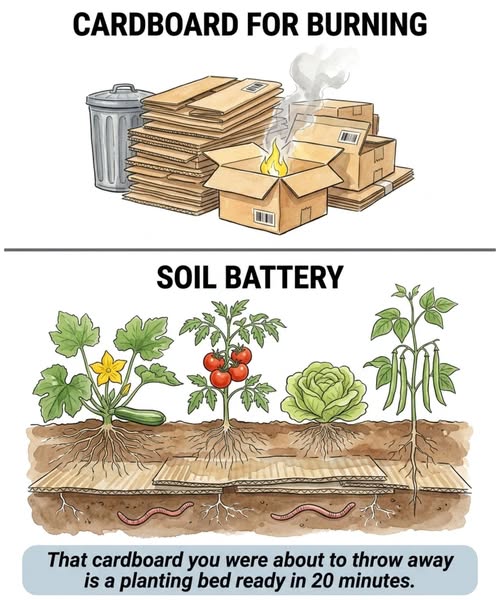
The stack of delivery boxes by the door is a weed-suppressing, moisture-retaining, fungi-feeding planting bed — buried under compost in twenty minutes, at zero cost.
Sheet mulching works by laying wet cardboard directly onto unprepared ground, overlapping edges by 15 cm to prevent gaps where weeds can push through. The cardboard blocks light to existing weeds, creates a substrate for decomposer fungi, and retains moisture in the soil beneath it. Earthworms do the rest — in three to six months, the cardboard is gone and replaced by dark, active humus.
To start a new bed today do the following steps, watering in each layer as you add it. The bed will be ready to plant the same day.
Remove all tape and plastic labels before laying: these are the only parts that do not break down cleanly.
Lay the cardboard in overlapping sheets on the area to be planted or slightly larger if space and cardboard permits.
Add a layer of branches and leaves.
Add a 5 cm layer of garden compost on top.
Add 10 cm of topsoil or growing medium.
Add a layer of fine mulch appropriate to the intended crop.
What grows well over sheet mulch from the first season:
Courgettes and cucumbers draw on the consistent moisture retained by the wet layer beneath. Tomatoes benefit from the stable soil temperature. Lettuce and salad leaves establish quickly in the upper compost layer without needing deep root runs. French beans penetrate the cardboard layer within weeks and drive roots straight through.