
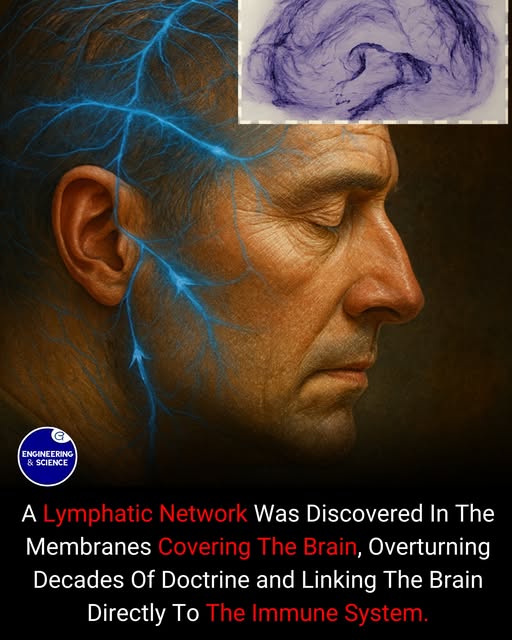
The discovery of a true lymphatic network surrounding the brain has been called one of the most significant breakthroughs in modern neuroscience, challenging the long-held belief that the brain was an “immune privileged” organ completely isolated from the body’s immune and waste-clearing systems. In 2015, researchers independently identified a network of meningeal lymphatic vessels nestled within the dura mater, the outermost membrane covering the brain.
This “missing link” fundamentally changed the understanding of neuro-immune interactions. The lymphatic system, traditionally known for collecting excess fluid, filtering waste, and transporting immune cells throughout the body, was proven to have a direct channel out of the central nervous system. These meningeal vessels work in conjunction with the glymphatic system, a network that flushes cerebrospinal fluid through the brain tissue to clear neurotoxins, including proteins associated with neurodegenerative disorders.
The discovery has vast implications for the study and treatment of major neurological diseases. Researchers are now intensely investigating how damage or reduced function in this drainage system may contribute to the development and progression of diseases like Alzheimer’s disease, Multiple Sclerosis, and Parkinson’s disease. Understanding how to reinforce this natural cleaning system opens entirely new avenues for therapeutic interventions.