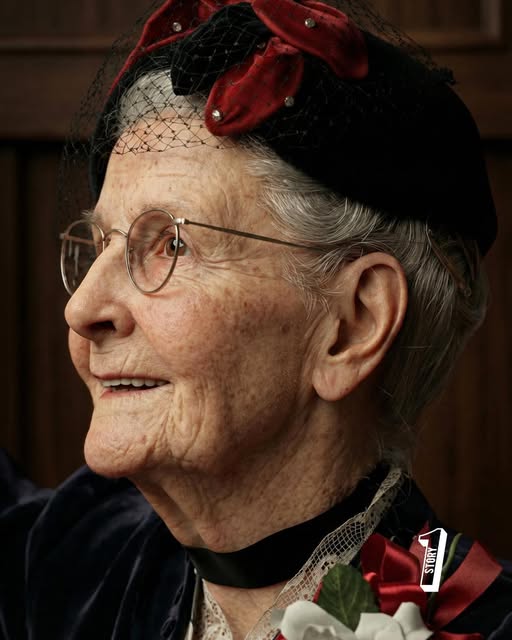
Anna Mary Robertson woke up every morning at four o’clock. She did it for seventy-eight straight years, long before anyone ever imagined her name would hang on gallery walls.
The alarm was never a clock. It was habit. Darkness still pressed against the windows when she swung her legs out of bed and pulled on her boots. Cows waited to be milked. Chickens needed feeding. The stove had to be lit. Breakfast had to be cooked for whoever happened to be hungry that morning. After that came the garden, the laundry, the mending, the endless small repairs that kept a farm from falling apart.
This was life in rural New York in the late nineteenth century, and Anna Mary knew no other way to exist.
She was born in 1860, the third of ten children, into a world where survival depended on hands that never rested. Schooling was brief. Childhood was shorter. By the age of twelve, she was sent away to work as a hired girl for wealthier families. Twenty-seven cents a week bought the right to scrub floors, wash clothes, cook meals, and raise children who belonged to someone else.
There was no room for wanting. No space for imagining a different life. Whatever dreams she carried were pushed down until they were nearly forgotten.
Still, something in her noticed beauty. As a child, she crushed berries and mixed the juice with chalk, painting rough colors onto scraps of wood when no one was watching. It was a quiet pleasure, fleeting and impractical. It did not help with rent or bread or winter coats. So she let it go.
At twenty-seven, she married Thomas Moses. Together they farmed land in Virginia, then returned north to New York. Life followed the same rhythm it always had. Work. Weather. Birth. Loss.
Ten children were born. Five survived.
Each death hollowed her a little, but she did not stop. She cooked. She cleaned. She sewed quilts by lamplight after everyone else had gone to bed. She patched clothes until fabric turned thin as paper. She learned endurance the way other people learned art.
Years collapsed into seasons. Seasons into decades. The children grew up and left. Thomas’s back gave out, but he worked anyway. Anna Mary worked alongside him, her hands cracked and strong, her body shaped by repetition.
She rose before dawn. She slept late only when illness forced her to. She never once thought of herself as an artist.
In 1927, Thomas died.
Anna Mary was sixty-seven years old.
The farmhouse fell quiet in a way it never had before. No footsteps. No shared meals. No voices carrying across the fields. For the first time in her life, she belonged only to herself, and she did not know what to do with the silence.
She turned to embroidery, the familiar motion of needle and thread. But age had arrived uninvited. Arthritis stiffened her fingers. Each stitch burned. What had once been comforting became unbearable.
Her sister suggested painting.
“Your hands might manage a brush better than a needle,” she said.
Anna Mary had never held a paintbrush in her life. She had never seen a museum. She did not know what “art” was supposed to look like. But she walked into the general store and bought a few cheap tubes of house paint, the kind meant for barns and fences. She found old boards in the shed. She mixed colors on cardboard.
She was seventy-eight years old when she painted her first picture.
It was simple. A farmhouse. Rolling hills. Figures working the land.
But something opened.
Memories flooded out. Winter sleigh rides. Maple sugaring parties. Barn raisings. Harvest dances. Children skating on frozen ponds. A world she had lived inside and watched slowly disappear.
She painted from memory, not observation. She did not sketch. She did not revise. She worked quickly, confidently, joyfully. Sometimes she painted until two in the morning, humming hymns at her kitchen table.
For three years, she painted without expectation. She gave pictures to neighbors. Sold a few for three or four dollars at the local pharmacy. It was enough to buy groceries. Enough to keep going.
Then, in 1938, a man named Louis Caldor walked past the pharmacy window.
He was an art collector from New York City. The paintings stopped him cold.
He bought every single one.
“Who painted these?” he asked.
“That’s just Grandma Moses,” the pharmacist said. “She’s about eighty.”
Caldor drove straight to her farmhouse. He found her in a calico dress and apron, painting at her kitchen table.
“You’re going to be famous,” he told her.
She laughed. She thought he was teasing.
He wasn’t.
Within two years, her paintings were hanging in New York galleries. Critics called her work primitive. Naive. Untrained. They searched for categories because they didn’t know where to put an elderly farm woman who painted joy without irony.
The public understood immediately.
They saw warmth. Community. A world where people knew each other and seasons mattered. They saw happiness without apology.
At eighty, Anna Mary Moses appeared on the cover of *Life* magazine. At ninety, she painted every day. She worked until she was 101 years old, producing more than 1,600 paintings.
She had spent nearly eight decades doing what survival demanded.
Then she spent the rest of her life doing what her hands had always wanted to do.
She did not talk about inspiration. She did not speak about destiny. She simply painted what she knew and loved.
Anna Mary Moses proved that a beginning does not expire with age. That the life you were meant to live can wait patiently for you. And that sometimes, the longest road leads exactly where it was always supposed to end.