
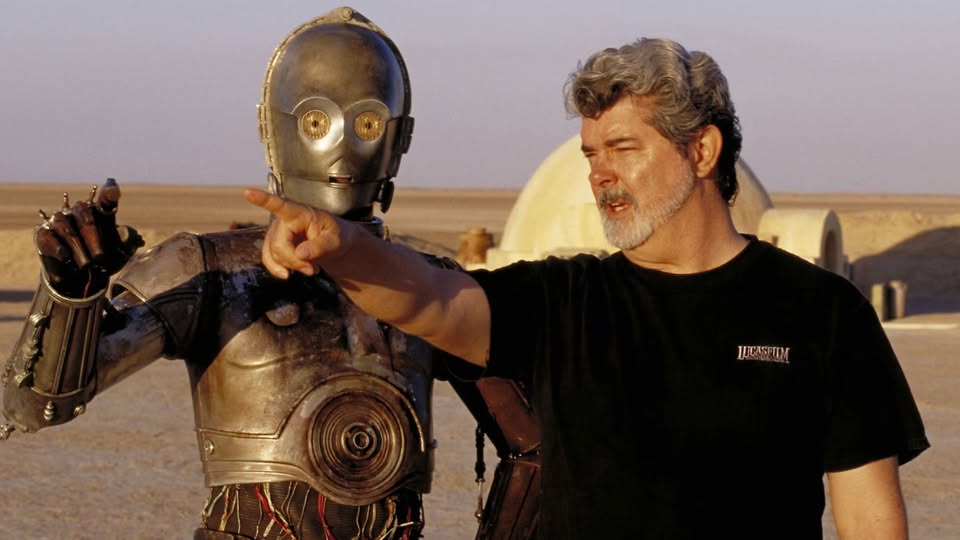
Hollywood executives laughed when he asked for the toy rights. Then he became richer than all of them combined.
A near-fatal car crash led to changing cinema forever.
George Lucas was 18 years old.
Three days before high school graduation, his Fiat got crushed by a Chevy Impala at an intersection.
The impact threw him from the car. His seatbelt snapped. That malfunction saved his life.
He should have died. Doctors didn’t know if he’d make it.
He spent weeks in the hospital. Had to watch graduation from a bed.
Everything changed after that.
Lucas stopped racing cars. Started thinking about what he actually wanted to do with the second chance he’d been given.
He decided to make films.
Everyone said it was a waste.
“You barely graduated high school.”
“You’re not connected to Hollywood.”
“Film school is for dreamers.”
He didn’t listen.
Went to USC film school. Made student films that caught attention. Got a scholarship from Warner Bros.
His first feature film, THX 1138, flopped. Studio hated it. Cut it against his wishes. Lost money.
Then American Graffiti became a hit. Made over $200 million on a tiny budget.
But Lucas had a bigger idea. A space opera. Something nobody had ever seen before.
He shopped Star Wars to every major studio.
Universal passed.
United Artists passed.
Disney passed.
Everybody passed.
They said it was too weird. Too expensive. Too risky.
“Space movies don’t sell.”
“The script is confusing.”
“Nobody wants to see robots and aliens.”
Finally, 20th Century Fox took a chance. But they didn’t believe in it either.
Here’s where Lucas did something nobody understood at the time.
Instead of negotiating for a bigger directing fee, he asked for something else.
The merchandising rights. And the rights to any sequels.
The studio laughed. Merchandising? From a weird space movie? Sure, take it.
They thought they were getting a deal. Paying Lucas less upfront for rights they considered worthless.
That decision made George Lucas a billionaire.
Star Wars opened in 1977. Forty theaters.
Lines wrapped around blocks. People saw it ten, twenty, fifty times.
It became the highest-grossing film in history at that point.
The toys alone generated billions. Action figures, lunchboxes, video games, books, theme parks.
All because Lucas believed in something nobody else could see.
But he wasn’t done.
He built Industrial Light and Magic because no special effects company could do what he needed. Now it’s created effects for most major blockbusters in history.
He built Skywalker Sound. Changed how movies sound.
He built Lucasfilm into an empire.
In 2012, he sold it to Disney for over $4 billion.
Then gave most of it away to education.
Today, the Star Wars franchise has generated tens of billions of dollars across films, merchandise, streaming, and theme parks.
All because a kid who almost died in a car crash decided to chase an idea everyone said was impossible.
What dream are you abandoning because the first few studios said no?
What rights are you giving away because you don’t see their future value?
Lucas nearly died at 18. His first film flopped. Every major studio rejected his biggest idea.
He took less money upfront because he believed in what he was building.
He created technology that didn’t exist because he needed it for his vision.
He proved that the people who reject you don’t get to define you.
Your near-miss might be your wake-up call.
Your rejection letters might be proof you’re onto something.
Your “worthless” idea might be worth billions.
Stop letting studios, investors, and doubters write your story.
Start thinking like George Lucas.
Take the rights everyone else thinks are worthless.
Build what doesn’t exist yet.
And never let “no” be the end of the conversation.
Sometimes the biggest wins come from the deals nobody else wanted.
Because when everyone underestimates you, you get to keep everything.
Think Big.