
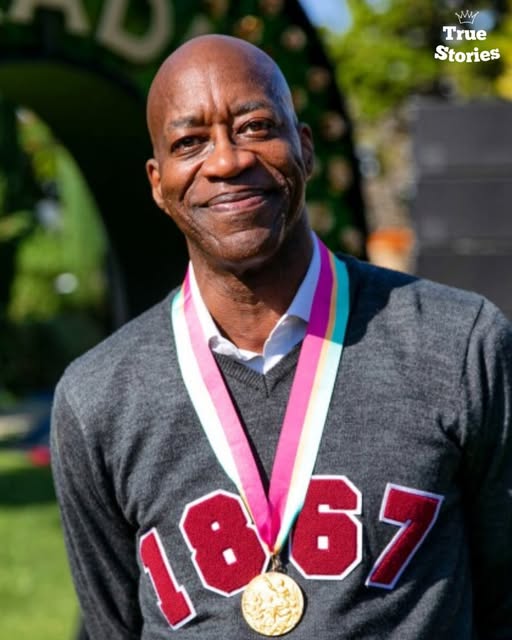
Edwin Moses walked onto a dusty Ohio State track in 1976, set down his physics notebook beside the hurdles, and told his coach he was going to rewrite the rhythm of the race by taking thirteen steps between hurdles instead of the fourteen every expert insisted was physically impossible.
He was an engineering student, not a sports prodigy. He had no scholarship. He had no elite training. He ran workouts alone because there was no hurdling coach for him. Moses studied film like a scientist. He measured stride angles. He calculated force and drag. He scribbled equations on scrap paper and taped them above his dorm room desk. He believed the event followed predictable laws of motion and he could break them if he learned the math.
The experiment worked on his very first try. Moses glided through ten hurdles with control that startled teammates. The longer stride meant fewer adjustments. Fewer adjustments meant no hesitation. By spring he won the Olympic Trials. By summer he was in Montreal wearing United States colors that had been a fantasy months earlier.
Then he ran the four hundred hurdles faster than any human in history.
He did not stop there. After Montreal he built a training schedule with the same logic he once used for lab work. He timed every run. He tracked heart rate, fatigue, and oxygen levels. He studied race film frame by frame to eliminate wasted motion. When he returned to competition, he began a streak the world still struggles to comprehend.
Nine years. One hundred and twenty two consecutive wins. No false starts. No collapses. No excuses.
Competitors tried to match his stride pattern. They failed. Coaches tried to decode his rhythm. They failed. Reporters waited for arrogance. Moses gave them none. He spoke about discipline, spacing, timing, and respect for the craft. He believed mastery came from patience and relentless analysis, not talent alone.
Even at the Los Angeles Olympics in 1984, with the weight of a nation on his shoulders, he lined up with the same quiet expression. He ran his race, held the thirteen step pattern, and crossed the finish with daylight between him and the field.
Edwin Moses did not dominate through force.
He used clarity, intelligence, and perfect rhythm to turn an event into a system only he understood.