
After decades and billions spent chasing amyloid, a new body of evidence is revealing the real causes of dementia and decades of forgotten research for healing cognitive decline is being rediscovered.
Story at a Glance:
•Alzheimer’s disease is commonly thought to result from abnormal plaque buildup in the brain that gradually destroys brain tissue. As a result, almost all Alzheimer’s research has been directed toward eliminating amyloid, even after the basis for much of this work was shown to stem from fraudulent research.
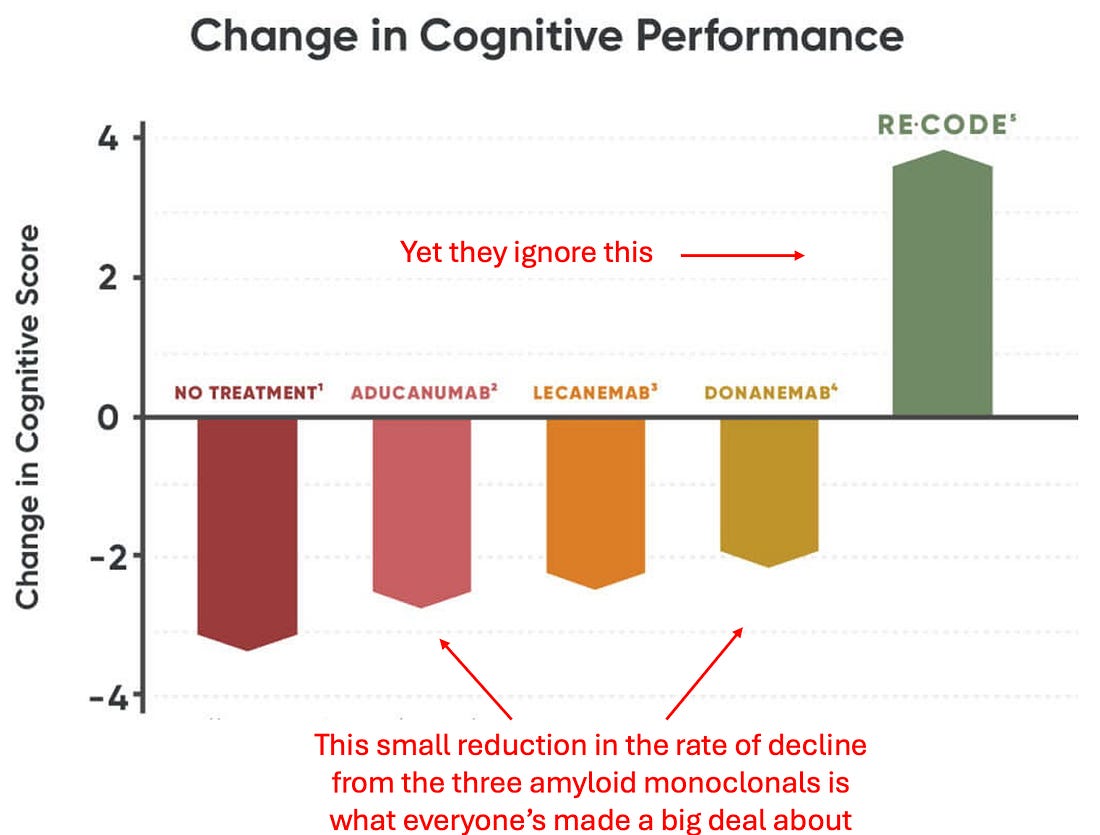
•As such, despite decades of research and billions of dollars spent, this model has completely failed to produce useful results. The costly “groundbreaking” Alzheimer’s drugs only slightly slow dementia progression—at the expense of causing brain bleeding and swelling in over a quarter of those treated. In April 2026, the most rigorous independent review of these drugs to date concluded they make no meaningful difference to patients.
•In contrast, numerous affordable treatments have been developed for Alzheimer’s disease that target the root causes of the disorder, producing significant benefits at a fraction of the cost and without any toxicity.
•One neurologist, for example, proposed that amyloid serves a protective function in the brain and treats Alzheimer’s by identifying the underlying process causing dementia (which can often be diagnosed through symptoms). Remarkably, despite the method being proven in clinical research (and now a randomized controlled trial), awareness of it or the fact there are completely different types of “Alzheimer’s disease” which require different treatments remains almost nonexistent.
•Likewise, a strong case can be made that impaired cerebral circulation, along with impaired venous and lymphatic drainage, plays a pivotal role in Alzheimer’s disease.
•A large body of forgotten research (much of it from Russia) shows that blood cells clumping together (“blood sludging”) obstructs the brain’s smallest vessels and can precede the brain changes seen in Alzheimer’s—a process Chinese medicine has long recognized as “blood stasis.”
•This article will review the common causes of cognitive impairment and dementia (e.g., cells becoming trapped in a shocked state where they no longer function) along with the forgotten treatments for neurodegenerative disorders—some of which, like DMSO, have extensive evidence supporting their use.
One of the least appreciated aspects of medicine is the numerous frameworks that have been developed to understand how the body works, why it gets sick, and how to heal it. This, I believe is a result of conventional medicine having successfully branded itself as the one true path to understanding the body and each remaining approach being a “second-rate gimmick,” which at best, can sometimes assume a complementary role in healthcare.
However, if you study those other approaches, you will find each medical system excels at certain types of health problems, while struggling with others, so in many instances, knowing which medical model to jump to can be immensely beneficial to patients.
The modern approach to medicine is heavily biased towards a biochemistry model, where customized drugs are designed to stimulate or inhibit specific molecular targets (most commonly enzymes, frequently cellular receptors or ion channels, and less often, other aspects of the body, such as individual genes or inflammatory messengers). This approach, in turn, tends to excel for specific issues (particularly acute emergencies) but typically struggles with chronic ailments—something I attribute both to target molecules rarely being able to reach broad swathes of the body and partly due to living organisms being designed to adapt to excessive stimulation or inhibition of specific receptors and enzymes within the body.
Yet despite its frequent failures, we continue to rigidly adhere to that model of medicine. This I believe, ultimately is because therapies produced within this framework are highly specific to individual diseases (hence allowing many distinct patentable products), and in many cases (since they can only temporarily shift an enzyme or receptor) do not produce lasting cures—hence requiring perpetual purchases of them and thus recurring pharmaceutical sales.
Note: in many cases, disabling critical enzymes or receptors also creates a myriad of side effects (particularly over time as the body readjusts itself to accommodate this unnatural state).
All of this summarizes why, despite spending an ever increasing amount of money on Alzheimer’s research (e.g., the NIH spent 2.9 billion in 2020 and 3.9 billion in 2024), we have still failed to make any real progress on the disease. Furthermore, we only spend that much money on Alzheimer’s research because of how dire its costs are (e.g., in 2024 it was estimated to cost the United States 360 billion dollars). Sadly, this figure only touches the surface of the social cost (as any relative of someone with Alzheimer’s can attest)—again making it so remarkable we still have not made any progress in the illness.
Finish reading: https://www.midwesterndoctor.com/p/the-forgotten-causes-of-alzheimers?r=yh8aw