If you plant your seeds in containers for later transplanting to the garden it is worth noting that capsicums handle the transition to the garden differently to tomatoes.
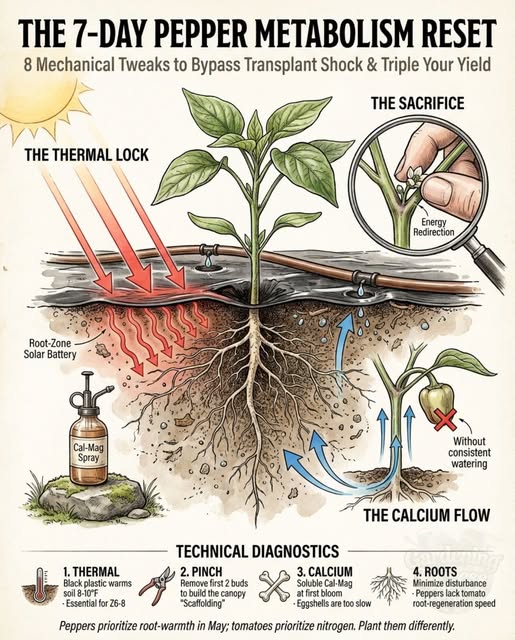
Tomatoes bounce back from transplanting quickly. Peppers are slower. They’re tropical plants that stall in cool, damp soil — and once they stall, it can take weeks to get them moving again. The first week after transplant sets the pace for the whole season.
Getting that week right doesn’t take much. It takes timing.
Three things that make the biggest difference early:
– Warm the soil before you plant — black plastic mulch laid a week or two before transplanting raises soil temperature enough to keep pepper roots active from day one. Without it, cool spring soil slows root growth even when the air feels warm. The roots care about ground temperature, not air temperature
– Pinch the first flower buds — it feels wrong, but removing early flowers lets the plant build a stronger frame before it starts carrying fruit. A pepper that sets fruit too early stays small and produces a light harvest. One that builds structure first holds more fruit later and produces through the whole season
– Water consistently, not heavily — blossom end rot on peppers is usually blamed on low calcium, but the real cause is almost always inconsistent moisture. When watering swings between dry and soaked, the plant can’t move calcium to the developing fruit even when there’s plenty in the soil. Steady, even moisture prevents it more reliably than any spray
The timing detail most people miss:
– Don’t transplant peppers until nighttime temperatures stay reliably above the 13 degrees C/ the mid-50s F. A tomato can handle a cool night and recover. A pepper that gets chilled in the first week can sit dormant for weeks before resuming growth — and by then, you’ve lost a significant chunk of the season
The pepper that produces heavily in late summer was treated carefully in spring. The rest is patience.