
In the summer of 1944, on the blood-soaked island of Saipan, the order was brutally simple: burn the caves, seal them shut, and move on. American Marines were taking the island yard by yard in some of the fiercest fighting of the Pacific War. Japanese soldiers, cornered, starving, and terrified of capture, were throwing themselves off the northern cliffs by the hundreds. The math of total war said this was the only way it could end.
Nobody told that to eighteen-year-old Guy Gabaldon.
He was supposed to be a clerk, typing reports at Headquarters Company, 2nd Marine Regiment. Instead, he set the typewriter down, picked up a pack of cigarettes and some medical supplies, and walked alone into the jungle and coral caves where death waited in the dark.
Guy wasn’t carrying some secret superweapon. What he carried was something far more powerful: language. Not stiff, military Japanese. The real thing. The warm, everyday language of family tables, shared meals, and quiet trust. He had learned it as a boy in East Los Angeles.
When Guy was young, poor, and restless, bouncing between broken homes, a Japanese-American family named the Nakanos took him in. They didn’t foster him temporarily. They brought him to their table, fed him, sheltered him, and treated him like one of their own. They taught him their language, their humor, their honorifics, and the gentle phrases people only use when they feel safe. For years, he lived inside that culture.
Then the war came. The U.S. government rounded up Japanese-American families and sent them to internment camps. The Nakanos were shipped to Wyoming. Guy, seventeen years old and heartbroken, joined the Marines.
Now he stood at the mouth of a pitch-black limestone cave on Saipan, facing hundreds of armed enemy soldiers who expected nothing but death. He didn’t shout. He didn’t threaten. He crouched low, lit a cigarette, and began speaking quietly into the darkness — using the exact tone, the exact words, the exact respect he had learned at the Nakano family table.
He told them no one inside would be harmed. There was food. There was water. There was dignity if they chose to walk out with him. He offered cigarettes. He promised they would be treated as human beings.
At first, two soldiers stepped out, hands raised.
His commanding officer threatened him with court-martial.
The next night, Guy went back anyway.
This time, fifty soldiers followed him out of a larger cave. Command stopped threatening him. They started protecting him. Every Japanese soldier Guy brought in alive was one less cave that needed to be burned with flamethrowers, one less Marine who had to risk a deadly assault, and one less life ended that day.
They let him keep going.
Night after night, alone or with one trusted South Vietnamese partner, Guy moved through jungle so thick it swallowed sound and light. He climbed coral cliffs. He crawled near cave entrances. He spoke the language of home to men who had been told Americans were monsters.
Then came the largest cave complex on the island.
A wounded Japanese officer lay near the entrance. Guy didn’t take him prisoner. He opened his own medical kit and treated the man’s wounds. Then he made one simple request: go back inside and tell your men they will be treated with respect if they surrender.
Guy sat down on a rock outside the cave entrance — no rifle raised, no backup, no easy escape. He waited in silence.
An hour passed.
The brush finally moved. The officer stepped out. Behind him, in a slow, steady stream, came more than eight hundred armed Japanese soldiers. They laid down their rifles. They placed their swords on the ground. One teenage boy from East Los Angeles walked an entire battalion back to American lines.
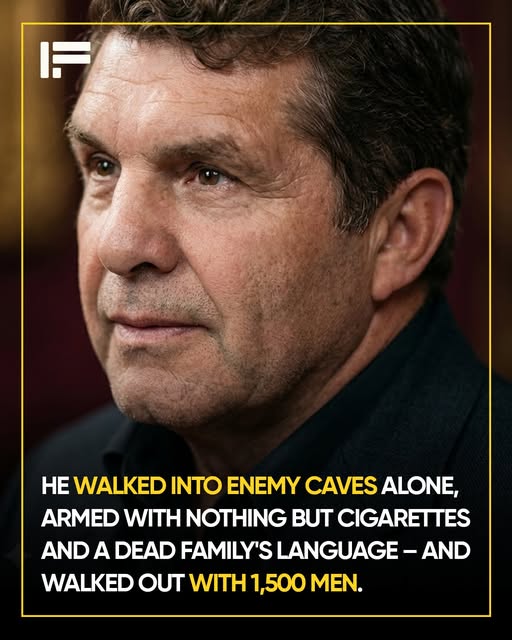
By the end of the Battle of Saipan, Guy Gabaldon had personally persuaded more than 1,500 enemy soldiers to surrender — the highest total of any single serviceman in the entire Pacific theater. He was awarded the Silver Star, later upgraded to the Navy Cross.
He called it the “Pied Piper of Saipan” story, but it wasn’t magic. It was memory. It was the kindness the Nakano family had shown a lost kid from the streets of East LA. He simply carried that kindness into the darkest places of the war and offered it back to men who expected only fire and death.
The caves of Saipan are quiet now. Many of the men who walked out of them lived to see their families again. They had children, grandchildren, and great-grandchildren whose lives exist only because one young Marine chose conversation over a flamethrower.
Guy Gabaldon came home, raised a family, and lived a quiet life. He passed away in 2006 at the age of eighty. The Nakano family, who had been imprisoned by their own country, gave him the greatest weapon he ever carried: the ability to see an enemy as a human being.
War had its protocol: destroy.
Guy chose a different one: communicate.
And because he did, more than 1,500 men walked out of the darkness and into the rest of their lives.