
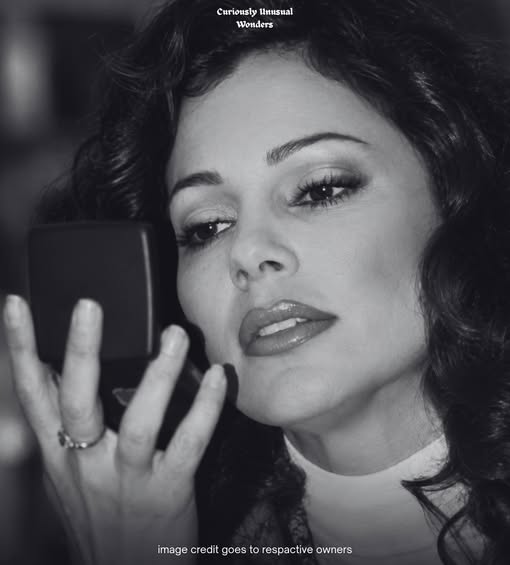
In 1998, Fran Drescher was untouchable.
She had created, produced, and starred in The Nanny — one of the most-watched sitcoms on the planet. Her character, Fran Fine, the big-hearted, loud, impossibly stylish woman from Queens, had made her a household name in over 60 countries. By the show’s final season, she was among the highest-paid actresses on American television.
From the outside, her life looked perfect.
Inside, something was quietly falling apart.
It started with symptoms that felt impossible to ignore — cramping, irregular bleeding, a persistent pelvic pain that didn’t respond to anything. She made an appointment with her doctor. Then another. Then another.
Each one ran tests. Each one delivered the same calm, confident verdict:
Perimenopause. Perfectly normal for your age.
She tried hormone replacement therapy, as recommended. It made things worse. The bleeding intensified. The pain didn’t ease.
“Something is really wrong,” she told doctor number six.
“You’re too young for anything serious,” he replied.
“You’re too thin to fit the cancer profile,” said another.
One doctor — and this part is not a joke — told her she was probably eating too much spinach.
For two years, Fran saw eight different doctors. None of them ordered the one test that could have answered everything: a simple endometrial biopsy.
She wasn’t a hypochondriac. She wasn’t overreacting. She was a woman describing real symptoms to credentialed professionals, and every single one of them sent her home.
Then she found doctor number eight.
This physician looked at two years of medical history — the dismissed symptoms, the failed treatments, the worsening pattern — and said four words that changed everything:
“Let’s do a biopsy.”
Three days later, the phone rang.
Uterine cancer. Stage I. Growing inside her for years while doctor after doctor told her she was fine.
She was 42 years old.
The surgery was successful. The cancer was removed. She was going to live.
But Fran couldn’t simply move on.
In 2002, she published a memoir — Cancer Schmancer — about navigating a medical system that had nearly cost her everything. She expected to share her story, promote the book, and get back to her career.
Instead, something happened at every single stop on her book tour.
Women lined up. Dozens of them. Then hundreds.
“My doctor told me I was too young.”
“They said it was stress. It was ovarian cancer.”
“Three years of symptoms before anyone ran a test.”
Her story wasn’t unique. It was everywhere. It was systemic.
Women were being dismissed across every age group, income level, and geography — and some of them were dying because of it.
Fran made a decision: she was not going to let that continue.
In 2007, she launched the Cancer Schmancer Movement, a nonprofit with one clearly defined mission — ensure that women’s cancers are caught at Stage I, when survival rates are highest. She didn’t write a check and step away. She became the organization. She lobbied members of Congress directly. She testified on Capitol Hill. She pushed until lawmakers passed the Gynecologic Cancer Education and Awareness Act into federal law — a national program dedicated to educating women about the warning signs of gynecological cancers.
The vote in Congress was unanimous. Not a single opposing voice.
Cancer Schmancer deployed mobile screening clinics into underserved communities, offering free mammograms and cancer screenings to women who had no other access. Thousands of women were reached. Some of them caught cancers early enough to survive.
She changed how a generation of women thought about their own health — not as patients who wait passively, but as informed consumers with the right to demand answers.
For years, she balanced advocacy with her entertainment career. Acting, voicework, Broadway. But the platform always served the mission.
Then, in 2021, she did something that surprised almost everyone.
She ran for president of SAG-AFTRA — the union representing 160,000 actors, broadcasters, and media professionals across America. Hollywood insiders were skeptical. The entertainment press was uncertain. Fran had never led a major labor organization.
She won anyway.
And in the summer of 2023, she showed everyone exactly why.
After negotiations with major Hollywood studios collapsed — over fair pay, streaming residuals, and the looming threat of artificial intelligence replacing human performers — Fran led SAG-AFTRA into the largest actors’ strike in the industry’s history. Forty thousand actors joined 11,000 striking writers. Hollywood shut down completely. No filming. No premieres. No press tours.
On the first day of the strike, Fran stood before the world’s cameras and delivered a speech that stopped people mid-scroll:
“How they plead poverty — while handing hundreds of millions of dollars to their own CEOs? It is disgusting. Shame on them.”
The internet erupted.
Even the skeptics went quiet.
David Simon, creator of The Wire, who had publicly doubted her leadership, wrote simply: “I’ll confess I thought she was a lost ball in tall grass. I was wrong.”
She showed up on picket lines every day. She refused every offer that fell short. She negotiated without blinking.
After 118 days, the studios gave in.
SAG-AFTRA secured historic gains: substantially higher pay, landmark protections against AI, improved residuals, and better working conditions across the industry. It was the most consequential labor victory in Hollywood’s modern era.
In September 2023, her members re-elected her with 81% of the vote.
Today, Fran Drescher is 68 years old. She has been cancer-free for 26 years. The organization she built from a book tour and a wave of shared grief has shaped national health policy and reached thousands of women who might otherwise never have been screened.
She leads one of the most powerful unions in entertainment.
And all of it — every bit of it — traces back to a single quality she has never been willing to surrender:
The refusal to accept being dismissed.
Eight doctors told her she was fine. She knew they were wrong, and she kept going until someone finally listened.
A medical system told women their symptoms didn’t matter. She changed the law.
Studio executives told actors to accept less. She said no — and won.
Fran Drescher was never just the woman with the famous voice and the iconic laugh.
She was always the woman who refused to be quiet until the room had no choice but to listen.