
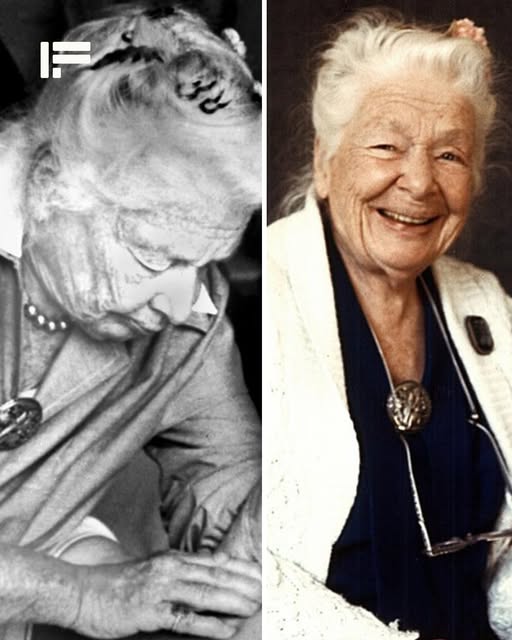
Women came to her with chronic pain doctors called “psychosomatic.” She found the physical cause medicine had ignored — and they dismissed her too.
In the 1940s, Ida Pauline Rolf had a problem that wouldn’t go away: she was a brilliant biochemist in a world that didn’t know what to do with brilliant women.
She had earned her PhD in biological chemistry from Columbia University in 1920 — one of the few women in her field. She had worked at the Rockefeller Institute. She had published research. She had the credentials, the training, the mind.
But chronic health issues — her own and her children’s — kept leading her to doctors who had the same response: rest. Wait. Accept it. There’s nothing structurally wrong.
Clean X-rays. Normal blood work. No visible pathology.
The implicit message: maybe it’s in your head.
Ida Rolf didn’t accept that answer. She was a scientist. If the pain was real — and she knew it was — there had to be a physical mechanism medicine was missing.
So she started looking where nobody else was looking: at fascia.
Fascia is the dense, fibrous connective tissue that wraps around every muscle, organ, nerve, and bone in the body. It’s everywhere — a continuous web that holds you together, transmits force, and shapes your structure. In the 1940s, medical schools barely mentioned it. It was considered inert packing material, something you cut through to get to the “important” stuff during surgery.
Rolf saw something different. She saw fascia as dynamic, adaptive, and capable of holding patterns — patterns created by injury, posture, repetitive stress, and emotional trauma. When fascia tightened and reorganized around these patterns, it pulled the body out of alignment. And that misalignment created pain that no X-ray would ever show.
Women came to her with stories doctors had stopped listening to.
Shoulders that never relaxed. Hips that felt crooked. Backs that ached without visible injury. Necks that couldn’t turn fully. Chronic headaches. Jaw pain. Pelvic pain. Exhaustion from holding their bodies together against invisible forces.
They had been told: lose weight. Exercise more. Take a vacation. See a psychiatrist. It’s stress. It’s hormones. It’s menopause. It’s motherhood. It’s life.
The subtext was always the same: you’re unreliable. Your pain isn’t real. You’re exaggerating. You’re too emotional. You’re a difficult patient.
Ida Rolf believed them.
She developed a method she called Structural Integration — a systematic approach to releasing fascial restrictions through deep, sustained manual pressure. She worked methodically through the body in ten sessions, each targeting specific fascial layers and regions. The goal wasn’t relaxation. It was reorganization.
And it hurt.
Rolfing wasn’t gentle. She pressed deeply into tissue, holding pressure until the fascia released. Patients cried. They trembled. They had emotional breakthroughs as their bodies let go of patterns they’d been holding for decades.
But when they stood up afterward, something had shifted. Shoulders dropped. Spines lengthened. Hips balanced. Pain that had been constant for years eased or disappeared entirely.
The women whose suffering had been dismissed as psychosomatic were getting structurally better. Their bodies were changing shape. Their movement was improving. The pain was real, the cause was physical, and the treatment worked.
Ida Rolf tried to bring her work to the medical establishment.
They rejected her completely.
She was a woman. She didn’t have a medical degree. Her method was based on manipulation of tissue doctors considered irrelevant. She talked about “energy” and “gravity” and “structural integration” in ways that sounded unscientific. And worst of all, she was claiming to cure conditions medicine had already categorized as psychosomatic — which implied doctors had been wrong.
The medical community called her a quack. They dismissed Rolfing as pseudoscience, dangerous manipulation, and exploitative bodywork preying on desperate patients. Some doctors warned people to stay away from her.
But the people she helped kept coming. And they kept getting better.
Throughout the 1950s and 60s, Rolf trained practitioners, refined her technique, and built a following — mostly among people medicine had failed. Dancers and athletes came because they understood bodies in ways doctors didn’t. People with chronic pain came because they had nowhere else to go.
Women came because Ida Rolf was one of the only people who believed them.
She was uncompromising, intense, and absolutely convinced she was right. She didn’t soften her approach to make doctors comfortable. She didn’t apologize for lacking an MD. She kept working, kept teaching, kept proving that the pain medicine dismissed was structurally real.
And slowly, science began to catch up.
In the 1970s and 80s, researchers started studying fascia seriously. They discovered it wasn’t inert — it was rich with nerve endings, mechanoreceptors, and cells that responded to mechanical stress. They found that fascial restrictions could create referred pain, limit range of motion, and alter movement patterns. They confirmed what Rolf had been saying for decades: fascia mattered.
By the 2000s, fascia research had exploded. Biomechanics labs were mapping fascial networks. Physical therapists were incorporating fascial release into treatment. Medical textbooks were updating their anatomy sections. Scientists were publishing papers on fascial plasticity, myofascial pain syndromes, and the role of connective tissue in chronic conditions.
Ida Rolf had been right all along.
Today, Rolfing is practiced worldwide. The Rolf Institute trains certified practitioners. Research continues to validate the biomechanical principles underlying her work. Fascia is now recognized as a key player in chronic pain, postural dysfunction, and movement disorders.
But here’s what still needs saying: Ida Rolf’s story isn’t just about fascia. It’s about who gets believed.
Women are significantly more likely than men to have their pain dismissed, minimized, or attributed to psychological causes. Studies show women wait longer in emergency rooms, receive less pain medication, and are more likely to be prescribed psychiatric drugs for physical symptoms. Chronic pain conditions that predominantly affect women — fibromyalgia, endometriosis, chronic fatigue syndrome — took decades longer to be taken seriously than comparable conditions affecting men.
Ida Rolf saw this pattern in the 1940s. She saw women being gaslit by a medical system that didn’t have the tools — or the interest — to understand their suffering.
And when she developed those tools, when she found the physical mechanism medicine had missed, the same system dismissed her too.
A PhD biochemist with reproducible results was called a quack because she was a woman working outside traditional medical hierarchies, treating a patient population medicine had already decided was unreliable.
It took decades for science to validate what she and her patients already knew: the pain was real. The tissue held the story. The body could be reorganized. And women weren’t making it up.
Ida Pauline Rolf died in 1979 at age 83. She lived just long enough to see her work begin to gain scientific recognition, but not long enough to see fascia become a major field of research.
She spent most of her career being dismissed by the very establishment she had been trained in.
But she kept working. She kept believing her patients. She kept insisting that invisible pain deserved visible solutions.
And she proved that the most profound healing often begins not with a diagnosis written by someone who doesn’t believe you, but with someone who listens — to your body’s structure, its silent stories, and the tissue that remembers what medicine chose to overlook.