
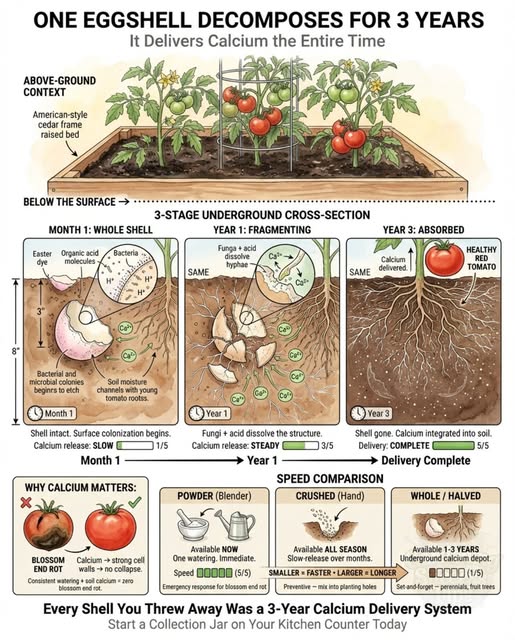
The eggshell you buried beside your tomato plant isn’t sitting there doing nothing. It’s dissolving. Molecule by molecule. And it’s going to keep going for roughly three years.
The first month, the shell is still intact underground. But soil bacteria and organic acids are colonizing the surface and releasing the first calcium into the surrounding moisture. Nearby roots detect it and grow toward the shell.
By year one, freeze-thaw cycles, fungi, and moisture have fragmented the shell. Each fragment exposes fresh surface area. The release accelerates.
By year three, nothing remains but a faint white trace in the soil. The calcium has passed into the cell walls of every plant that rooted near it.
The size controls the speed:
– Whole shell buried near a fruit tree or perennial — delivers calcium for multiple seasons with zero effort
– Crushed to rice-grain size and mixed into the planting hole — releases over a full growing season
– Ground to powder in a blender — dissolves in days. The fast response when blossom end rot appears on your tomatoes
The smaller the piece, the faster the calcium arrives. The bigger the piece, the longer it lasts.
One breakfast eggshell. Three years of delivery.