
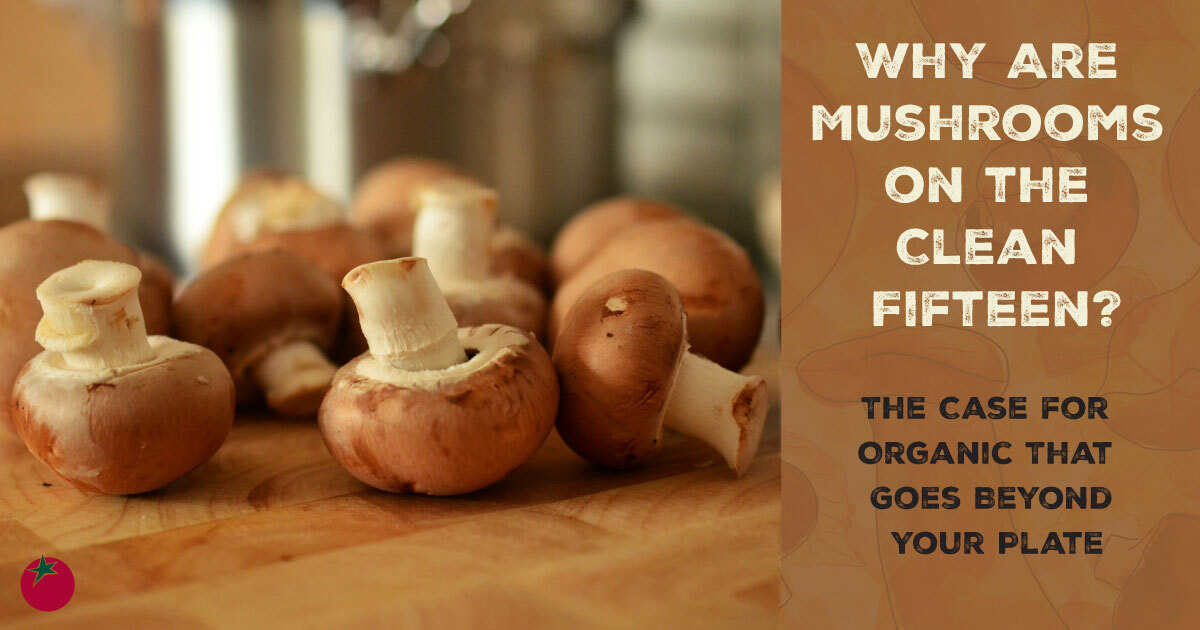
The Environmental Working Group puts mushrooms on the Clean Fifteen at #14 among fruits and vegetables with the lowest pesticide residues, but this doesn’t mean mushrooms don’t have pesticide residues.
The U.S. government’s Pesticide Data Program found residues of the anti-mold pesticide thiabendazole in 54.5 percent of conventionally grown mushrooms.
The EPA classifies thiabendazole as likely to be carcinogenic when doses are high enough to disrupt thyroid hormones. According to the EPA’s assessment, thiabendazole also harms the immune and nervous systems. The European Food Safety Authority determined that thiabendazole is associated with adverse effects on thyroid hormone function. If we’re concerned about the health effects on farm workers and rural communities in addition to consumers, we shouldn’t just be looking at pesticide residues per pound of produce, we should also be looking at pesticide usage per acre of farmland.
If you look at pesticide residues per pound of produce, as the Environmental Working Group does, mushrooms make the Clean Fifteen, but if you look at pesticides per acre of farmland, as the Pesticide Action Network has done, mushrooms would be #2 on the Dirty Dozen, second only to potatoes.
We need to keep in mind that the damage from conventional farming doesn’t end at our plates — even produce that tests residue-free was grown with chemicals that poison our waterways, deplete our soil, and silently devastate wildlife along the way. The organic food we purchase or grow isn’t just a personal health choice, it’s a vote for and a contribution to a food system that doesn’t gamble with humanity’s most critical medicines — or the health of the planet we all share.