Your raised bed sits empty from October to April. That’s half the year producing nothing from the same soil, same space, same sun.
One bed can run three rounds in a season. Cool crops, warm crops, cool crops again — each round feeding the next.
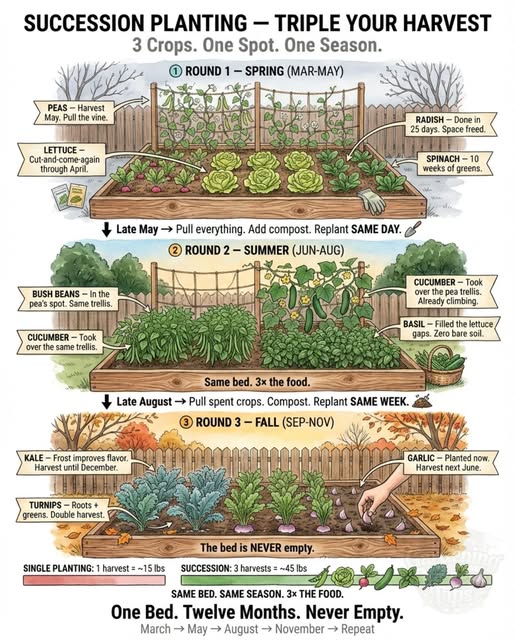
 Round one — spring:
Peas on the trellis, lettuce in rows, spinach in the gaps, radishes in every open inch. These crops want cold soil and finish by late May. When the peas come out, the nitrogen-fixing nodules stay behind in the roots — free fertilizer for what comes next.
Pull everything in late May. Add an inch of compost. Replant the same day.
Round two — summer:
Bush beans go in the pea spot and feed on the nitrogen the peas left. Cucumbers grab the same trellis. Basil fills the lettuce gaps and thrives in the heat that killed the greens.
This round finishes by late August. Same routine — pull, compost, replant within the week.
 Round three — fall:
Kale goes in September and tastes better after frost converts its starches to sugar. Turnips give you a fast root crop with edible greens — two harvests from one plant. Garlic goes in October, roots before winter, and you harvest it the following June.
The bed carried food from March through November and has garlic overwintering for next year.
Three rounds. Same soil. Each crop leaves something behind for the one that follows — nitrogen, trellis infrastructure, loosened soil, residual compost. The bed gets more productive each cycle, not less.
Same square footage. Roughly triple the harvest.