
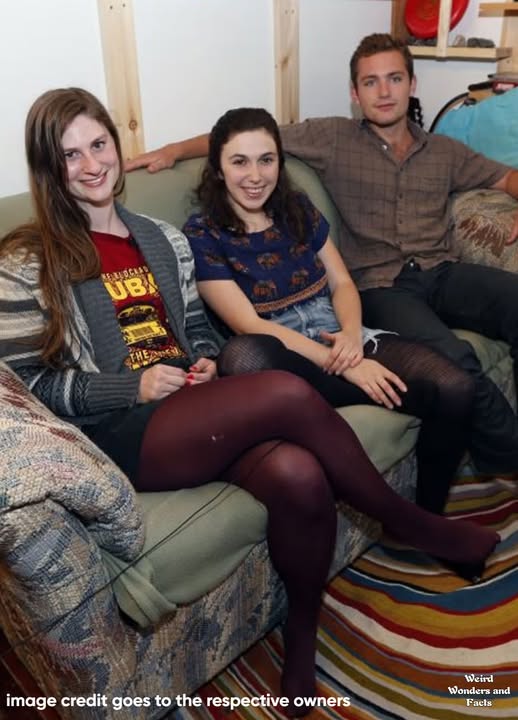
Reese Werkhoven and his roommate Lara Russo were sitting on their recently purchased couch one night in April 2014, watching a Harry Potter movie, when the cushions started bothering him enough to do something about it. The couch was lumpy. It had been lumpy since they bought it at a Salvation Army store in New Paltz, New York, a month earlier for twenty dollars. He unzipped one of the cushions to see what was making it uncomfortable and found a small package wrapped in bubble wrap.
He later described his first thought: it might be drugs, it might be money, they were getting scared about it.
It was money.
He and Russo called their third roommate Cally Guasti in, and the three of them started finding more. Envelopes, one after another, tucked inside the cushions and inside the arms of the couch. They piled everything on a bed and counted it. The total was $40,800.
Their neighbours heard the shouting from their apartment and assumed someone had won the lottery.
The three of them spent several days discussing what to do. They had real conversations about the moral question, and they admitted later that they considered keeping it. They were in college or recently graduated. None of them had much money. Forty thousand dollars was a life-changing amount. One of them said later that there were a lot of gray areas to consider.
Then Guasti found a bank deposit slip inside one of the envelopes with a woman’s name on it.
Werkhoven called his mother for advice. She tracked down a phone number and texted it to him. He called the number, heard an elderly woman answer, and hung up. He called back and told her he had found something that he thought might be hers. She told him she had a lot of money in that couch and that she really needed it.
He drove with his roommates to her home the next day.
The woman, who has asked to remain anonymous, was 91 years old.
She was a widow with a recently broken hip. Her family had donated the couch to the Salvation Army while she was in hospital, not knowing what was inside it. The money was decades of savings — including wages from years of work as a florist — that she had been hiding in the couch at the encouragement of her late husband, who had worried about what would happen to her after he was gone. She had slept on that couch for years. When her back problems became serious, her family replaced it with a bed and the couch went to the charity shop.
She cried when the three roommates handed her the money.
She told them that it was her husband looking down on her, and that this was supposed to happen.
She gave them a reward of one thousand dollars. They kept the couch.
The three of them — Werkhoven, Guasti, and Russo — were college students and recent graduates in upstate New York who bought a secondhand piece of furniture because they needed somewhere to sit. What they ended up with was the specific knowledge that when it actually cost them something, they did the right thing.
Werkhoven said simply: it’s not our money. We didn’t have any right to it.
Guasti said, “At the end of the day, it wasn’t ours.”
There is nothing more to add to that.
Share this with someone who needs a reminder today that ordinary people make extraordinary choices all the time, without cameras or applause, because it is simply what you do.
Weird Wonders and Facts