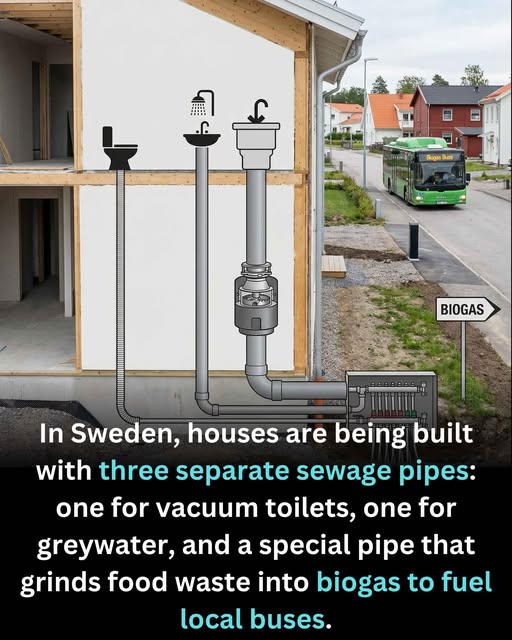
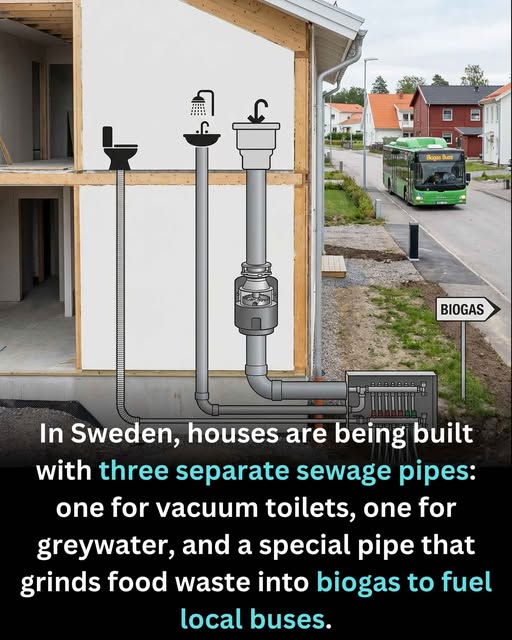
In parts of Sweden, modern homes are being designed with a plumbing system that goes far beyond traditional sewage. Instead of a single wastewater outlet, these houses are constructed with three separate pipes serving distinct purposes. One line connects to vacuum toilets that use minimal water and transport waste efficiently through suction. A second pipe carries greywater from showers and sinks to be treated and reused. The third is dedicated to food waste, which is ground and sent to biogas facilities.
This separation allows each waste stream to be processed in the most effective way. Organic kitchen scraps are converted into renewable biogas, which can power local buses and reduce reliance on fossil fuels. Greywater can be cleaned and redirected for non-drinking purposes, conserving fresh water supplies. Even toilet waste is handled more efficiently through vacuum technology.
By redesigning something as ordinary as plumbing, Sweden turns everyday household activity into part of a circular energy system. Kitchens help fuel transportation. Showers contribute to water conservation. Toilets use less water without sacrificing function. The result is housing that quietly supports sustainability — proving that environmental innovation can begin beneath the floorboards.