You just brought in a gorgeous harvest of squash and onions, and your first instinct is probably to rush them somewhere cold. Stop right there! That instinct could ruin half your hard work.
Before they go into long-term storage, many crops need a crucial resting phase called “curing.“ Curing is a magical window where warm air helps wounds seal, skins toughen, and delicious sugars develop. Skip this step, and your vegetables are highly vulnerable to rot. Give them a little time, and your harvest will easily last straight through the winter!
Here is how to properly cure these essential garden crops—and what happens if you don’t:
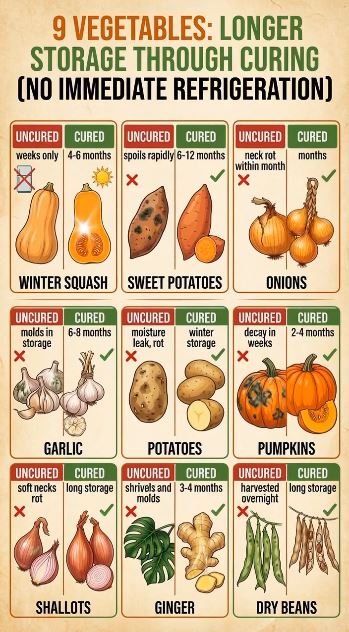
Most Winter Squash & Pumpkins: Let them bask in a warm, dry spot for about ten days. The stem scars will seal and their rinds will harden beautifully. After that, a cool, dry room will keep them fresh for months.
Sweet Potatoes: These favorites need about a week to ten days in a warm, humid spot. Why? This is when their starches convert to sugars! Freshly dug sweet potatoes taste surprisingly starchy, but properly cured ones are incredibly sweet.
Onions & Shallots: Spread them out in a single layer with plenty of airflow for two to three weeks. You’re waiting for the necks to dry completely and the outer skins to turn delightfully papery. A soft neck in the pantry means rot can easily spread through your whole batch.
Garlic: Hang your bulbs in the warm shade for two to four weeks. As they cure, the outer wrappers dry out and those signature, punchy flavor compounds concentrate. A properly cured bulb in a breathable mesh bag will easily outlast anything you keep in the fridge.
Potatoes: These need a slightly different approach—cooler, not warm! Keep them in complete darkness at around 50 to 60°F for about two weeks. The skins will develop a protective, corky layer that locks in moisture for the long haul.
Ginger: Give fresh ginger a few days of air-drying at room temperature to heal any broken edges and thicken the skin before storing. A short cure makes a massive difference in how long it lasts!
Dry Beans: Let them stay right on the vine or hang them indoors until you can hear the beans rattling inside their pods. If you store them even a little bit damp, mold will quickly take over.
Warm air, a little patience, and perfectly sealed skins—give your harvest exactly what it needs, and your cool winter pantry will work exactly like a charm!