
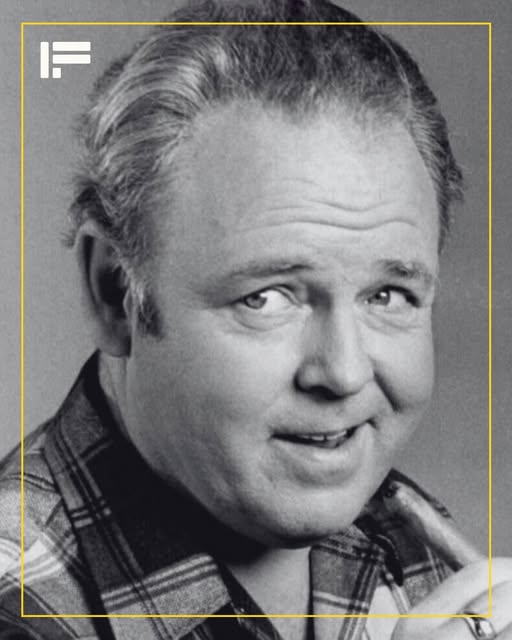
Carroll O’Connor buried his son in 1995, then walked into court and spoke drug dealers’ names out loud, turning private grief into a public fight that Hollywood largely avoided.
Most Americans knew Carroll O’Connor as Archie Bunker, the loud, abrasive television character whose bigotry was exposed through satire. Offscreen, O’Connor was almost the opposite: disciplined, private, intellectually rigorous, and deeply protective of his family. That distinction mattered when tragedy entered his life for real.
In March 1995, his son Hugh O’Connor was found dead in his Los Angeles apartment. He was thirty-three years old. The cause was a heroin overdose. Hugh had struggled with addiction for years, cycling through rehabilitation programs, relapses, periods of sobriety, and setbacks. Carroll and his wife, Nancy, spent enormous sums on treatment, medical care, and legal help, believing that persistence and resources could overcome the disease.
They could not.
Instead of retreating from public view, O’Connor did something few celebrities dared to do. He spoke openly and angrily. He publicly named individuals he said supplied the drugs that led to his son’s death. He repeated those names in interviews and in print. One of the men sued him for defamation.
O’Connor did not retract his statements. He welcomed the case.
In 1997, a jury ruled in O’Connor’s favor, finding that his claims were substantially true. The individuals involved were later convicted on drug-related charges. The courtroom became a place not just of mourning, but of record-making.
The choice came at a cost. Hollywood was comfortable discussing addiction only when it remained abstract or safely personal. O’Connor refused both. He testified before Congress, called for stronger enforcement against drug traffickers, and criticized systemic failures in law enforcement without euphemism. He framed addiction not as a moral failing, but as a medical condition exploited by criminal networks.
He did all of this while continuing to work.
O’Connor returned to television in In the Heat of the Night as Chief Bill Gillespie, a role marked by restraint, authority, and moral gravity. It stood in sharp contrast to Archie Bunker’s volatility. The performance earned him another Emmy and revealed an actor channeling grief into control rather than rage.
Privately, the loss never eased. The stress took a physical toll. O’Connor underwent multiple heart surgeries and lived with chronic pain, yet continued speaking publicly about addiction and accountability. He insisted that silence protected the wrong people and that naming systems mattered more than protecting reputations.
Carroll O’Connor died in 2001 at the age of seventy-six.
He is often remembered for Archie Bunker. That memory leaves out the harder chapter, when he chose confrontation over comfort and accuracy over discretion. Faced with a loss that satire could not soften, O’Connor used his voice not to perform, but to force attention onto a reality many preferred to keep unseen.
He understood something fame often hides:
Silence shields systems.
Naming names forces reckoning.