
His employees got thrown in an Iranian prison. He hired Special Forces to break them out.
A $1,000 investment created a man who almost became president.
Ross Perot was 32 years old.
He quit IBM in 1962. Started Electronic Data Systems with nothing but an idea and a thousand bucks.
Everyone said he was crazy.
“Why would you leave the best sales job in America?”
“Data processing? Nobody’s buying that.”
“You’re throwing away your career.”
He didn’t listen.
But here’s what nobody tells you. They were almost right.
Perot was rejected 77 times before landing his first contract.
Seventy-seven nos. Most people quit after five. Maybe ten.
He kept going.
By 1968, EDS went public. The stock opened at $16. Within days it hit $160.
Forbes called him “the fastest, richest Texan.”
By December 1969, his shares were worth $1 billion.
Then April 1970 happened.
In a single day, Perot lost $445 million on the stock exchange.
The biggest individual loss in NYSE history at that time.
Wall Street laughed. “The Texan got what was coming to him.”
Most people would have crumbled. Sold everything. Gone back to a safe job.
Perot? He just kept building.
Fourteen years later, he sold EDS to General Motors for $2.4 billion.
But that’s not what makes this story interesting.
In 1979, a young Bill Gates approached Perot about buying Microsoft. A tiny software company worth maybe $2 million.
Perot thought the asking price was too high.
He passed.
Microsoft is now worth over $3 trillion.
Perot called it “one of the biggest business mistakes I’ve ever made.”
But here’s what separates good entrepreneurs from great ones.
When Steve Jobs got fired from Apple in 1985, he started a new company called NeXT. Everyone said Jobs was finished. Washed up. A has-been at 30.
Perot watched a PBS documentary about Jobs. Called him the next morning.
“If you ever need an investor, call me.”
Perot invested $20 million into NeXT. Took a board seat.
He didn’t want to miss another Microsoft.
NeXT struggled. The computers didn’t sell. Most people would have written it off as a loss.
But in 1996, Apple bought NeXT for $400 million. Jobs came back.
NeXT’s software became the foundation for macOS. And later, the iPhone.
Perot’s “failed” investment helped create the most valuable company on Earth.
But he wasn’t done.
In 1979, two of his EDS employees were arrested in Iran during the revolution. The government wanted $12.7 million in ransom. The U.S. couldn’t help.
Most CEOs would have hired lawyers. Waited it out. Let bureaucracy run its course.
Perot hired a retired Special Forces colonel. Assembled a team of Vietnam veterans who worked for EDS. Flew to Tehran himself.
When negotiations failed, his team helped start a prison riot. 11,000 inmates escaped. Including his two employees.
They drove 500 miles overland to Turkey.
All of them made it home.
Hollywood made a miniseries about it. Ken Follett wrote a bestseller.
Then came politics.
In 1992, Perot announced he was running for president. As an independent. No party. No political machine.
Everyone said it was impossible.
“Third-party candidates never win.”
“He’s wasting his money.”
“Americans don’t vote independent.”
At one point, Perot led the polls. Ahead of both George Bush and Bill Clinton.
He dropped out in July. Came back in October.
Still got nearly 20 million votes. 19% of the popular vote.
The most successful third-party candidate since Theodore Roosevelt in 1912.
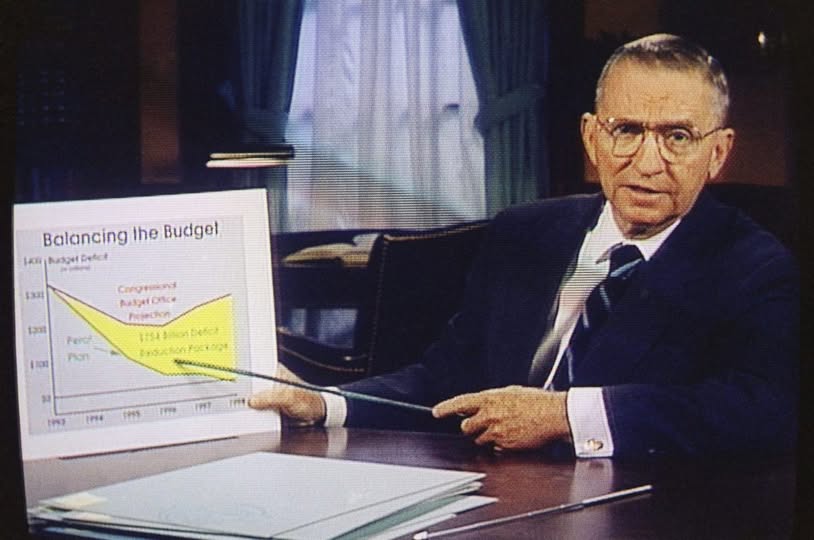
He changed how campaigns worked. Used TV infomercials instead of rallies. Spoke directly to voters on talk shows. No handlers. No scripts.
He ran again in 1996. Got 8% of the vote.
Never won an election. Never held office.
But here’s what people miss.
Perot didn’t run to win. He ran to prove a point. That ordinary Americans were tired of being ignored. That you didn’t need permission from the political establishment to have a voice.
When he died in 2019, he was worth $4.1 billion.
Started with $1,000.
Rejected 77 times.
Lost $445 million in a single day.
Missed Microsoft.
Got called crazy for running for president.
Still built companies that sold for billions. Still rescued his people from a foreign prison. Still changed American politics. Still helped fund the technology that powers every iPhone on the planet.
What rejection are you letting stop you?
What “failure” are you treating like the end?
Perot got rejected 77 times before his first yes.
He lost almost half a billion dollars in one day and kept going.
He missed the biggest investment opportunity in tech history and still funded the next one.
He ran for president twice without winning and still made history.
Stop counting your losses.
Start counting your attempts.
The guy who got told no 77 times built a multi-billion dollar empire, bankrolled the iPhone, and ran for president.
Your “impossible” goal doesn’t look so impossible anymore, does it?
Think Big.