
10 Prepping mistakes to avoid before SHTF

Prepper Survival Man

Ignoring the basics

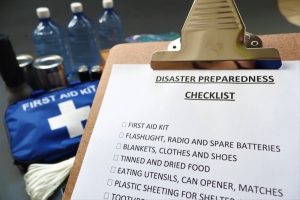
Before even touching the more complicated aspects of being a prepper, you should make sure to have your fundamental prepping skills covered. Some of these basic skills include first aid and emergency medical care, water purification, food preservation and fire-making.

Going over your budget

Prepping is undoubtedly an investment, but that doesn’t mean you should have to spend beyond your means. It is possible to prep even while on a tight budget. However, you may have to change your spending habits and plan your expenses ahead of time. Remember to stick to your budget and buy only what you need – your wants can (and should) wait.

Focusing on supplies instead of skills

No matter how much survival gear you stockpile, you can’t use an abundance of supplies to compensate for a lack of skill. Prepping equipment can be destroyed, lost or stolen, but as long as you regularly practice your survival skills, they can never be taken away from you. Invest in skills more than supplies. This can also help you stay within your budget.

Ignoring your health

It is easy to take your health for granted, but when SHTF, physical fitness is crucial to your survival. Staying in peak physical condition means that you will have a much easier time lifting heavy objects, traversing difficult terrain and outrunning your enemies. Simply put, your chances of survival are greater if you’ve been living a physically active lifestyle rather than a sedentary one. (Related: Why physical fitness is crucial for survival (and why all preppers need to take good care of their bodies).)

Not properly rotating your food supply

A common problem with long-term food storage is that once you’ve bought it and placed it in the pantry, you tend to forget about it until an emergency happens. By the time one does occur, the food might have already gone bad. You can avoid this problem by making an inventory of all the food you buy and marking their expiration dates. If you stock up on raw ingredients, it is also useful to learn how to make meals from scratch. You can also supplement your food supply by learning how to fish, hunt and forage for food.

Overlooking your local SHTF situation

Not all survival situations will happen on a large scale. Sometimes, a crisis may only affect your local community, your family or even just you specifically. Just because a crisis doesn’t affect everyone else doesn’t mean you should underestimate it. Give it your proper attention and resolve it immediately.

Trying to convince everyone to be preppers

You think you might be doing everyone a favor by trying to convince them to prepare for some unseen future disaster, but it’s probably not worth your time and effort to “convert” these people. Unfortunately, not everyone is fit for the prepping lifestyle or willing to actively engage in it. You’re more likely to end up outing yourself as a prepper.

Preparing for only one kind of disaster

Even if your specific location is only prone to a single type of disaster, anything can still happen, so you should be able to change your plans accordingly. Think about all the possible scenarios that could happen and create contingency plans in case anything goes wrong.

Not putting in the hard work

No one simply becomes a prepper overnight. True prepping is a full-time commitment that requires a lot of planning and effort. If you want to reap the rewards, you need to first put in the hard work. This often entails setting up your bug-out location, tending to your edible garden, crafting DIY prepping equipment and practicing your prepping skills. It’s also easy to become complacent by thinking that you’ve already “prepared enough,” so sharpen those survival skills to avoid getting rusty.

Trying to do too much all at once

On the other side of the spectrum, you could fall into the trap of doing too much all at once. If you take on more tasks than you can handle, you’re more likely to end up starting too many prepping projects and finishing none of them. You could also end up rushing through your tasks, which could result in costly mistakes in the long run. Pace yourself and learn to organize your priorities. This will help you go through your tasks more efficiently.

Even if you’ve committed any of these prepping mistakes in the past, all that matters now is that you’ve learned from them and can properly avoid them in the future.

https://newstarget.com/2020-01-28-10-prepping-mistakes-to-avoid-before-shtf.html

How To Prep For A Detox

There are several things you can do prior to doing a detox that will minimize the stress on your body as it gets rid of toxins and parasites. It will also maximize your chances of enjoying a successful detox.

1. Increase your intake of natural or purified water to aid the flushing out of toxins and normal waste.
2. Reduce or eliminate your intake of refined sugars and processed foods.
3. Replace them with plenty of organic fruit and vegetables, grass-fed meat and wild caught (not farmed) fish.
4. Add some probiotics and different varieties of fermented foods to your diet.
5. Make a list of your personal care and household products. Check each on the database maintained by the Environmental Working Group at https://www.ewg.org/skindeep/ to see how it fares for toxic load. Make a shopping list to replace the ones that fail.
6. If you are constipated, fix it naturally. One way is to consider adding seeds and nuts to your diet. Chew them really well to avoid them being too abrasive on your gut and if you have time, soak them overnight to leech out the enzyme blockers so you get full value from their nutrients.
7. Get the body moving. Even walking for 10,000 steps a day is a significant boost to your circulation. It you are already active, take it up a notch.

If, while reading this, you thought, “That would be good to do at any time, not just prior to a detox!” give yourself an extra 5 points!

If you thought, “I’m already doing all of that!” give yourself another 10 points!

Trouble In Peru

Trouble In Peru

As these shortages roll out there are not going to be many places where there is not trouble! Make sure you start laying in extra supplies for you and your family.

Poisoned And Distracted

Poisoned And Distracted

Here is a great newsletter from Dr Keith Scott-Mumby. I think he is spot on the money, again!

Why Would You Buy a Pair of Panties You Didn’t Need?

Hold my hand while we go for a walk… and then I’ll tell you where we are going, and why!

A man called Alan Titchmarsh is a pretty big cheese on English TV. He started out as a TV celebrity gardener and was very good. Eventually he got an amusing gig called Ground Force, in which he revealed his incredible sense of humor.

Alan Titchmarsh is these days rightly considered a UK “national treasure”!

That was no doubt a factor in him getting to become a TV presenter. I followed his career, because I love gardening, and eventually Alan got to head up a major BBC lunchtime non-gardening initiative called “Pebble Mill At One” (Pebble Mill was the BBC headquarters in Birmingham but shown nationally across Britain).

So I was quite impressed when I was invited on to his show, to explain about food allergies. We had a feature case, a delightful lass called Josie, who had been the center of media attention that week, because I had found and proven that she got drunk (yes, intoxicated) eating potatoes.

Not so weird, I had plenty of cases like that; different foods, of course. As I explained to Alan on air, a food allergen will act like a toxin and if it poisons certain parts of the brain, like alcohol does, a person will be first stimulated (like somebody inebriated or silly) and then pass out (drunk under the table, as we say), as it gets worse.

We did nearly an hour of live TV on this theme.

With me so far?

Well, Alan has a great new TV series called “Love Your Weekend”, on Sunday mornings. And it so happens I can get the program on my French TV. Once again, it’s a magazine format and his guests are many, varied and interesting.

BUT—and a big BUT (no sniggering at the back)—I am dismayed to find the chief sponsor for his program is Jeyes Fluid, the chemical firm.*

Not just that but their ad slogan is “clean space, clear mind”. THAT I strongly object to; it’s a lie (and now we’ve arrived at our destination):

Chemicals do NOT and never will = clear mind. I have had thousands of patients knocked silly by ambient chemicals in the environment, to the point of not being able to think straight. I’m going to stand up for them.

I was one of the first pioneers among doctors finding and treating patients with environmental chemical sensitivity (ECS). In time it became obvious that some individuals were sensitive to environmental chemicals. It is hard to describe this as an allergy; probably the term ‘low-grade poisoning’ would be better since many of these chemicals would make anyone exposed to them in sufficient concentration feel ill.

The problem is just that certain individuals react to smaller doses. We are all subject to a barrage of alien chemicals in our bodies (Greek word: xenobiotics, meaning alien to life). We have chemical pathways in our bodies designed to remove toxic substances: a process called detoxication or more correctly biotransformation. The trouble is these new man-made chemicals have no equivalent in nature and so we do not have the right systems in our body to fully eliminate the toxicity. In fact, in its attempts to deal with the problem the body sometimes, by mistake, actually coverts these xenobiotics into something even more toxic1

It’s a self-perpetuating problem, since the alien chemicals can poison the enzyme pathways that are there to remove them. The result is that sick and sensitive people get sicker and sicker. Pioneer UK psychiatrist Richard Mackarness christened these patients “chemical victims.”2

The media used extreme phrases like “allergic to the twentieth century” and there is no doubt that for these sufferers, our modern techno-chemical society is a nightmare. Increasing numbers of people simply cannot accommodate the everyday load of ambient chemicals and it begins to undermine their health in many unsuspected ways.

In my radical 1986 book Allergies: What Everyone Should Know (London, Unwins) I introduced the term “human canaries”. The phrase seems to have caught on. This likens chemically sensitive people to the canaries taken down mines in olden days. If the bird fell dead it meant that the air was dangerous and a warning to humans to get out fast. It seems to me that we have many human canaries today but few people are heeding the warnings.

Let me give just one case example: a very pleasant lady who simply could not cope with fabric treatment chemicals. She would go in to a clothing shop and before she had walked 10 paces, she would forget why she was there! So she would pick a pair of cheap panties, pay and leave, thoroughly humiliated.

She probably had more pairs of knickers than Imelda Marcos had shoes!

Overload

The phenomenon of chemical overload and the chemically-sensitive patient is one that we have created for ourselves with our advanced lifestyle. Toxic volatile chemicals, such as benzene, formaldehyde, methacrylate, tetrachloroethylene, toluene, xylene, naphthalene, phthalates and styrene, can come from many sources in the home (this particular list of substances are all given off by new carpets).

Then there are more chemicals at work; some are recognized occupational hazards and strictly controlled, but the majority are not considered “occupational”: photocopy fluid, glues, plastics, paper treatments, inks, dyes, fabric treatments, flame-proofing, and so on.

I particularly object to the concept of spoofily-named “air fresheners”, when all they do is add more chemicals to the air, in an attempt to disguise existing contaminants. It is rather like taking dirty trench water to wash away stains — “Not logical”, as Mr. Spock (Leonard Nimoy, not Dr. Spock the pediatrician) would have said.

In my view it is unarguable that we will all go under if we don’t soon start to reduce the total chemical load in our environment. This is not merely green politics but an out and out survival issue. There is dirty work afoot and that, of course, means Big Business dollars getting in on the act and perverting truth. We are told we need most of this chemical junk, that pesticides “save lives” and “help grow more crops”, which we need to feed the planet, and so on.

I am not in the agribusiness, I’m a doctor. My take on this is very simple and very blunt: the word “pesticide” is a con trick. Plant and animal physiology does not recognize human value judgements, such as “useful” and “nuisance” life forms. The correct word is biocide, which means that it kills any life (including us), not just pests.

And there’s another con trick the spin merchants work on us: the idea of “responsible” or “controlled use” of toxic substances and talk of “reducing” usage levels is meaningless and dishonest: chemicals in the environment persist. Last year’s output is added to that of the year before, to this year’s, next year’s and so on. It’s cumulative.

There are already enough xenobiotic substances in our environment, working their way through the water table and eco-system, to keep us all sick for decades, even if output was curtailed tomorrow, which you will agree is a pretty unlikely event in any case.

Sorry Alan, for this outpouring. I love you and your sense of humor. I listen in rapt awe when you talk about plants. But pick your backers more carefully, please! They are trying to piggy-back you to get the “green” ticket!

To your good health,

Prof. Keith Scott-Mumby
The Official Alternative Doctor

References:

1. Casarett and Doull’s Toxicology. Basic Science of Poisons. Third Edition, Editors: Klaasen CD, Amdur MO, Doull J, Macmillan, New York 1986.

2. Mackarness R. Chemical Victims, Pan Books, London, 1980.

*Footnote: Jeyes Fluid is a brand of disinfectant, patented by John Jeyes in 1877, and granted a Royal Warrant to the British Royal Family in 1896. While no longer used for this purpose, Jeyes Fluid has been used in historical medical treatments: patients were once bathed in water with Jeyes Fluid added, as an antiseptic treatment. It contains chlorocresol (ugh!), tars, phenols and iso-propyl alcohol (batty Hulda Clark would turn over in her grave!)

US Life Expectancy Continues Historic Decline in 2021

US Flags In Ground

(Tom: I have seen three great videos of Catherine Austin Fitts. One where she labelled the rise in toxins and the drop in food nutrients over the last 30 years as “the great poisoning”. The writer of the article lays the rise in deaths at the foot of Covid. Evidence points to the deliberate denial of effective early treatments and the continuing administration of non-effective, lethal “treatments” as the reason for so many deaths ascribed to Covid.)

Life expectancy in the United States took another hit in 2021, furthering a dramatic decline from 2020 that was the largest since World War II, according to a new report.

The study — published Thursday on the preprint server medRxiv, which means it has not been peer-reviewed — found that after falling nearly 1.9 years in 2020, life expectancy in the US decreased another 0.4 years in 2021 as Covid-19 continued to spread.

“Although the introduction and availability of effective vaccines were expected to curb US mortality rates in 2021, slow vaccine uptake and the spread of the Delta variant produced large surges in mortality,” the researchers wrote.

With a brief exception in the summer of 2021, Covid-19 has consistently been one of the top three causes of death for the past two years in the US, an analysis from the Kaiser Family Foundation shows.

In the decade before the pandemic, life expectancy in the US changed by an average of less than 0.1 years annually, according to data from the US Centers for Disease Control and Prevention.

Changes to life expectancy amid the Covid-19 pandemic widened an existing gap between the US and other high-income countries, the new report shows. Among a set of 19 peer countries, life expectancy dropped only a third as much as in the US in 2020 (down 0.6 years, on average) and rebounded in 2021, with an average increase of about 0.3 years.

https://www.msn.com/en-us/news/us/us-life-expectancy-continues-historic-decline-with-another-drop-in-2021-study-finds/ar-AAVZ2Zu

OZ SCIENTISTS PRODUCE EVIDENCE OF NANOTECH & GRAPHENE OXIDE

Zee

Australian scientists have provided evidence replicating the findings of nanotechnology in the COVID-19 Vaccines.

The scientists for reasons of fear of Pharma mafia-style reprisals have withheld their identities.

These findings replicate those of many others internationally as we have documented.

It is imperative that everyone with the ability to investigate does so NOW.

This must not be left to the few brave scientists, and doctors in getting this information about the 2021 vaccine holocaust to the masses.

https://www.notonthebeeb.co.uk/post/australian-whistleblower-scientists-provide-evidence-of-nanotech-graphene-oxide

New Vitamin D Evidence

Vitamin D Hospital Stay
A recent study by the University of Tampere in Finland has found that vitamin D helps to prevent respiratory infections. In the study, supplementing with vitamin D resulted in more than half the participants who took it staying healthy throughout the trial, compared to just over 30 percent in the control group.
Dr. Ilkka Laaksi and her team evaluated a group of 164 males going into the military to see if vitamin D supplementation affected their overall health. They gave part of the group 400 international units (IU) of vitamin D a day for six months, and the other part of the group a placebo pill for the same period of time. Those who took vitamin D experienced greater overall health and fewer respiratory infections than those who did not.
Though 400 IU of vitamin D a day meets minimal recommended government intake recommendations, many in the medical profession are now realizing that this level is far too low to offer much therapeutic effect. We suspect that if a higher dose had been used in the study, the effects would have been even more significant.
This hypothesis was illustrated in a recent Japanese study that administered 1,200 IU doses of vitamin D to schoolchildren. Those who took this dose every day had a much lower chance of developing influenza than others.