
If you would like some ideas on how to identify your basic purpose, here’s an article I wrote to help you:
How To Work Out Your Basic Purpose In Life
https://www.tomgrimshaw.com/tomsblog/?p=37862

Tom's Blog on Life and Livingness
If you would like some ideas on how to identify your basic purpose, here’s an article I wrote to help you:
How To Work Out Your Basic Purpose In Life
https://www.tomgrimshaw.com/tomsblog/?p=37862
Many symptoms of long COVID and injuries from COVID-19 shots may be due to microclots throughout the body, which coagulate and cause various vascular pathologies. The microclots make it difficult for cells to get enough oxygen, leading to symptoms such fatigue, brain fog and muscle weakness to heart attack and stroke.1
In the video above, investigative journalist Sharyl Attkisson speaks with Jordan Vaughn, CEO and owner at MedHelp clinics, in Birmingham, Alabama, about the issue, revealing a triple anticoagulant therapy that may help.2
Vaughn is the founder and president of the Microvascular Research Foundation (MVRF), which he founded to help those suffering from COVID-19 shot injuries and long COVID. He and colleagues have treated more than 1,500 such patients, with close to 80% experiencing a significant reduction in symptoms.3
Those affected range from teenage athletes to adults in their 90s. While it’s easy for health care providers to brush off debilitating symptoms as a consequence of aging in older adults, Vaughn says he sees a lot of athletes affected, with symptoms even conventional providers can’t just explain away. At the root of the damage, he told Attkisson, is the spike protein:4
“The fundamental pathogen … is the spike protein. And, in fact, what made COVID so dangerous is also what makes the vaccine something that also can cause significant issues because, again, the spike protein itself is what’s unique.
It’s what makes the damage and it’s what truly is the pathogenic mechanism of this virus … Unfortunately … the powers that be chose to use that same spike protein, and in fact a pre-conformational form of it, to vaccinate the population.”
In June 2020, one of Vaughn’s mentors, Dr. Jaco Laubscher in South Africa, suggested the symptoms of COVID-19 were primarily vascular in nature, not respiratory. He posted a video for physicians warning that most were “barking up the wrong tree” when it came to treating COVID-19 as a viral pneumonia.5
He and colleagues, including Dr. Resia Pretorius, have published research showing that microclots due to COVID-19 are resistant to fibrinolysis,6 which your body typically uses to break down blood clots.
The vascular damage caused by COVID-19 also explains why ventilators typically led to dire outcomes for COVID patients. A February 2020 study published in The Lancet Respiratory Medicine stated, “Mechanical ventilation is the main supportive treatment for critically ill patients” infected with novel coronavirus 2019 (COVID-19).7 In March 2020, the American Hospital Association suggested that up to 960,000 Americans may need ventilator support due to COVID-19.8
But it quickly became apparent that mechanical ventilators may cause more harm than good in a significant number of COVID-19 patients. In a JAMA study that included 5,700 patients hospitalized with COVID-19 in the New York City area between March 1, 2020 and April 4, 2020, mortality rates for those who received mechanical ventilation ranged from 76.4% to 97.2%, depending on age.9
Similarly, in a study of 24 COVID-19 patients admitted to Seattle-area ICUs, 75% received mechanical ventilation and, overall, half the patients died between one and 18 days after being admitted.10 Vaughn explained:11
“One of the worst things you can do to somebody with a vascular regulation problem of the lungs is to increase the pressure in the lungs because you’re just going to close off more vessels with a ventilator, and that’s why … in many ways a ventilator was a death knell.”
The other major clue at the time came from people who were taking anticoagulants to thin their blood. They tended to have better COVID outcomes, again supporting the vascular nature of the disease:12
“The one thing that was kind of a signal to us was that a lot of people that were already on anticoagulants or antiplatelets were the people that survived hospitalization. Typically, those aren’t the healthier people in a population but for some reason there was some protective effect that it offered them.
So, there’s something about anticoagulant blood thinners … so people who are on blood thinners to begin with weren’t that healthy going in sometimes had better outcomes after COVID and people were trying to explain why that could be.”
Long COVID symptoms vary but often include fatigue, shortness of breath, brain fog, sleep disorders, fevers, gastrointestinal problems, anxiety and depression.13 Severity ranges from mild to debilitating, and the disorder shares many similarities with post-jab injuries.
Many people who’ve received COVID-19 shots report long COVID-like symptoms,14 such as memory problems, headaches, blurred vision, loss of smell, nerve pain, heart rate fluctuations, dramatic blood pressure swings and muscle weakness. In many cases the symptoms are debilitating, but doctors may brush them off as all in the patient’s head.
“The reality is it affects everybody if they have it [microclots] and it inhibits the ability for oxygen to get to tissues,” Vaughn says. “And nothing’s going to work well if oxygen doesn’t get to those tissues, from your brain to your vestibular system, your balance your hearing. All the way to the way your heart operates to, in a sense, even how your body recovers from exercise.”15
Part of the problem is that typical diagnostic scans can’t detect microclots. At the Microvascular Research Foundation it’s explained that the only way to know whether your symptoms are due to microclots is to “look at your blood plasma through an immunofluorescent microscope. This microscope is capable of 2000x magnification and can detect the presence of amyloid fibrin with immunofluorescent stain.”16
Vaughn, again, saw many cases of athletes whose doctors couldn’t find anything wrong on scans, but who knew something was off with their body:17
“The metaphor I always like to use … is it’s almost like you’re standing in your shower at home and there’s nothing coming out of your showerhead. And you called a plumber and the plumber comes over to your house, digs up your front yard and tells you, ‘The water main is open, why did you call me?’ And I think that’s where medicine is.
A lot of the things that doctors currently do is really dependent on being able to have a yes or no diagnosis. And a lot of the diagnostic equipment we have doesn’t go down to the small vessel level and isn’t really able to tell us what’s truly going on at the tissue level. So just because the water main’s open doesn’t mean you can still take a shower.”
Attkisson also spoke with New York pulmonologist Dr. Pierre Kory, who helped found the Front Line COVID-19 Critical Care Working Group (FLCCC). He and colleagues also noticed early on that blood clotting was a significant issue in COVID-19:18
“I started the pandemic in the ICU and actually one of the first papers I wrote back in April of 2020 was really on the hypercoagulability or the real strong propensity to form clots. And this is in the most severe forms of acute COVID. So, we already knew that there was really severe clotting problems going on with these patients.
Later, when I went into the care of these patients with long COVID or long vacs, it’s extremely complex … We understand that the clotting problems are a major cause of the pathogenicity … but I will say, though, that this syndrome is really complex.
There’s a number of other dysregulated systems that have been triggered by the spike protein including a dysregulated immune system, which you could tie that back to the lack of proper blood flow …
Even just the clotting problems are complex because one of the things we noticed … is that the red cells themselves tend to clump together. There’s a receptor that gets triggered by the spike and you see these clumping of red cells, which is not a common issue that we’ve seen in medicine.”
Kory is an expert on the drug ivermectin, a widely used antiparasitic drug that was vilified during the pandemic. “Ivermectin actually … dispels the clumping,” he says.19 Research also recently vindicated ivermectin, showing not only did ivermectin work against COVID-19, it was remarkably effective, resulting in a 74% reduction in excess deaths in the 10 states where it was used most intensively.20
MVRF is planning clinical trials in early 2024 to test the use of triple anticoagulant therapy, nutraceuticals and supplements to eliminate microclots due to long COVID and COVID-19 jabs.21 In the meantime, Vaughn recommends aspirin and fibrinolytic enzymes to “tilt the body toward fibrinolysis, which is a fancy word for let’s get rid of this sludge.”22
Lumbrokinase is my top recommendation for a fibrinolytic enzyme, as it’s about 300 times stronger than serrapeptase and nearly 30 times stronger than nattokinase.23 Extracted from earthworms, lumbrokinase is a highly effective antithrombotic agent that reduces blood viscosity and platelet aggregation24 while also degrading fibrin, which is a key factor in clot formation.
However, I spoke with cardiologist Dr. Peter McCullough as we were both presenting at an Orlando dental meeting and he told me that he was having better results with bromelain, curcumin and serrapeptase. I am also in the process of investigating a homeopathic of snake venom s that has been reported to help many people. I will report on this in a future article.
In 2020, researchers wrote in the Journal of Thrombosis and Haemostasis about favorable effects using fibrinolytic therapy for COVID-19:25
“There is evidence in both animals and humans that fibrinolytic therapy in acute lung injury and acute respiratory distress syndrome (ARDS) improves survival, which also points to fibrin deposition in the pulmonary microvasculature as a contributory cause of ARDS.
This would be expected to be seen in patients with ARDS and concomitant diagnoses of DIC [disseminated intravascular coagulation] on their laboratory values such as what is observed in more than 70% of those who die of COVID-19.”
The researchers reported three case studies of patients with severe COVID-19 respiratory failure who were treated with tissue plasminogen activator (TPA), a serine protease enzyme found on endothelial cells that’s involved in fibrinolysis, or the breakdown of blood clots.26
Kory adds that because there are so many pathophysiologic processes going on in these cases, even beyond microclots, that a new specialty called spikeopathy should be formed to study it. He’s found that many people respond favorably to ivermectin while others benefit from additional therapies like low-dose naltrexone and even antihistamines.
Dr. Patrick Whelan, from the department of pediatrics at UCLA School of Medicine, wrote a letter to the U.S. Food and Drug Administration in 2020, warning that COVID-19 shots could lead to problems with microvasculature and be disastrous for the public, particularly children.27 He never heard back from the FDA, but in 2022 published a study with colleagues to follow up on adverse events caused by the shots.28
“It turned out that they were pretty frequent,” he told Attkisson. “About 1 out of every 800 vaccinated individuals developed some kind of an adverse event.”29 If you’re struggling with ongoing symptoms, find a provider who understands the complexity of the condition and is willing to work with you to find a solution.
In addition to fibrinolytic enzymes and ivermectin, you can also review FLCCC’s I-RECOVER30 protocol, which provides step-by-step instructions on how to treat long COVID31 and/or reactions from COVID-19 injections.32
https://articles.mercola.com/sites/articles/archive/2023/10/07/the-covid-clots.aspx
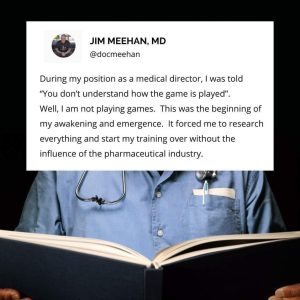

…MKUlta, The Tuskagee experiment, cigarettes, aspartame, glyphosate, chemtrails, “safe and effective”, Ivermectin, Hydroxychloroquine, global warming and the Voice and…
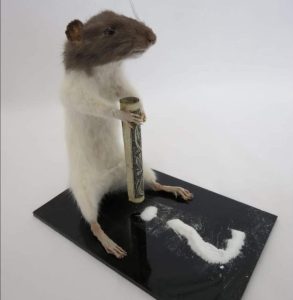
“Put a rat in a cage and give it 2 water bottles. One is just water and one is water laced with heroin or cocaine. The rat will almost always prefer the drugged water and almost always kill itself in a couple of weeks. That is our theory of addiction.
Bruce comes along in the ’70s and said, “Well, hang on. We’re putting the rat in an empty cage. It has nothing to do. Let’s try this a bit differently.”
So he built Rat Park, and Rat Park is like heaven for rats. Everything a rat could want is in Rat Park. Lovely food. Lots of sex. Other rats to befriend. Colored balls. Plus both water bottles, one with water and one with drugged water.
But here’s what’s fascinating: In Rat Park, they don’t like the drugged water. They hardly use it. None of them overdose. None of them use in a way that looks like compulsion or addiction.
What Bruce did shows that both the right-wing and left-wing theories of addiction are wrong.
The right-wing theory is that it’s a moral failing, you’re a hedonist, you party too hard.
The left-wing theory is that it takes you over, your brain is hijacked.
Bruce says it’s not your morality, it’s not your brain; it’s your cage. Addiction is largely an adaptation to your environment.
Now, we created a society where significant numbers of us can’t bear to be present in our lives without being on something, drink, drugs, sex, shopping… We’ve created a hyperconsumerist, hyperindividualist, isolated world that is, for many of us, more like the first cage than the bonded, connected cages we need.
The opposite of addiction is not sobriety. The opposite of addiction is connection. And our whole society, the engine of it, is geared toward making us connect with things not people. You are not a good consumer citizen if you spend your time bonding with the people around you and not stuff. In fact, we are trained from a young age to focus our hopes, dreams, and ambitions on things to buy and consume. Drug addiction is a subset of that.”
Credit: Johann Hari
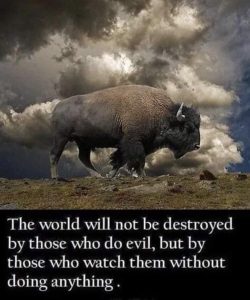
There will always be those who do evil. We need to increase the number of people who recognise it, call it for what it is and fight back,. That is, after all, the price of freedom. Constant alertness, constant willingness to fight back.
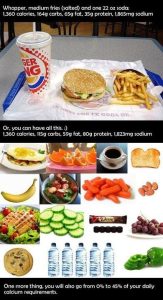
My elder daughter sent me this 11 years ago. Just saw it again and thought it worth reposting.
Did the US government and CDC have enough scientific evidence before recommending mRNA vaccines to pregnant and breastfeeding women? And did Facebook censor those who shared accurate information about it?
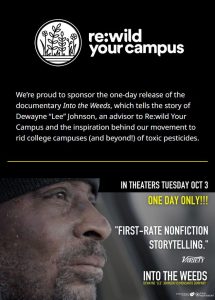
From our Founder
Mackenzie Feldman
Project Director of Re:wild Your Campus
If you don’t know Lee Johnson’s story, I want to take a minute to explain how important this hero is to our organization.
Back in 2018, Lee Johnson took Monsanto (now Bayer) to court, claiming that his non-Hodgkin lymphoma cancer was caused by Monsanto’s herbicide, Ranger® Pro (containing the active ingredient glyphosate) during his time as a groundskeeper when he used the herbicide daily.
I attended many days of the trial, and on the day of the closing arguments, I was moved to tears, and wrote Lee a letter, telling him what an inspiration he is, and how Bridget Gustafson and I were trying to ban herbicides at UC Berkeley. I also told him that many people in my home state of Hawai’i were watching this trial, as Hawai’i is ground zero for pesticide-use and if he wins, there is hope that we can change regulations back home. I handed the note to one of the lawyers sitting in front of me (thanks Michael!) and asked if he could pass it to Lee. On the day of the verdict, after the judge announced that Lee had won the case, I introduced myself to Lee and congratulated him. He said he got my note and he was going to write me back, and that he wanted to get involved in what we were doing. Fast forward to today, and as I write this, I can’t stop smiling about all we have done together to advocate for change, and all we will continue to do.
Bridget and I brought Lee to UC Berkeley for a panel shortly after the trial for his first public appearance in the U.S. We worked with the Protect Our Keiki Coalition to bring Lee and his family to Hawai’i, and we got all herbicides banned from every public school in the state! This trial put the issue of pesticides in the public eye, and together we have catalyzed a movement of students and community members wanting to end the spraying of herbicides so that no other groundskeeper, landscaper, or agricultural worker has to go through what Lee Johnson continues to go through.
Lee, you have made a profound impact on my life, and all of our lives at Re:wild Your Campus. With this film, your story will get to impact countless others.
I really hope everyone reading this will join us in seeing the film on Tuesday.
Get tickets to a theater near you!
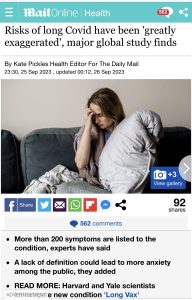
The risks of long Covid have been ‘greatly exaggerated’ with more than 200 symptoms linked to the condition, experts say.
Major flaws in research have distorted the real extent of the condition, leading to misdiagnoses and heightened public anxiety.
They blamed overly broad definitions and criticized a lack of appropriate comparison groups in studies looking at the incidence, prevalence, and control of the condition.
Kate Shemirani commented in Twitter:
A group of long Covid patients were treated with 7 mg nicotine patches for six days. All symptoms resolved and the patients remained symptom-free at six months and 12 months. The question that everyone should be asking is “Why did nicotine lead to recovery?” Because it displaces venom from nicotinic acetylcholine receptors (nAChRs)! So where did that venom come from?!
Shirley Bell commented in Twitter:
I can personally say that after the third time I had covid, which is a virus (designed over many years of development and each strain made in a lab (as confirmed in a paper from Japan) and then released, I had severe brain fog.
I read as much as I could and found that nicotine does act on the ACE receptors which are one of the main targets for covid.
I took a half the lowest strength nicotine tablet and it was like someone wiped my brain to clear the fog.
It was bordering on miraculous.
NAC is also reported by others to have similar beneficial impact.