To those who bought silver when its price was higher, or to those who want to make some capital gains… …read this.
https://www.zerohedge.com/precious-metals/silvers-endgame-almost-too-obvious
Tom's Blog on Life and Livingness
To those who bought silver when its price was higher, or to those who want to make some capital gains… …read this.
https://www.zerohedge.com/precious-metals/silvers-endgame-almost-too-obvious
You get sick every time someone around you has a cold. Or you take three weeks to recover from an infection that others shake in three days. You take vitamin C, zinc, elderberry — and your immune system still responds sluggishly to everything.
This happens because a chronically weakened immune system doesn’t just need more vitamins. It needs the reactivation of its primary cells — T-lymphocytes and NK cells — that with chronic stress and poor nutrition enter a state of suppressed activity that vitamins alone can’t reverse.
1,400 years ago, Islamic medical texts declared about Nigella Sativa: “In this black seed there is healing for every disease, except death.” It wasn’t poetic exaggeration. Medieval Islamic physicians used it for infections, chronic fatigue, and respiratory conditions with results documented so thoroughly that Crusaders carried the knowledge back to Western Europe. Modern pharmacology is still catching up.
The Immune System Modulator
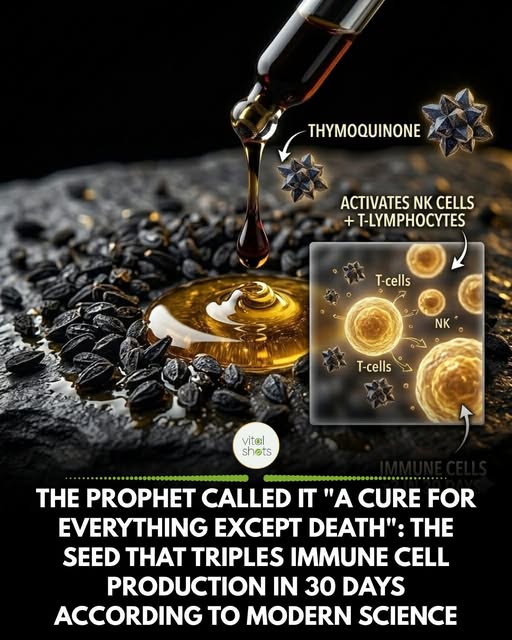
Nigella Sativa seed oil contains a unique compound: Thymoquinone. This phenol acts on the immune system in a way researchers describe as “bidirectionally modulatory” — it doesn’t just stimulate, it balances. If the immune response is overactive (as in allergies or autoimmune conditions), it regulates it down. If it’s underactive, it amplifies it upward.
Specifically: thymoquinone increases T-lymphocyte proliferation in lymphoid tissue, elevates interferon-gamma levels (the protein that coordinates antiviral response), and potentiates NK cell activity — the frontline cells that attack virus-infected cells within hours of infection. Clinical studies with immunosuppressed patients document significant increases in CD4 cell counts. Research with healthy volunteers shows reduced incidence of respiratory infections and faster recovery times during peak viral circulation seasons.
The Ancient Immune Stack:
Option 1 (seeds): 1 teaspoon of lightly toasted black cumin seeds chewed with raw honey every morning on an empty stomach
Option 2 (oil): ½ teaspoon of cold-pressed Nigella Sativa oil in warm water with lemon, every morning
Option 3 (potentiated): mix the oil with Manuka honey and freshly grated ginger — the classic medieval Islamic protocol
Take for 30 consecutive days, rest 10 days, repeat
Results: lower frequency of colds, faster recovery, noticeably higher energy levels.
Source: Journal of Ethnopharmacology — “Nigella sativa immunomodulatory effects: clinical evidence review.”
Every time you make guacamole, you take a knife, whack the giant, hard, wooden-looking pit in the center of the avocado, and toss it straight into the garbage. You are throwing away the armor.
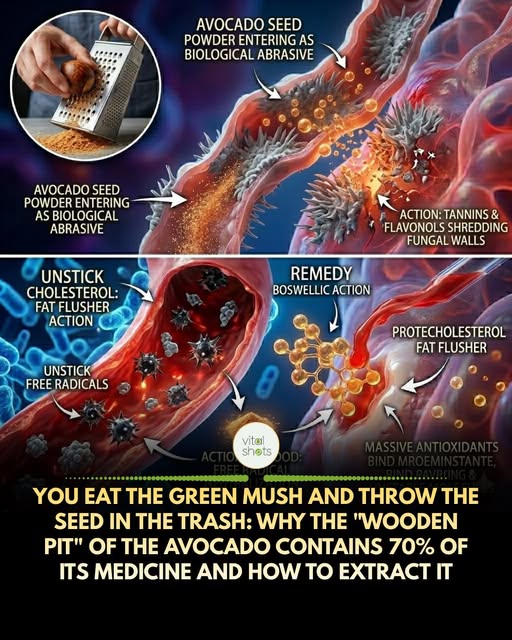
Botanically, a plant concentrates its most powerful defense chemicals in its seed to ensure the survival of its genetic line. The soft green flesh of the avocado is full of healthy fats, but clinical analysis reveals that an astonishing 70% of the avocado’s total antioxidant capacity is locked inside that hard pit.
Ancient South American and Mayan cultures never threw the pit away. They used it as a fierce, broad-spectrum botanical medicine to cure severe gastric ulcers, parasitic infections, and chronic fatigue.
The Fungicidal Bomb
The avocado seed is heavily loaded with Tannins, Saponins, and Flavonols.
These compounds are intensely bitter (which is why bugs and animals won’t eat the seed). In the human body, this bitterness translates to raw pharmacological power.
When you extract the compounds from the pit, they act as a massive fungicidal and antimicrobial agent. They travel through your digestive tract and actively disrupt the biofilms of bad bacteria and yeast (like Candida) that cause severe bloating and sugar cravings.
The Fat-Binding Matrix
Furthermore, the seed contains a unique type of soluble fiber that acts as a biological “sponge” in your bloodstream. Studies have shown that consuming the extracted seed powder significantly lowers elevated LDL cholesterol levels and reduces systemic inflammation in the joints by neutralizing free radicals that age your skin.
The Ancestral Seed Tea:
You cannot just bite into the pit; it will break your teeth. You have to prepare it like the ancients did.
The Drying Phase:
Next time you eat an avocado, wash the pit and leave it on a windowsill in the sun for 2 to 3 days. It will dry out, and the thin brown skin will peel off easily.
The Grating:
Once dry, the pit is surprisingly soft inside. Use a standard cheese grater or a high-powered blender to pulverize the pit into a fine, orange-brown powder.
The Decoction:
Boil 2 cups of water. Add exactly 1/2 teaspoon of the pit powder (do not use more, it is extremely potent and bitter). Let it simmer for 10 minutes.
The Brew:
Strain the liquid into a mug. It will turn a beautiful deep ruby-red/orange color. Add a spoonful of raw honey to cut the bitterness, and drink it. You have just rescued the ultimate antioxidant from the trash can!
Source: Scientific World Journal, “Avocado Seed (Persea americana) Extract as a Potential Antioxidant and Antimicrobial Agent.”

Voyager 2 was never meant to wake up again. Drifting in total darkness for years, it was cold, quiet, and forgotten. Then, without warning, it spoke with a pulse that should not exist. Engineers first thought it was damage but then they saw the timing. Something had touched the signal. Something had changed it. As the data reached Earth, old records began to surface and alarms spread across deep space labs. This was not a message sent to us. It was a response and whatever answered was listening long before we ever noticed..
The Ultimate Discovery creates unique transformative content for educational and entertainment purposes and represents the opinions of this channel. If you believe your copyright has been violated please contact us directly theultimatediscovery1@gmail.com. We take out content seriously and all content meets legal standards for licensing or fair use. Any attempts to falsify content strikes via the YouTube copyright system will be dealt with by our legal team.
The Spike Protein appears to induce massive release of iron from Ferritin, damaging the microvasculature much like after mini strokes.
I would like to discuss an additional mechanism of microvascular damage today that the Spike Protein may induce. This mechanism can also help to explain the neurological symptoms of Long COVID – and why it resembles post stroke conditions. This mechanism starts with – the Endothelium. Brain endothelial cells contain high amounts of Ferritin.
Iron mediates endothelial cell damage and blood-brain barrier opening in the hippocampus after transient forebrain ischemia in rats
https://pmc.ncbi.nlm.nih.gov/articles/PMC3047193/
SARS-CoV-2 Spike Protein Induces Time-Dependent and Brain-Region-Specific Alterations in Ferroptosis Markers: A Preliminary Study in K18-hACE2 Mice
https://pmc.ncbi.nlm.nih.gov/articles/PMC12897609/
Serum Ferritin Levels Are Associated with Vascular Damage in Patients with Nonalcoholic Fatty Liver Disease.
https://ashpublications.org/blood/article/114/22/5098/77164/Serum-Ferritin-Levels-Are-Associated-with-Vascular
Serum ferritin level during hospitalization is associated with Brain Fog after COVID-19 https://www.nature.com/articles/s41598-023-40011-0
Finish reading: https://open.substack.com/pub/wmcresearch/p/the-spike-protein-ferritin-and-long
In addition to the supplementation we have discussed over the years, it is also important to keep in mind that simple dietary inclusions can also help tip the scales in our favor when it comes to protecting ourselves from the ravages of SARS-CoV-2 and its Spike Protein. As all readers of this Substack know, the Spike Protein is extraordinarily pathogenic – especially towards the Endothelium. Of course, it only makes sense to take every step we can to protect it. Today I would like to discuss three foods we can enjoy daily that can help protect our Endothelium. They can conveniently be incorporated into breakfast, lunch, and dinner.
Finish reading: https://open.substack.com/pub/wmcresearch/p/friday-hope-an-inexpensive-readily
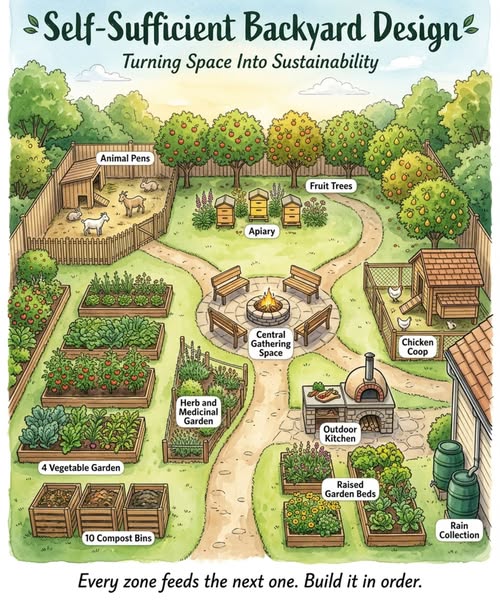
A self-sufficient backyard isn’t built all at once. It’s built in zones, each one adding a layer that feeds or supports the ones around it. This layout shows how ten elements work together in a single property.
Working from the outside in:
Fruit trees along the perimeter — the slowest investment and the longest return. Plant these first. Apple, pear, peach, and plum all work well in most US climate zones and provide decades of harvest once established.
Animal pens and apiary in the back corner — positioned upwind of the kitchen garden to keep manure smell away from the harvest areas. A small goat, rabbits, or laying hens produce fertility for the entire system. Two beehives service the fruit trees and vegetable garden simultaneously.
Chicken coop on the opposite side — chickens are rotated through the vegetable beds after harvest to scratch, fertilize, and break pest cycles before the next planting.
Vegetable garden and raised beds — the core production area. Multiple beds allow crop rotation across seasons. Raised beds near the outdoor kitchen shorten the distance from harvest to preparation.
Herb and medicinal garden — positioned close to the kitchen path for daily cutting access. Perennial herbs anchor this bed permanently.
Central gathering space — a fire pit with stone seating in the center of the layout functions as the organizing hub. Paths radiate outward to every zone from this point.
Compost bins — positioned at the junction between the kitchen garden and the animal area so inputs from both flow in without long carries.
Rain collection — a cistern or barrel system fed from the house or outbuilding roof, positioned to gravity-feed the nearest raised beds.
Outdoor kitchen — wood-fired oven and prep area adjacent to the raised beds, closing the loop between growing and cooking on the same property.
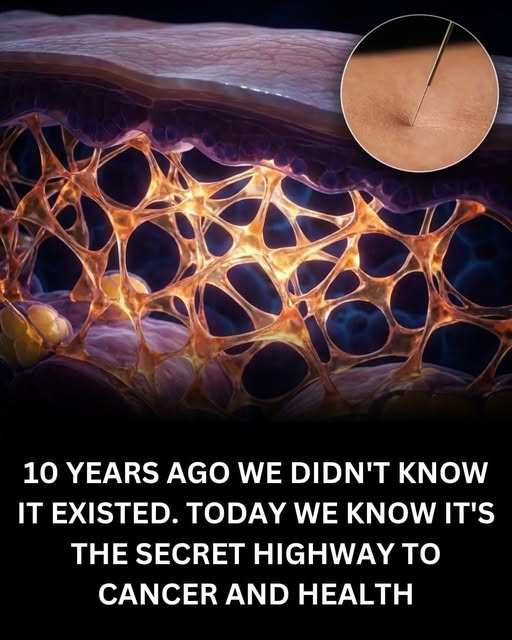
THE GHOST ORGAN THAT WAS ALWAYS THERE.
Imagine opening a 2015 anatomy book You’ll see skin, then fat, then muscle. All packed up like solid dense layers. Now throw that book away.. I was wrong.
Until very recently, histologists (scientists who study tissue) prepared samples by drying them and fixing them in microscopes. By doing so, they destroyed the actual structure. The spaces were collapsing.
In 2018, thanks to new live endomicroscopy technologies, we discovered Interstition.
We ain’t “solid”. Underneath your skin, covering your arteries, your lungs, and your muscles, there is a massive network of interconnected compartments filled with liquid. It’s like a global hydraulic damper. A highway of fluids that connects everything to everything.
Why is this revolutionary in 2026?
The route of metastasis: It has been found that cancer cells often don’t travel through blood or lymph initially, but rather use these “highways” of the interstice to move quickly between tissues. Understanding this is changing oncology.
Validation of Ancestral: For thousands of years, Traditional Chinese Medicine spoke of “Meridians” or energy channels (Qi) that did not correspond to nerves or veins. Western science was mocking. Today, many researchers propose that the Interstition, with its high electrical conductivity thanks to the fluid rich in electrolytes, could be the physical anatomical base of those meridians. Acupuncture needle doesn’t poke a nerve; it stimulates the facial/interstitial network, sending mechanical signals throughout the system.
Your body is a continuous hydraulic system. The stiffness in your ankle can affect your neck because the fluid network is the same. The “stagnation” of fluids that the Ancients spoke of now has a scientific name.
Keeping this organ healthy is vital. How? Hydration and Movement. The interstition needs you to move to pump its fluids. If you stay still, it becomes sticky, dense, and toxic.
You’re 70% water, but that water ain’t stuck in a bucket. It’s flowing through a sacred, complex architecture that we’re just beginning to understand.
To keep your interstition fluent and avoid morning stiffness:
Hydration with Electrolytes: Water alone isn’t enough. Interstitial fluid is rich in salts. Add a pinch of sea salt to your water.
Bounce (Rebounding): Gentle jumps or oscillatory movements help move interstitial fluid better than static cardio.
Myofascial Release: Using foam rollers helps rehydrate these compressed layers of tissue.
Source: Scientific Reports, “Structure and Distribution of an Unrecognized Interstitial Space in Human Tissues”. / Updates 2025 on Fascial Research.
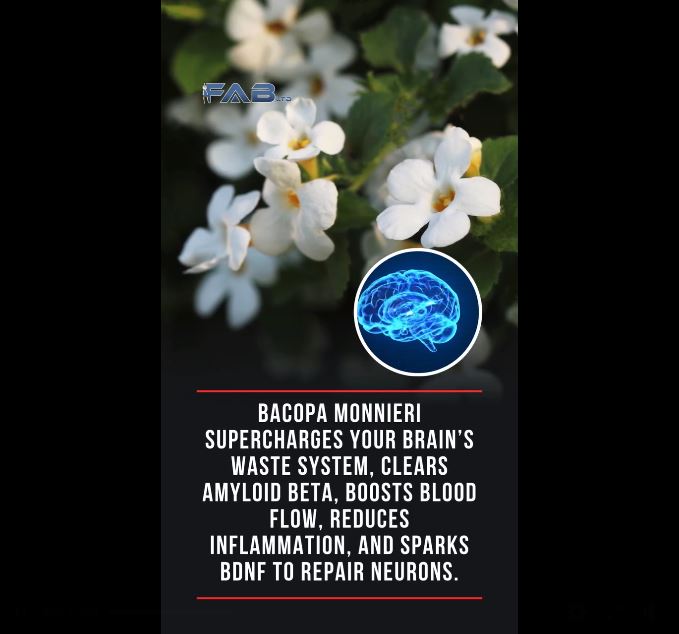
The top ingredient in my NutriBlast Memory and Intelligence Blend.