
The MAHA Report – Poison Food, Lack of Activity, and Poison Jabs
The MAHA Report and Strategy, spanning 73 and 20 pages respectively, reveal a stark reality: the United States spends $10,000 to $12,000 per capita on healthcare, dwarfing other developed nations, yet life expectancy languishes below 80 years, while peer countries exceed this threshold with far lower costs. This discrepancy reflects a system prioritizing profits for Big Pharma and Big Agriculture over public health. The report identifies poor diet, chemical exposure, sedentary lifestyles, and over-medicalization as drivers of chronic childhood diseases. The strategy proposes sweeping reforms, including stricter pesticide regulations, enhanced water quality standards, and revisions to the generally regarded as safe (GRAS) designation process, which currently allows untested chemicals into food with minimal oversight. Additional measures target agency capture, conflicts of interest, direct-to-consumer pharmaceutical advertising, and the integration of nutrition education into medical school curricula.
The report notes that in 1986, children received three vaccine injections in their first year; today, that number is 29, none subjected to comprehensive studies evaluating their combined effects. The MAHA Report demands gold-standard clinical trials with true placebos, larger sample sizes, and extended follow-up periods, exposing the current childhood vaccine schedule’s reliance on deficient studies lacking inert placebo controls and adequate safety monitoring. Having reviewed every vaccine on the CDC schedule, I believe unequivocally that none meets gold-standard criteria for safety or efficacy. The report’s acknowledgment of vaccine injuries and commitment to investigating autism’s roots, likely tied to vaccine components such as aluminum and mercury, represents a historic shift, but it underestimates the pervasive harm caused by these poisons.
Finish reading: https://open.substack.com/pub/tomrenz/p/the-maha-report-poison-food-lack
The Right Path
Your Daily Steps Hold a Life-or-Death Secret
Sayer Ji writes:
For more than a decade, I’ve been immersed in documenting the therapeutic potential of lifestyle practices. Through GreenMedInfo, I’ve curated over 1,000 peer-reviewed studies on exercise alone, spanning 280 distinct health conditions ranging from depression and dementia to diabetes, cancer, cardiovascular disease, and osteoporosis.1
The consistent message from this body of evidence is that exercise is medicine in the truest sense. Unlike pharmaceuticals, which typically act on one pathway at a time, exercise orchestrates a symphony of benefits across multiple systems simultaneously: lowering inflammation, improving vascular health, balancing hormones, supporting brain function, enhancing immunity, and so much more.
But while I knew exercise was a keystone for health, one mystery lingered. Why does walking—the most basic, natural, and low-intensity form of exercise—deliver such profound and wide-ranging effects? Why would simply accumulating steps rival high-intensity training or sophisticated interventions in protecting against chronic disease and premature death?
I did not have a satisfying answer—until now.
A Landmark Study and Its Simple Message
On August 4, 2025, epidemiologist Nicolas Hulscher, MPH, published a clear summary of a landmark Lancet Public Health meta-analysis:
Walking around 7,000 steps per day cuts the risk of dying from any cause by nearly half. It also significantly lowers the risks of cardiovascular disease, dementia, depression, diabetes, and cancer mortality.
This study pooled data from nearly a million participants across 24 cohorts worldwide—the most comprehensive analysis of step counts and health outcomes to date. The numbers were staggering:
- 47% lower risk of all-cause mortality at ~7,000 steps/day compared with 2,000
- 25% lower risk of developing cardiovascular disease
- 47% lower risk of dying from cardiovascular disease
- 37% lower risk of cancer death
- 14% lower risk of type 2 diabetes
- 38% lower risk of dementia
- 22% lower risk of depression
- 28% lower risk of falls
The benefits started with as little as 3,000–4,000 steps and grew progressively stronger, plateauing around 7,000 for some outcomes but continuing toward 10,000 for others.
It was exactly the kind of validation public health officials have long sought: a clear, evidence-based threshold that people can understand and act upon.
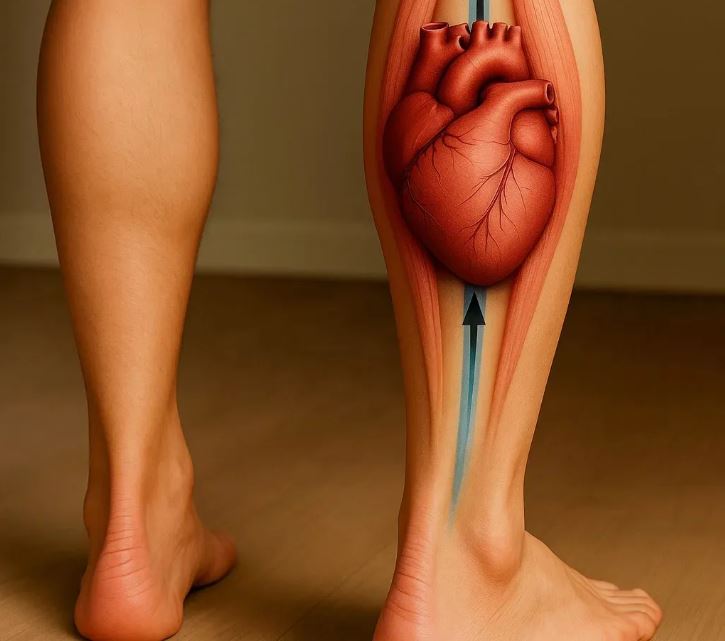
But for me, it did more than affirm the importance of walking. It supports my ongoing thesis that the primary reason walking is so potent lies in a little-known physiological marvel—the soleus muscle, the “second heart you never knew you had.”
https://sayerji.substack.com/p/the-second-heart-you-never-knew-you
15 Pineal Gland Decalcifiers

12 of these are ingredients in my top bars and powders. Check them out for yourself: https://healthelicious.com.au/
Psychiatry Destroying Creativity
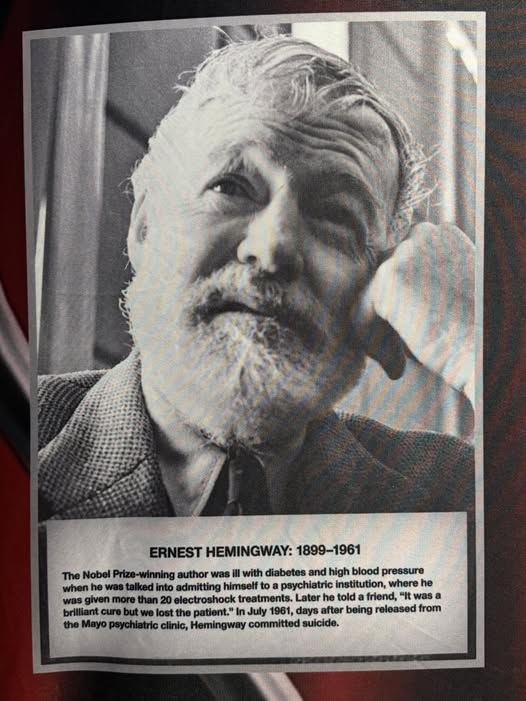
“What these shock doctors don’t know is about writers and such…What is the sense of ruining my head and erasing my memory, which is my capital, and putting me out of business? It was a brilliant cure but we lost the patient.”
—Ernest Hemingway Nobel Prize-winning author
Are You More Than 9 Meals Away From Starving?
I read an article from Jeff Thomas (if interested you can read it at http://www.321gold.com/editorials/thomas/thomas042316.html) wherein he writes, “After only nine missed meals, it’s not unlikely that we’d panic and be prepared to commit a crime to acquire food.“
Given the current declining levels of ethics, morality, civility and stability in society, there is an increasing chance of disruptions in the supply chain that would cause food shortages, to a greater or lesser degree.
Now, while I like to think that if you knocked on my door in need of a feed, that I would be only too willing to welcome you to my table, obviously I do not have the resources to do that for everyone.
So I am asking you to start laying in some extras each week that might enable you to help your family and friends in a worst case scenario. That will take the load off my ability to help others.
This does not need to stretch your budget past breaking point.
As I write this, Coles have a half-price special on brown rice this week, $9.50 for 5 kilos.
They also have brown lentils for the regular price of $5.50 a kilo or red lentils for $4.20 a kilo. And several varieties of canned beans for $1.10 a 420 gram can.
Even if you only spend $5 or $10 a week to lay in a reserve supply of food you are gradually building a potentially life-saving increase in your survival potential.
Just as a further tip, get a glass or hard plastic container in which to store your 5 kilo plastic bag of rice. Otherwise rice weevils can eat through the plastic bag and you don’t want that sort of competition for your rice! LOL!
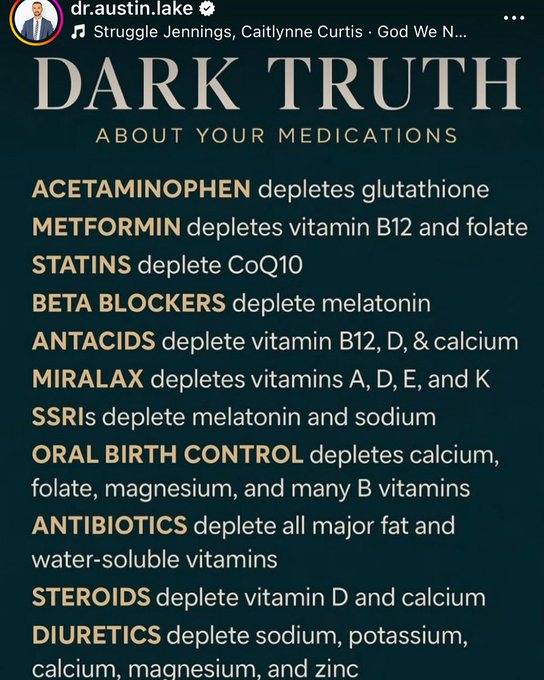
The Dark Truth About Medications
The hardest part of 14 days to flatten the curve is the first two years….

Dr Naomi Wolf At EU

On Sept 06, 2025, the European Union listened to Dr. Naomi Wolf explain why you have noticed personality changes, emotional irregularity and a lack of critical thinking from people vaccinated with the mRNA COVID shot.
According to Wolf, the Pfizer papers reveal that the lipid nanoparticles inside the Pfizer mRNA vaccine are breaching the blood-brain barrier and attacking the frontal cortex of the brain, which is damaging people’s ability to retain memory, control their emotions, and utilize critical thinking.