
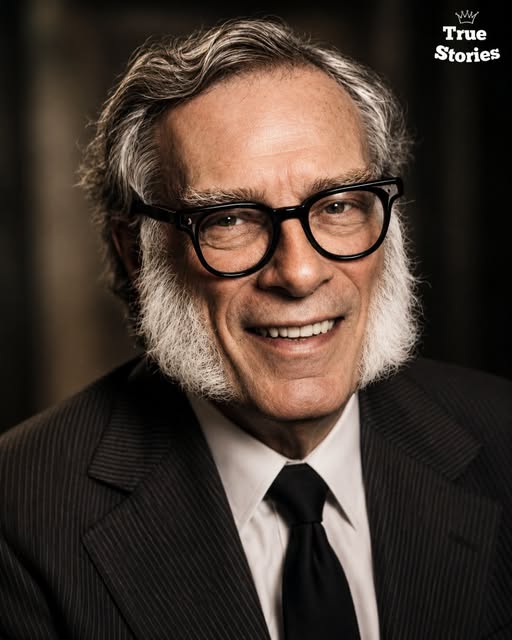
Isaac Asimov looked 50 years into the future in 1964—and some of his predictions became so accurate that they’re still cited today.
The year was 1964
There was no internet.
No personal computers.
No smartphones.
Humans had never walked on the Moon.
Artificial intelligence existed only in science fiction.
Then **Isaac Asimov** was asked a remarkable question by **The New York Times**:
**What would the world look like 50 years from now?**
Most people guessed.
Asimov reasoned.
His answers would become one of the most astonishing prediction lists of the twentieth century.
He wrote that people would carry devices allowing them to **see and speak to anyone anywhere in the world**.
He predicted **portable screens** that could display documents, photographs, books, and news.
He believed routine work would increasingly be performed by **machines and automation**, forcing society to rethink employment.
He foresaw **electronic education**, where students could learn from computers without sitting in a traditional classroom.
He warned that rapid population growth would create enormous pressure on cities and resources.
He even predicted that humanity would become increasingly dependent on technology, creating a future where learning to live alongside intelligent machines would become one of civilization’s greatest challenges.
Remember…
He wrote this in **1964**.
Five years before the first Moon landing.
More than a decade before the personal computer.
Nearly thirty years before the World Wide Web.
Over forty years before the smartphone.
The remarkable part?
Isaac Asimov wasn’t an engineer building these technologies.
He wasn’t running a laboratory.
He was a science-fiction writer using logic, scientific trends, and human behavior to imagine where the world was heading.
That ability had already made him one of the most influential authors of his generation.
His **Foundation** novels imagined civilizations rising and falling through mathematical prediction.
His **I, Robot** stories introduced the **Three Laws of Robotics**, concepts that continue to influence discussions about robot safety and AI ethics even though they were written for fiction.
Across his lifetime, Asimov wrote or edited **more than 500 books**, making him one of the most prolific authors in modern history.
But perhaps his greatest achievement wasn’t the number of books he produced.
It was showing that science fiction could be more than entertainment.
It could become a blueprint for asking the right questions about the future.
Think about the contradiction.
Millions of people dismissed his ideas as fantasy because the technology didn’t exist.
Half a century later, many of those same ideas had become part of everyday life.
The image that lingers isn’t Isaac Asimov typing another novel.
It’s Isaac Asimov sitting in 1964, staring 50 years into a future no one else could yet imagine—and getting enough of it right that the world is still reading those predictions decades later.