
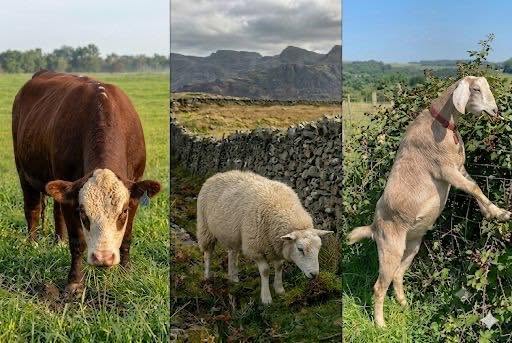
A pasture grazed by cattle alone is a good pasture. Put cattle and sheep on it together and it becomes something else.
The cattle take the long grass, the coarse stems, the rough patches. The sheep come behind and clear what the cattle left: the short regrowth, the wildflowers, the plants a cow won’t touch. Two heights, two mouths, two patterns. Twice the use, none of the waste.
Add a goat and the bramble line retreats. Add a pig on the woodland edge and the parasite cycles break. Add a few geese and weeds you never knew you had quietly vanish. Each animal eats what the others refuse and breaks the worms the others carry. The system tunes itself.
The result is about as biodiverse, productive and low-input as farming gets. More carbon in the soil. More birds. More wildflowers. Less disease. Less spent on feed, wormer and fertiliser. Ground that would grow no crop at all turns into meat, milk and wool.
This is the oldest idea in farming. Nearly every working agricultural culture has done it since the beginning: Roman estates, medieval manors, Mongolian camps, Welsh hill farms.
The single-species, single-field, single-product model that shoved it aside is barely a century old, and it is running out of road on every measure you can name.
The fix is older than the problem. A Welsh farm with cattle on the low pasture, sheep on the high, a goat on the bramble line and a couple of geese in the orchard.
The farmer would explain the whole thing in four minutes, if anyone asked.
The policy paper never has.