Your digestion isn’t broken, it’s just missing this forgotten biological catalyst.
You probably see it every morning at the hotel buffet or in your kitchen fruit bowl and ignore it as if it were just another tropical decoration. Most people assume papaya is just fiber and water for the occasional bathroom break, but that’s the biggest lie we’ve been sold by omission. Imagine for a moment that heavy feeling after a dense meal, that bulge in your abdomen that forces you to unbutton the top button of your pants as you feel your energy completely drained. You’ve tried expensive probiotics, enzymes in drugstore bottles, and designer supplements, but the real solution has been right in front of your eyes, camouflaged in vibrant orange pulp. It’s not just a fruit; it’s a bioengineering tool that ancient cultures used as internal medicine long before antacids existed. There’s a specific method to unlock its potential, and today you’re going to learn how to use it like a true biohacker.
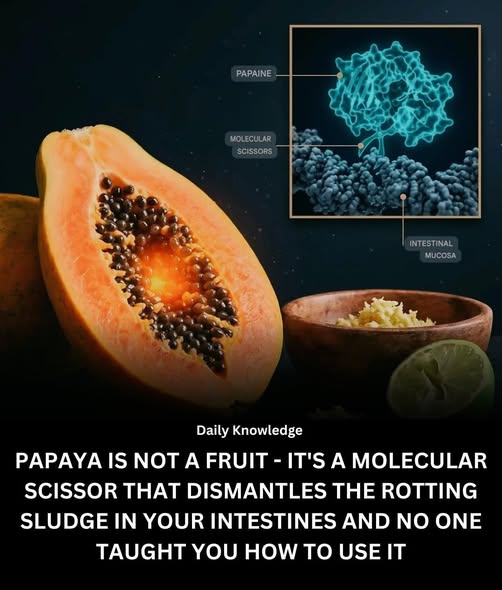
The secret isn’t in the sweet pulp, but in a proteolytic enzyme called papain, which literally works like high-precision molecular scissors. While your stomach struggles to unravel the complex protein chains imposed by the modern diet, papain steps in to dismantle these structures before they begin to rot and generate toxic gas in your colon. Most people believe their stomach acid is sufficient, but under chronic stress, acid production drops, leaving food half-processed and creating a ‘digestive sludge’ that inflames your intestinal walls. Papain not only digests food but also has the ability to attack bacterial biofilm and fibrin debris that accumulates on the microvilli. It’s a deep-cleaning process that occurs at a microscopic level, removing the waste that prevents you from absorbing the quality nutrients you consume. It’s the difference between having an engine clogged with old oil and one that flows smoothly with high-performance synthetic lubrication.
To implement this digestive optimization protocol, you can’t just randomly eat the fruit after dessert. The most common mistake is consuming it when you’re already full, which dilutes its enzymatic effect. You need to find a papaya that’s perfectly ripe: not too green, because the alkaloids are too aggressive, and not too overripe, because the enzymes will have already broken down. Cut a slice about two fingers thick and eat it exactly twenty minutes before your heaviest meal of the day, preferably lunch. But here’s the real expert trick: don’t throw away the black seeds. Take five of these small seeds, rinse them quickly to remove any excess pulp, and chew them thoroughly before swallowing. They have a spicy flavor, similar to radish or pepper, due to the benzyl isothiocyanates they contain. These compounds act as a natural antiparasitic and a potent bile stimulant. By combining the enzyme-rich pulp with the potency of the seeds, you create a biological environment hostile to pathogenic bacteria and perfect for amino acid assimilation.
Don’t expect an instant miracle with the first bite, although you’ll feel lighter almost immediately. By the third or fourth day of following this ritual, you’ll notice something fascinating: the ‘brain fog’ that often accompanies heavy digestion will disappear completely. The sign that the protocol is working is an effortless morning bowel movement and a real feeling of emptiness in your abdomen—not hunger, but efficiency. The critical mistake that ruins the whole process is mixing papaya with dairy or refined sugars in the same sitting; the enzymes will be distracted trying to process the lactose and sugar instead of cleansing your tissues. Do it with discipline, and you’ll see that your body didn’t need more medication; it just needed you to stop ignoring the technology that nature has already perfected. Your gut doesn’t forget when you treat it with biological respect, and papaya is the first step to reclaiming your digestive sovereignty.
The bioavailable food: Consume a 150-gram serving of fresh papaya sprinkled with the juice of half a lime and a pinch of grated ginger. The citric acid in the lime acts as a cofactor that stabilizes papain, while the ginger accelerates gastric emptying so the enzymes reach the small intestine faster. Always do this on an empty stomach to maximize contact with the gastric mucosa.
* The natural protocol: Prepare an infusion with three dried papaya leaves in 250ml of water at 85 degrees Celsius, letting it steep for exactly ten minutes. Drink this bitter tonic after heavy meals to take advantage of the phenolic compounds that help reduce systemic inflammation. The taste is strong, but it’s a sign that the phytochemicals are active and ready to work on your gut microbiota.
Shot Booster: Concentrated Carica papaya leaf extract standardized to 5% flavonoids, diluted in 150ml of purified water just before bed. Nighttime absorption allows the bioactive compounds to modulate the immune response of gut-associated lymphoid tissue while the digestive system is at rest. This ensures deep regeneration of the intestinal barrier without the disruptions of the daytime digestive process.
Singh SP, Kumar S, Mathan SV et al.. Daru : journal of Faculty of Pharmacy, Tehran University of Medical Sciences. “Therapeutic application of Carica papaya leaf extract in the management of human diseases.” 2020. PMID: 32367410.