
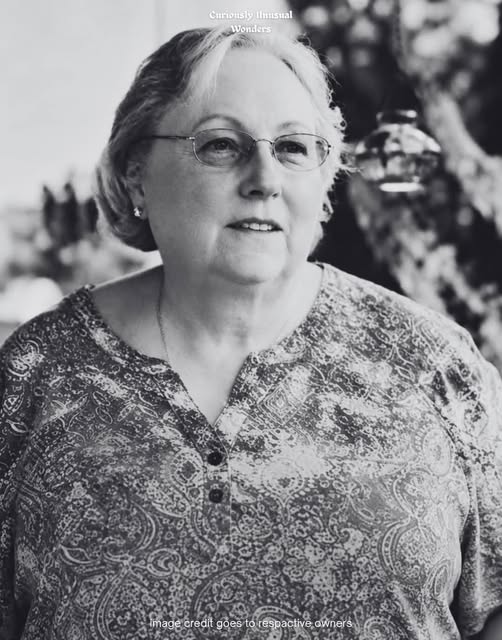
One hour before a hitman attacked her with a claw hammer, Susan Kuhnhausen sat in a hair salon reading a poem in Oprah magazine.
“I will not die an unlived life,” it began. “I will not live in fear.”
She had no idea how prophetic those words would become.
On the evening of September 6, 2006, the 51-year-old emergency room nurse finished her shift at Providence Portland Medical Center and stopped at Perfect Look salon on East Burnside Street. She mentioned to her stylist that she was going through a tough divorce—her husband Mike had finally moved out after nearly 18 years of marriage.
An hour later, Susan drove home to her blue Cape Cod in southeast Portland’s Montavilla neighborhood. In the mudroom, she found a note from Mike by the microwave.
“Sue, haven’t been sleeping. Had to get away—Went to the beach.”
She walked toward her bedroom. It was strangely dark. Had she forgotten to open the curtains that morning?
Then a man stepped out from behind the door.
He was 59 years old, with long hair tucked into a tan baseball cap pulled low over his eyes. He wore yellow rubber gloves. In his hands was a red and black claw hammer.
He swung.
The first blow caught Susan on the left temple. For most people, the sight of an intruder with a weapon would have meant one thing: run.
But Susan wasn’t most people.
For nearly 30 years, she had worked in the emergency room. She had helped crack open patients’ chests to perform heart massages. She had disarmed violent, injured men. She had administered IVs to people thrashing from drug withdrawal. And every nurse at Providence trained regularly in self-defense—learning how to slip out of headlocks, how to take someone down, how to survive.
As the man came at her, Susan did something counterintuitive. Instead of retreating, she rushed toward him. She knew from training that a hammer swing has less force at close range. She slammed her body against his, pushing him against the wall.
He spoke the only words she would hear him say that night.
“You’re strong.”
In that moment, Susan knew. This was no burglar. He hadn’t asked where her money was. He hadn’t asked about a safe. He was there to kill her.
“It became quickly clear that his intent was murder,” she later said. “And I fought.”
Susan tackled him. She wrestled the hammer away. She hit him in the head—three times, maybe four—with the claw end. Her father had been a carpenter. He always told her a hammer could be used for self-defense. The claw end worked best.
But the man grabbed the hammer back. Susan reached for his throat and squeezed. His face turned red, then purple, then a darker purple with a blue tinge.
“WHO SENT YOU HERE?” she screamed.
He said nothing.
She let go, thinking he was done. She tried to run. But as she fled into the hallway, he caught her from behind. He spun her around and punched her in the face, splitting her lip. She fell to the floor.
He stood over her with the hammer raised.
“I looked at the floor,” Susan remembered, “and I thought, I’m going to die today.”
She doesn’t know how she did what came next. Somehow, she pulled him down to the floor with her. She bit him—on the arm, on the thigh—hoping that if he killed her, at least her teeth marks would link him to her death.
Then she threw her leg over his body, climbed on top of him, and hooked her left arm around his neck.
“TELL ME WHO SENT YOU HERE AND I WILL CALL YOU A FUCKING AMBULANCE!” she yelled in his face.
He growled at her.
Susan leaned forward and squeezed harder. His face changed color again. He tried to flip her, but her years of training held. She pressed down until he stopped moving.
The fight had lasted approximately 15 minutes.
Susan grabbed the hammer and ran to her neighbor’s house. The neighbor called 911.
“We have an intruder in the house next door. The intruder was in the bedroom with a hammer. The woman who lives there thinks she may have strangled him. He was down when she left.”
“Does she need an ambulance?”
“No, she’s a nurse. She says call an ambulance for the guy. He may be dead.”
Police arrived to find the intruder dead in the hallway. His name was Edward Dalton Haffey. He had a long criminal record—including a 1994 conviction for arranging the murder of his ex-girlfriend, for which he served nine years in prison.
At first, investigators thought Haffey was a burglar who had picked the wrong house. But Susan knew better. She had suspected from the moment he said “You’re strong” that someone had sent him.
In Haffey’s backpack, police found a day planner. On the week of September 4, two days before the attack, someone had written: “Call Mike. Get letter.”
Inside a folder was a phone number. It belonged to Mike Kuhnhausen.
Further investigation revealed that Mike had hired Haffey—who once worked as a custodian at an adult video store Mike managed—for $50,000 to kill Susan. Mike had wanted her dead so he could inherit their $300,000 house. He knew she had removed him from her life insurance policy, but he figured the house was still worth the gamble.
On the day of the attack, Mike had driven to the Oregon coast and checked into the Lincoln City Inn, establishing an alibi. The day after learning Susan had survived, he bought a .357 Magnum revolver at a pawn shop. Then he wrote a suicide note: “All I ever wanted was to be loved and every time I had it—I fucked it up.”
Police arrested him on September 13. He denied everything at first.
But the evidence was overwhelming. Haffey wasn’t the first person Mike had approached about killing Susan. He had solicited three others before finding a man desperate enough to say yes.
In August 2007, Mike pleaded guilty to soliciting aggravated murder. At his sentencing hearing, Susan was allowed to address him directly. She held up photographs of her own bloodied face.
“You told police that you found out I was okay,” she said. “Do I look okay?”
Then she delivered a message she had prepared.
“You were willing for me to share your small, miserable life until death we did part—the sooner the better, as it turned out.”
She paused.
I am damaged by what you have done to me. I am damaged. But I am not destroyed.”
Mike was sentenced to 10 years in prison.
Susan sued him for $1 million in civil court—not because she needed the money, but because she wanted to make sure he couldn’t afford to hire another hitman when he got out. The jury awarded her $1,053,783.
She never had to worry. In June 2014, three months before his scheduled release, Mike Kuhnhausen died of cancer in prison.
Susan had already changed her name to Susan Walters. She moved to a new house. She practiced at the shooting range. She lived with what she called “two life sentences”—the trauma of knowing her husband had tried to have her killed, and the weight of having taken another man’s life.
“I don’t know that you ever get over having killed another human being,” she said. “I’ve always said I don’t take any pride in what I did. But I also feel no shame.”
Her boss at the hospital offered her a different way to see it.
“They are not calling you a hero because you killed a man,” she told Susan. “They are calling you a hero because they want to believe that, given the same circumstances, they could do what you did.”
Today, Susan Walters is a victim advocate in Portland. She helped create Case Companion, a free website that allows crime victims to track their offenders’ court dates, sentencing, and release information. She has worked with WomenStrength and GirlStrength programs, teaching others what she learned the hard way.
“If you can’t run and you can’t hide,” she says, “you have to fight.”
“I didn’t choose my attacker’s death for him. I chose my life.