
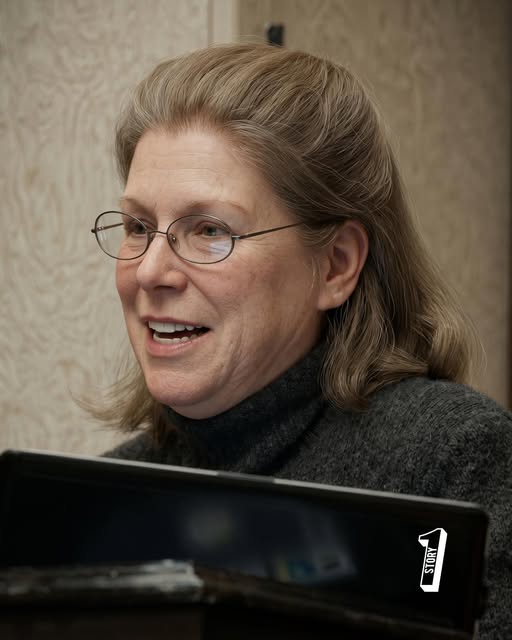
In December 1979, Adele Goldberg was told to report to a conference room inside a low, modern office building on Coyote Hill Road in Palo Alto, California. Waiting for her inside was a skinny twenty-four-year-old entrepreneur with intense eyes, restless energy, and a reputation for pushing until people broke.
His name was Steve Jobs.
Goldberg already knew why he was there. And she hated it.
Outside the windows, Silicon Valley still looked half-finished. Apricot orchards had not entirely disappeared yet. The region had not become the center of the technological universe. Most Americans still thought computers belonged in government buildings, banks, or universities. They were enormous machines hidden behind locked doors and operated by specialists in white shirts and ties.
But inside Xerox PARC, the future had already arrived.
The Palo Alto Research Center did not feel like a corporate office. It felt like a secret laboratory from a science fiction novel. Hallways smelled faintly of solder, warm plastic, and coffee that had been sitting on hot plates too long. Engineers wandered between rooms carrying stacks of punched paper printouts. Wires snaked beneath raised flooring. Cooling fans hummed constantly in the background like distant engines.
The researchers there were not trying to make slightly better office machines. They were trying to reinvent the relationship between humans and computers.
Adele Goldberg stood near the center of that revolution.
She was a mathematician, computer scientist, and one of the key architects behind Smalltalk, a programming environment so advanced that much of the world would not fully catch up to it for years. She managed the System Concepts Laboratory, where researchers believed computers should become personal, visual, intuitive, almost playful.
At the time, interacting with a computer was still an intimidating experience for ordinary people. Machines communicated through command lines. Users typed precise instructions into black screens glowing with green or amber text. One typo could stop everything. To use a computer, you had to think like the machine.
Goldberg and her colleagues wanted the opposite.
They believed the machine should adapt to the human being.
So they built windows that could overlap on the screen like sheets of paper on a desk. They created icons you could move with your hand. They developed menus that appeared instantly when requested. They designed a cursor controlled by a small device most people had never seen before: a mouse.
The Alto computer running this software looked strange for its time. The monitor stood vertically, shaped more like a printed page than a television. The computer itself sat beneath the desk in a heavy metal case about the size of a compact refrigerator. Researchers used it to send electronic mail years before most Americans had heard the phrase. They wrote documents, shared files, and printed them on laser printers that felt almost magical compared to noisy typewriters.
Inside PARC, the modern world already existed in prototype form.
Almost nobody outside the building understood what they were looking at.
That included Xerox corporate leadership in New York.
Xerox dominated the copier industry and made fortunes from office machines. Executives thought in terms of paper movement, manufacturing costs, toner cartridges, and leasing agreements. Software barely registered in their worldview. They saw computers as specialized business tools, not devices every household would someday own.
Then Apple Computer came calling.
Apple was still young in 1979. Successful, but scrappy. Their Apple II had sold well, especially in schools, yet the company still felt fragile compared to giants like IBM or Xerox. Steve Jobs knew Apple needed something revolutionary to stay ahead.
And rumors about PARC were spreading through engineering circles.
People whispered about machines with pictures on the screen instead of text. About windows. About a pointing device. About software that felt alive.
Jobs became obsessed.
He arranged a deal with Xerox executives. In exchange for allowing Apple engineers to see PARC’s technology, Xerox would receive the opportunity to invest one million dollars in Apple before its public stock offering.
To the executives in New York, it sounded harmless. Maybe even generous. They believed they were trading a research tour for a potentially profitable investment.
Goldberg was horrified.
She argued fiercely against the demonstration. She warned management they were handing a competitor the most important technological breakthrough in the industry. She understood immediately what the interface represented.
This was not a copier improvement.
This was the future of human-computer interaction.
She later recalled feeling physically sick over the decision. She tried to avoid participating entirely. At one point, she asked if another engineer could handle the demonstration instead. Management refused. She was the lab director. If Apple was going to see the technology, it would come from her.
The order was direct.
Do the demonstration.
Or be considered insubordinate.
So Adele Goldberg walked into the conference room.
Jobs entered with several Apple engineers, including Bill Atkinson, one of the company’s most gifted programmers. Jobs was intense from the start. Barefoot at times during that era, impatient almost to the point of aggression, he moved through rooms like somebody permanently late for an appointment nobody else could see.
Goldberg sat at the Alto terminal.
Then she began.
She moved the mouse across the desk, and the cursor glided across the screen in real time. She clicked a button, and a menu dropped open. She pulled one window over another. Text and graphics coexisted on the same display. Files could be moved visually instead of through typed commands.
The Apple team stared.
Jobs paced back and forth around the machine, interrupting constantly with questions. How fast could it render graphics? How was memory being handled? Could the windows resize dynamically? How did objects communicate inside the software?
Atkinson leaned toward the display, studying every detail.
The demonstration lasted for hours.
Goldberg showed them Smalltalk’s object-oriented programming system, one of the most influential software concepts ever created. She explained how digital objects could interact independently while remaining part of a larger environment. It was elegant, flexible, and radically ahead of its time.
Jobs looked stunned.
At one point, according to people present, he exploded in frustration toward the Xerox representatives.
“Why aren’t you doing anything with this?”
He could not understand how a company could invent something so revolutionary and fail to recognize its value.
But Xerox leadership did fail to recognize it.
That was the tragedy.
The executives saw the Alto as an experimental workstation for researchers, too expensive and impractical for consumers. They believed ordinary people would never need graphical interfaces or mice. Computers, in their minds, remained tools for specialists.
Jobs saw something entirely different.
He saw the first truly personal computer.
He left PARC electrified. On the drive back to Apple headquarters in Cupertino, he reportedly talked nonstop about what he had just witnessed. Existing Apple projects were suddenly obsolete in his mind. Text-based systems no longer mattered.
Apple would build machines based on the ideas he had seen that day.
The Lisa project accelerated first. Then came the Macintosh.
Meanwhile, something else important happened inside Apple’s engineering rooms. Bill Atkinson realized he could not simply copy what he had seen at PARC directly. He needed to make it faster, cheaper, and commercially viable on smaller hardware. So Apple engineers developed entirely new methods to render graphics and overlapping windows efficiently.
The PARC demonstration did not hand Apple a finished product.
It handed them a direction.
And that direction changed history.
In January 1984, Apple unveiled the Macintosh.
The launch felt theatrical, almost mythic. Millions of people saw a computer that smiled, talked, displayed graphics, and invited users to point and click instead of memorizing commands. For ordinary consumers, it felt revolutionary because it was.
The modern graphical user interface entered public life.
Soon Microsoft adopted similar concepts for Windows. Other companies followed. Overlapping windows, desktop icons, dropdown menus, digital folders, trash cans, and mouse navigation became universal parts of everyday existence.
Children learned them instinctively.
Billions of people eventually organized their lives around concepts born inside that PARC laboratory.
And yet Xerox barely profited from any of it.
The company did release its own graphical workstation, the Xerox Star, in 1981. It was expensive, awkwardly marketed, and aimed mostly at corporations. Xerox never understood how to transform the ideas into a mass consumer product. Their invention arrived wrapped in the thinking of a copier company.
Apple wrapped the same ideas in excitement, design, personality, and ambition.
That made all the difference.
Goldberg stayed at PARC for another decade before leaving to found her own company. She continued working in software and education, eventually becoming president of the Association for Computing Machinery. Inside computer science circles, her influence remained enormous, even if the public rarely knew her name.
Steve Jobs became a global icon.
The executives who approved the PARC demonstration retired comfortably.
The original Alto machines became museum pieces.
But the real legacy never sat in museums.
It spread across desks, offices, schools, apartments, and eventually pockets around the world.
Every time you drag a window across a screen, click a menu, move a cursor, or organize files visually, you are using ideas Adele Goldberg and her colleagues built inside a quiet laboratory decades ago.
She did not invent the future alone.
But she helped build the window the modern world still looks through.