
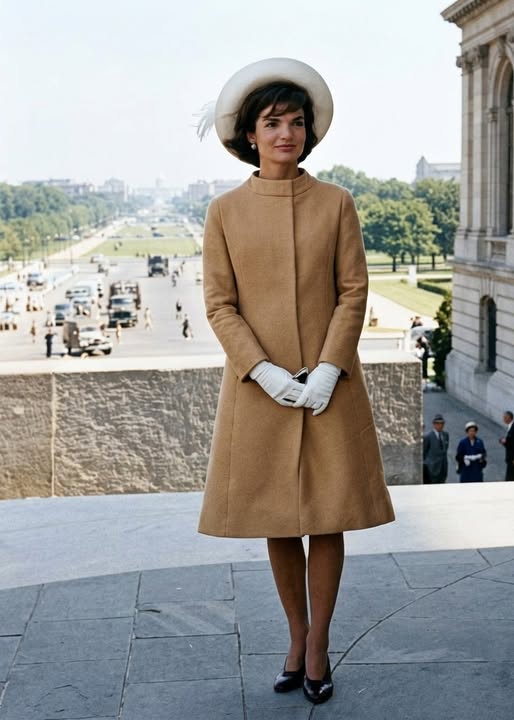
Vienna, Austria. June 3, 1961.
The most dangerous meeting of the Cold War era has just begun.
John F. Kennedy and Nikita Khrushchev — the leaders of the two nuclear superpowers whose weapons are pointed at each other across an ocean — are sitting down to dinner. The world’s future is genuinely uncertain. Diplomats are anxious. Translators are poised. Everyone in the room knows that what is said at this table will matter.
At Khrushchev’s side sits Jacqueline Kennedy.
She is 31 years old, speaks French and Italian and Spanish fluently, and has spent the day so thoroughly charming Paris that French President Charles de Gaulle — a man not known for being charmed — described her as extraordinary. JFK will joke the next day that he is simply “the man who accompanied Jacqueline Kennedy to Paris.”
Now she is seated next to the Soviet Premier at dinner.
They talk. The conversation moves. And then — “She ran out of things to talk about,“ as her daughter Caroline would later tell it, “so she asked about the dog, Strelka, that the Russians had shot into space. During the conversation, my mother asked about Strelka’s puppies.”
A few months later, a package arrived at the White House.
“A few months later, a puppy arrived and my father had no idea where the dog came from and couldn’t believe my mother had done that.“
The puppy’s name was Pushinka.
Russian for “Fluffy.” A white, mixed-breed puppy, the daughter of Strelka — one of two Soviet space dogs who had become the first living creatures to orbit the Earth and return home safely, aboard the Soviet spacecraft Korabl-Sputnik 2 in 1960.
She arrived in the United States with her own Soviet passport, listing her as “a non-breed type.”
Because this was 1961, and because the United States and the Soviet Union were in the middle of a nuclear standoff, the White House was not simply going to let a Russian dog wander in unexamined. Pushinka was taken to Walter Reed Army Medical Center and examined thoroughly before she was permitted to settle into her new home — checked for any listening devices the Soviets might have thought to embed in a puppy.
She was clean.
She was welcomed.
And shortly after settling in, she fell in love with Charlie — the Kennedy family’s Welsh terrier — and eventually produced four puppies of her own. Kennedy, with the dry wit his letters reveal, called them the “pupniks.”
In June 1961, Kennedy wrote to Khrushchev: “Mrs. Kennedy and I were particularly pleased to receive Pushinka. Her flight from the Soviet Union to the United States was not as dramatic as the flight of her mother, nevertheless, it was a long voyage and she stood it well.”
Two men. Enough nuclear weapons between them to end civilization. Writing to each other about a dog’s flight from Moscow.
At its core, the Cold War was fought between governments and ideologies and weapons systems. But its edges were softened, occasionally, by moments like this — accidental, human, and entirely Jackie’s doing.
The puppy was not a one-off.
Jacqueline Kennedy understood something about power that most politicians learn too late, if they learn it at all: that the most durable kind of influence is not exercised through force or position, but through connection. Through language. Through the ability to make someone feel seen and heard and respected.
She spoke French and had it on good authority — from de Gaulle himself — that her command of it was that of an educated native. When she accompanied JFK to Paris in 1961 and addressed the French people in their own language, the reception was unlike anything an American leader had ever received. When she visited India and Pakistan the following year, she drew crowds of hundreds of thousands. Diplomatic handlers struggled to keep up with the goodwill she generated simply by being present, and genuinely fluent, and genuinely interested.
She was not performing interest. That was the thing about her that no one could manufacture. She actually wanted to know about Khrushchev’s dog.
At home, she was rebuilding something else.
When Jackie moved into the White House in January 1961, she found the mansion in a state that she found quietly embarrassing — a residence of the leader of the free world furnished with mismatched pieces and reproductions. She believed that the White House was not merely the president’s house. It was the people’s house — a living museum of American history that deserved to be treated as such.
She formed a committee. She tracked down authentic period furniture that had been sold off over decades. She acquired paintings, chandeliers, manuscripts, and objects that told the story of the nation with the seriousness that story deserved.
And then, in February 1962, she invited the American people inside.
The televised tour of the White House — Jackie moving through room after room, explaining the history of each object with the authority of a trained curator — was watched by approximately 56 million people. It remains one of the highest-rated television broadcasts in history. The Television Academy recognized her with a special Trustees Award, the only time that honor has been given to a First Lady.
She wasn’t just showing people a beautiful house. She was telling them that beauty and history and culture were theirs — that they belonged to everyone, not only to those who happened to live inside the gates.
Then came November 22, 1963.
What Jackie did in the hours, days, and weeks after Dallas is one of the most documented and still most difficult things to fully comprehend. She organized the state funeral with historical precision — modeled on Lincoln’s, because she believed the gravity of the moment required that kind of acknowledgment. She stood at the graveside in the same pink suit she had worn on the plane back from Dallas, because she wanted the world to see what had been done.
And weeks later, she gave one carefully chosen interview — to the journalist Theodore White of Life Magazine — in which she introduced the image that would define her husband’s presidency forever.
She said it reminded her of the musical they both loved: Camelot.
“Don’t let it be forgot, that once there was a spot, for one brief shining moment, that was known as Camelot.”
She chose those words deliberately. She told White she wanted that image preserved. He published it exactly as she asked.
Jackie Kennedy understood that history is not only what happens — it is what is remembered, and how it is framed, and by whom. She spent the rest of her life making sure the story was told right.
There is a version of Jacqueline Kennedy that history sometimes reduces to style — the pillbox hat, the pink suit, the poise under pressure. That version is not wrong, exactly. She had all of those things, and they mattered.
But the fuller picture is this:
A woman who accidentally negotiated a moment of Cold War warmth by asking about a dog at a dinner table. Who checked a Soviet puppy for listening devices and then let her children teach it to slide down the playground slide. Who spoke to the French in their own language and made them love America for an afternoon. Who stood in the East Room and told 56 million people that this house — this history — belonged to them.
And who, in the most devastating moment of her life, made sure that what had happened was not just mourned, but remembered, with the weight it deserved.
She was not a witness to history.
She was, quietly and deliberately, one of its most skillful authors.