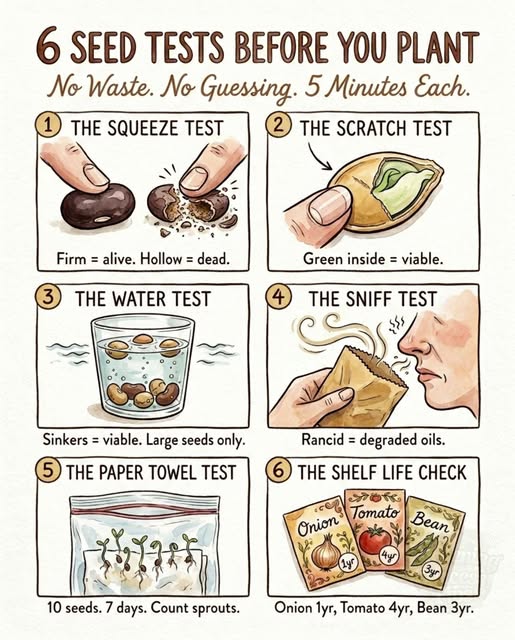
Before you plant a single seed this spring, pick one up and squeeze it between your fingers.
If it’s firm and resists pressure, the embryo inside is likely intact. If it crushes hollow or crumbles between your fingertips, that seed was dead before you opened the packet. That took two seconds. Here are three more tests that cost nothing.
The scratch test:
Take a larger seed — bean, pumpkin, sunflower — and nick the outer coat with your fingernail. White or green underneath means the embryo is alive and holding moisture. Brown or dry and hollow means the seed lost viability long before you found the packet in the back of the drawer. This works on any seed large enough to nick, and it tells you something no printed date ever will.
The sniff test:
Open the packet and breathe in. Healthy seeds smell like almost nothing — faintly earthy, mostly neutral. Seeds with high oil content — sunflower, corn, squash — go rancid as they age. If the packet smells stale, sharp, or off, the oils inside have broken down and germination will be poor.
The paper towel test:
This one settles every argument. Lay ten seeds on a damp paper towel, fold it over, slide it into an unsealed plastic bag, and leave it somewhere warm for seven to ten days. Count the sprouts. Eight or more means the packet is still strong. Five or fewer means it’s time to compost the rest and buy fresh.
Every one of these tests reveals the same truth: viability depends less on the date on the packet and more on how those seeds were stored. A cool, dry, dark spot keeps most varieties alive for years. A hot garage or a humid drawer kills them in a single season. T