You add the same bag of compost to every bed and assume the soil got what it needed.
It didn’t. Compost isn’t one product. What it started from, how it broke down, and how long it aged all determine what it delivers — and what it can’t.
Four types. Four different jobs. Most gardens need more than one.
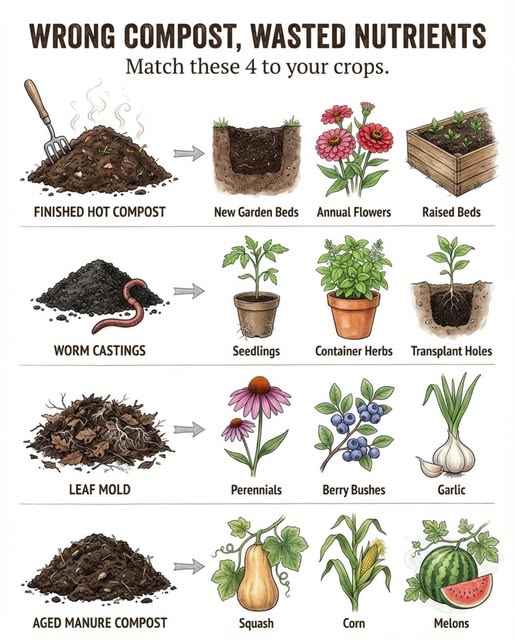
Hot compost — the all-purpose base. The sustained heat kills weed seeds and breaks material into stable, balanced soil amendment. Safe for direct contact with any planting. But the heat also burns off much of the nitrogen, so hot compost builds structure and biology more than it feeds. Heavy producers like tomatoes can stall mid-season if this is the only input.
Worm castings — concentrated and fast-acting. More available nutrients packed into a fraction of the volume. Ideal for transplant holes, seed-starting trays, and container refreshes where space limits how much you can add. Broadcasting it across full beds wastes its strength on soil that doesn’t need that intensity.
Leaf mold — almost no fertility, but holds several times its weight in moisture. Decomposed by fungi, not bacteria. It builds the crumbly aerated texture that perennials, berries, and garlic thrive in. Spreading it where heavy feeders need nitrogen is giving them a sponge when they’re asking for fuel.
Aged manure compost — the nitrogen source the others can’t match. Composted chicken, horse, or cow manure delivers the sustained feeding that squash, corn, and large tomatoes demand through a long season. The key word is aged — raw manure needs months of composting before it goes near food crops.