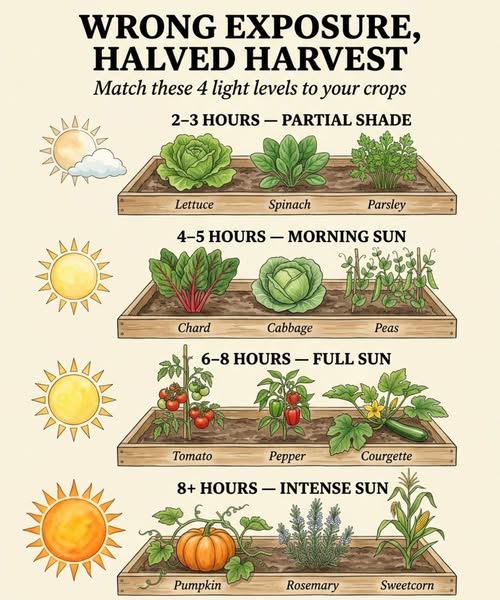
Wrong exposure, halved harvest. Most gardeners plant wherever there is space — not wherever there is the right light — and then blame the compost.
Every crop has a precise light requirement. Too much sun scorches delicate leaves. Too little and fruit never ripens.
2 to 3 hours of sun is enough for lettuce, spinach, lamb’s lettuce, and parsley. The shade actually protects them from bolting in warm weather.
4 to 5 hours suits chard, brassicas, peas, and leafy herbs. These grow well with morning sun and afternoon shade — the classic pole-facing or partially shaded bed is often better for these crops than a full equator-facing position.
6 to 8 hours unlocks tomatoes, peppers, and courgettes. Without full sun, British-grown tomatoes stay green and flavourless, and peppers remain thin-walled. An equator-facing raised bed or a warm sheltered wall is essential for these crops in most of the UK.
8+ hours of direct sun is the requirement for pumpkins and squash, Mediterranean herbs such as rosemary, thyme, and sage, and sweet corn. These are the plants that genuinely need the most open, unshaded, sun-facing position available. Rosemary especially thrives in a hot dry sun-facing spot and resents shade.
Map the sun hours on your bed before deciding what to plant in it.