
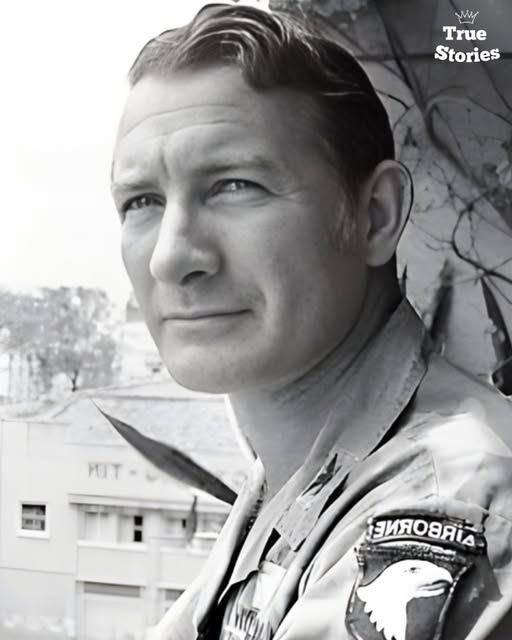
Colonel David Hackworth went on national television in 1971 and accused the U.S. Army of failing its own soldiers during the Vietnam War, knowing the interview would likely end his career.
At the time, David Hackworth was one of the most decorated officers in the military. He had earned eight Purple Hearts, two Distinguished Service Crosses, and more than 90 medals across Korea and Vietnam. Inside the Army, he was considered a combat legend. On May 27, 1971, sitting under studio lights on ABC’s Issues and Answers, he became something else.
A whistleblower in uniform.
Hackworth did not speak in generalities. He described drug use spreading through combat units, officers chasing body count statistics instead of protecting troops, and leadership decisions that he said were getting soldiers killed. He called the situation “a crisis in leadership” and warned that the Army was breaking down from the inside.
The reaction was immediate.
Pentagon officials were furious. Senior commanders accused him of disloyalty and exaggeration. Investigations into his conduct began within weeks. Hackworth later said he understood the risk before he spoke. “I knew when I did that interview, my career was over.”
The scrutiny intensified.
Military auditors examined his finances, his awards, and his command decisions. Hackworth denied wrongdoing, but the pressure mounted. Facing potential court martial and the collapse of his position, he resigned from the Army in 1971 after 26 years of service.
The consequences followed him into civilian life.
Some veterans saw him as a truth teller who spoke for enlisted soldiers. Others viewed him as a traitor who publicly attacked the military during wartime. The division never fully disappeared.
But Hackworth did not retreat.
In 1989, he published About Face, a 700 page memoir that detailed corruption, poor leadership, and systemic failures inside the Army. The book became a bestseller and is still used in military leadership courses. Later, as a military analyst for Newsweek and television networks, he continued criticizing Pentagon decisions, including readiness problems in the 1990s.
The irony defined his career.
David Hackworth had built his reputation by fighting wars aggressively and leading from the front. In Vietnam, he had created “Tiger Force” style units designed for mobility and survival, pushing commanders to reduce casualties rather than chase statistics.
His most controversial battle was not against an enemy.
It was against his own institution.
Colonel David Hackworth did not destroy his career because he opposed the military.
He risked it because he believed loyalty to soldiers mattered more than loyalty to the system that was failing them.