
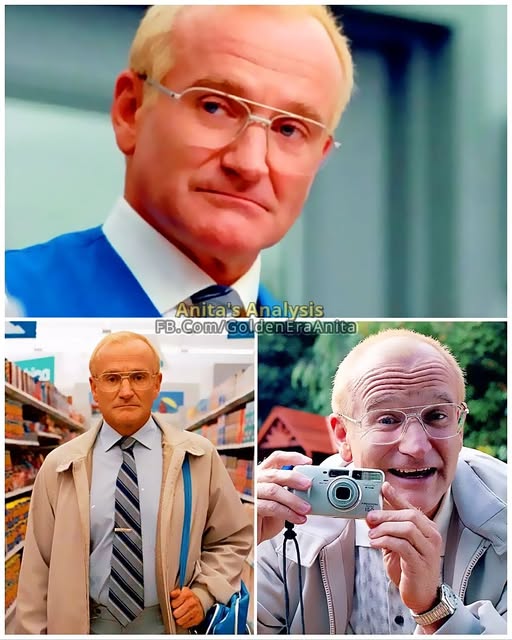
In 2002, Robin Williams accepted the role of Sy Parrish in the psychological thriller “One Hour Photo“ released in 2002, choosing a character defined by control, repression, and moral disquiet rather than humor or sentimentality.
At that point, Williams was commercially associated with warmth, verbal speed, and emotional release. Films like “Mrs. Doubtfire“ from 1993 and “Patch Adams“ from 1998 had reinforced an expectation that his presence signaled comfort or comic relief. Audiences trusted his energy as a stabilizing force. That trust became the raw material “One Hour Photo“ quietly dismantled.
Sy Parrish operates within routines, systems, and boundaries. He works inside a corporate photo lab, follows procedural rules, and measures his value through consistency. Williams approached the role by stripping away expressive habits. His vocal choices stayed flat and controlled. Physical movement remained minimal and purposeful. Emotional information arrived through pauses, eye focus, and restraint rather than dialogue emphasis. The effect unsettled viewers who expected expressive reassurance.
Critics responded by reframing how Williams could be discussed as a performer. Reviews in publications like “The New York Times“ and “Variety“ focused on psychological accuracy rather than transformation gimmicks. The performance was not praised for shock value. It was praised for discipline. Williams demonstrated that menace could exist without volatility and that threat could be communicated through order and fixation rather than chaos.
Audience reaction followed a different path. Many viewers reported discomfort rooted in familiarity. Sy Parrish felt recognizable as a type rather than an exaggeration. That recognition challenged the audience relationship with Williams himself. His public image had trained viewers to relax when he appeared on screen. “One Hour Photo“ inverted that conditioning. The same actor now required vigilance rather than trust.
Williams spoke in interviews around the film’s release about intentional role selection. He acknowledged an interest in characters who revealed interior damage without theatrical signaling. This approach aligned with earlier dramatic work in “Dead Poets Society“ from 1989 and “Good Will Hunting“ from 1997, yet “One Hour Photo“ removed inspirational framing. There was no redemptive arc offered to reassure the viewer.
The film also altered industry assumptions about casting reliability. Studios often rely on type consistency to protect audience expectations. Williams proved that subversion could succeed without alienation. Box office performance remained modest but stable. Critical discussion extended beyond opening weekend, sustaining attention through debate rather than spectacle. The role became a reference point in casting conversations about controlled antagonists.
Importantly, the film avoided positioning Sy Parrish as monstrous through excess. The writing and direction allowed the character to exist within recognizable social systems like retail labor, corporate rules, and suburban family imagery. Williams anchored that realism by refusing emotional escalation. This choice invited viewers to confront discomfort without narrative cushioning.
Over time, “One Hour Photo“ entered discussions about actor credibility rather than reinvention. Williams did not abandon comedy. He expanded the contract he held with audiences. Viewers learned that his presence did not guarantee safety or humor. It could also signal introspection and unease.
The immediate relevance of this performance remains tied to audience literacy. Modern viewers accustomed to tonal shifts across genres often cite Sy Parrish when discussing early examples of expectation reversal executed with restraint. The role continues to function as a benchmark for psychological realism achieved through subtraction rather than intensity.
Williams did not announce this shift through publicity or controversy. He allowed the work to recalibrate perception. That recalibration changed how audiences watched him afterward, carrying a quiet alertness into every subsequent role.
Robin Williams reshaped trust between performer and audience by proving that familiar charisma could conceal credible threat, altering how viewers assess tone, intent, and safety when an actor known for warmth appears.