
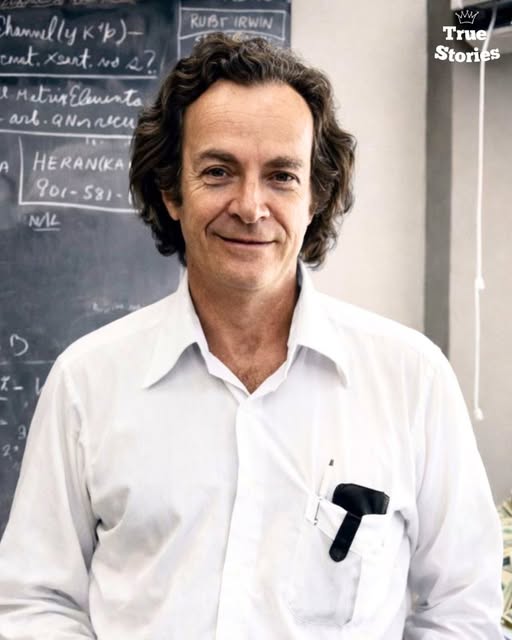
Richard Feynman embarrassed NASA on live television and forced the country to watch how easily intelligence gets buried by
procedure.
In 1986, after the Space Shuttle Challenger exploded, Feynman was appointed to the Rogers Commission as a symbolic gesture. A Nobel Prize physicist added for credibility. NASA assumed he would sit quietly while engineers handled the narrative. They miscalculated.
Inside closed sessions, Feynman discovered something worse than a technical failure. Engineers had warned management for years that the O-rings failed in cold temperatures. Data existed. Memos existed. Launches continued anyway. Risk had been normalized through language, not science (Rogers Commission Report; NASA internal memoranda).
Feynman refused the script.
At a televised hearing, he took a small clamp, a piece of rubber, and a glass of ice water. He submerged the O-ring material, removed it, and showed that it no longer returned to shape. No equations. No abstractions. Just physics. The room went quiet. NASA’s explanations collapsed in under thirty seconds (C-SPAN archival footage).
By the third turn, the consequence was institutional exposure. Feynman bypassed management entirely and published his own appendix to the final report, directly contradicting NASA leadership. He wrote that NASA’s stated risk estimates were fantasy and that reality was being replaced by wishful thinking. His line cut deeper than the demonstration. “For a successful technology, reality must take precedence over public relations, for nature cannot be fooled” (Rogers Commission Appendix F).
NASA was furious.
Internally, Feynman was treated as disruptive. He ignored hierarchy. He spoke directly to engineers instead of executives. He refused to soften language. The system could tolerate failure. It could not tolerate being exposed as dishonest. After the report, NASA adopted safety reforms without acknowledging how aggressively it had resisted them (NASA post-Challenger reviews).
This is the part the legend avoids.
Feynman did not save NASA. He outed it. He showed that catastrophic failure was not caused by ignorance, but by obedience. Smart people had been trained to defer to process over evidence. The explosion was not an accident. It was an outcome.
Feynman knew what it cost him. He was already dying of cancer. He had nothing left to trade for access. That made him dangerous. He told the truth because there was no future leverage to protect.
The cold truth is this. Richard Feynman did not expose Challenger because he was brilliant. He exposed it because he refused to play along. Intelligence is common. Honesty under pressure is rare. Systems do not fear failure. They fear someone who makes failure undeniable.
Sources (in text):
– Rogers Commission Report on the Space Shuttle Challenger Accident (1986)