
A speck of dust is usually harmless. It settles on a bookshelf or floats in a sunbeam, unnoticed. But in 1960, a single speck of dust was a weapon. It could destroy a missile guidance system or ruin a gyroscope.
The American military and manufacturing industries were facing a crisis. They were trying to build smaller, more precise electronics, but they kept failing. The culprit was always the air.
Microscopic particles were landing on sensitive parts during assembly. If a piece of metal the size of a bacteria landed on a circuit, the whole device was trash.
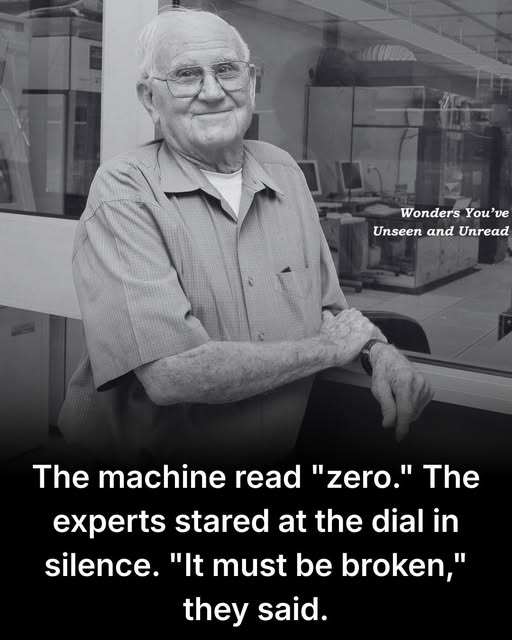
Willis Whitfield sat in his office at Sandia National Laboratories in New Mexico, watching this failure happen over and over. He was a physicist, a quiet man known for finding practical answers to hard questions.
The industry solution at the time was simple: clean harder.
Factories built “clean rooms” where workers wore tight plastic suits. They vacuumed the floors constantly. They scrubbed the walls. They pumped air in and sucked it out, creating strong winds to blow the dust away.
It never worked.
Whitfield realized why. By blowing air violently around the room, the ventilation systems were actually stirring up the dirt. The turbulent air scrubbed the floors and then deposited that dirt right onto the delicate parts. The solution was the problem.
He had a different idea. He did not want to mix the air. He wanted to rinse the room.
The established engineering world had a strict set of rules for ventilation. Standard practice dictated that air must be turbulent to be effective. The leading experts believed that trying to move air in a straight, steady line across an entire room was impossible. The friction from people and tables would disrupt the flow. The text books said it couldn’t be done.
This rule works—until it meets a person who refuses to read the book.
Whitfield ignored the experts. He designed a room lined with filters. Instead of blowing air around, he pushed a steady, solid wall of air from the ceiling to the floor.
He called it “laminar flow.” The air moved like a piston. It pushed every particle down to the floor and out through grates. It didn’t stir the dust; it evicted it.
He built a small model to test his theory. He turned on the fans. He turned on the particle counter, a machine designed to count the dust in the air.
The moment he switched it on, the counter went silent.
Whitfield looked at the numbers. Zero.
The other scientists in the room did not clap. They did not cheer. They looked at the machine, then at Whitfield, and shook their heads.
“The counter is broken,” one colleague said.
They were certain the reading was an error. In the history of their work, no room had ever measured zero dust particles. It was physically impossible. They forced Whitfield to reset the machine.
He did. It read zero again.
The discomfort in the room was palpable. It is difficult to accept a miracle when it makes all your previous hard work look foolish.
Whitfield invited skeptical competitors to try to break the system. They came to the lab with smoke pipes and devices to generate dust. They puffed smoke into the air, expecting it to linger.
The smoke vanished instantly. It didn’t swirl. It was pressed straight down into the floor and disappeared. The air in the room remained perfectly clear.
Within months, the disbelief turned into a scramble. The Radio Corporation of America (RCA) heard about the room and sent engineers to investigate. They were struggling to build reliable television tubes.
When they saw the dust count, they called their headquarters immediately. They began building Whitfield’s rooms that same year.
This quiet invention changed the structure of the modern world.
Before Whitfield, the manufacturing of microchips was nearly impossible. The failure rate was too high. Because of his “laminar flow” rooms, companies like Intel could manufacture complex processors.
Hospitals adopted the technology for operating rooms to stop infections. Pharmaceutical companies used it to keep drugs pure.
Whitfield did not patent the idea for himself. He was a government employee, and he gave the invention to the world. He didn’t become a billionaire. He simply solved the problem.
Today, every smartphone, every modern car, and every advanced medical device exists because one man decided that the experts were cleaning the room the wrong way.
Sources:
Sandia National Laboratories Archives; The National Inventors Hall of Fame (Willis Whitfield).