If you know anyone pregnant or planning a child, please share this.

Tom's Blog on Life and Livingness
If you know anyone pregnant or planning a child, please share this.
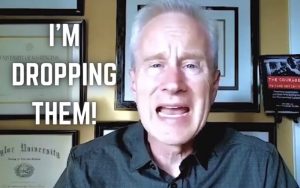
Dr. Thomas explained that he’s dealt with vaccine side effects as a pediatrician and started witnessing the industry’s harm two decades ago.
He asks Peter, “You hadn’t been, I don’t think in your typical world, having to worry about that, and then all of a sudden, you try to do the right thing and what have you experienced and how have you handled that as somebody who was so at the top of your field?”
Dr. McCullough responds, “I could tell you through the course of my career, my personal life, I never questioned vaccines. I assumed they were safe and effective; it wasn’t my area of research.
And when I was asked to support a vaccine, like the 13-valent pneumococcal vaccine in adult medicine, I did so. Or when I was asked to take the influenza vaccine, I did so, but since all of this has happened, Paul, I’ve actually called to question even those vaccines.
And on my Twitter feed, @P_McCulloughMD, I just present the data, the publications. The vaccine efficacy for the 13-valent pneumococcal vaccine, in terms of protection against hospitalization and death, is 9%, Paul. Nine!”
Chuckling at the figure, Dr. Thomas states, “I am not surprised by that. The strains have changed anyway.”
Well, actually, as explained by Dr. McCullough, “That’s even through the period of time when it should have covered.”
He then moves on to the less-than-desirable results of the flu vaccine.
“The vaccine efficacy for this year’s influenza vaccine, which I took last year, 16%, Paul.”
Abysmal results. Now, what is the conventional standard for calling something a vaccine? Dr. McCullough breaks it down.
“Standard conventional acceptance criteria, something that would be acceptable that you would actually consider [recommending or taking], would be at least 50% vaccine efficacy and should last at least a year.
So these are nowhere close to being acceptable products in modern medicine. And those are just two that people would consider uncontroversial, but you know, what? Doctors’ lives and our knowledge and our analyses of things change as the science changes, and based on those contemporary results, I’m dropping them! They’re no longer supportable to me, for my practice for myself.”
Great to see Dr. McCullough coming around to this issue. To see the full interview, follow the link below.
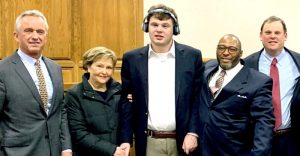
In a riveting legal battle spanning two decades, William Yates Hazlehurst (“Yates”) on Feb. 2, 2022, became the first vaccine-injured person with a diagnosis of autism to reach a jury since the National Childhood Vaccine Injury Compensation Act of 1986 (the Vaccine Act) became law.
In a medical malpractice case filed in the Madison County Circuit Court in Tennessee, attorneys for Yates argued the clinic and physician who administered Yates’ vaccines, including the measles-mumps-rubella (MMR) vaccine on Feb. 8, 2001, should be held liable for medical malpractice and the neurological injuries Yates developed after being vaccinated.
Although the jury decided in favor of the physician — who Yates’ father said failed to adequately inform the parents of the risks of vaccinating Yates while he had an active ear infection — the case exposed major flaws in a system designed to protect children and shield pharmaceutical companies and physicians from liability for vaccine injuries.
“In the fight to end the autism epidemic, we were all hoping for the one knockout punch that would bring the truth to light and help end the autism epidemic,” Yates’ father, Rolf Hazlehurst, said.
“This medical malpractice trial was the only opportunity in the last 35 years for a jury to hear evidence in a court of law regarding whether a vaccine injury can cause neurological injury, including autism.”
Hazlehurst, who is a senior staff attorney for Children’s Health Defense (CHD), said “unless the Vaccine Act is repealed, my son is probably the only vaccine-injured child with a diagnosis of autism who will ever reach a jury.”
The Hazlehurst case was a medical malpractice case against the doctor who administered the pediatric vaccines that, in the opinion of the world’s top experts, sent Yates, now 22, spiraling into the depths of severe, non-verbal autism.
Although the case was originally filed in 2003, it didn’t receive its day in court for 19 years because a separate case involving Yates’ injury first had to work its way through the National Vaccine Injury Compensation Program (NVICP).
When Yates’ medical malpractice case was finally heard, the trial exposed alarming evidence about autism and vaccines, the low standard of care practiced by physicians administering pediatric vaccines and financial conflicts of interests between pharmaceutical companies that manufacture vaccines and government agencies entrusted with vaccine safety.
During the trial, the world’s top experts in the field of autism and mitochondrial disorder explained how the administration of “routine” childhood immunizations can cause autism, brain injury, and many other disorders.
According to the National Institute of Mental Health, autism is a neurological and developmental disorder that affects how people interact with others, communicate, learn and behave. Symptoms can be severe and usually manifest before a child turns 3, which coincides with the age children receive the most childhood vaccines.
Increasing evidence indicates a significant proportion of individuals with autism have concurrent diseases such as mitochondrial dysfunction, abnormalities of energy generation, gastrointestinal abnormalities and abnormalities in the regulation of the immune system.
Yates’ medical malpractice trial illuminated how vaccines can cause autism in children with mitochondrial disorder and showed how the Vaccine Act — which is designed to ensure informed consent and compensation to injured children — is an abject failure because it’s largely unenforceable.
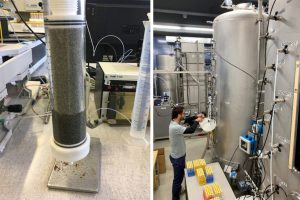
Microplastics are ubiquitous in the environment and have been detected in marine water, wastewater, and even in drinking water, both bottled and tap water. This has led to concerns about the efficacy of current drinking water treatment processes to remove these contaminants.
In 2019, Eawag and the Zurich Water Works launched a joint project to find out whether the tiniest of particles, measuring less than a thousandth of a millimeter across, actually find their way from lake water into drinking water pipes and therefore into homes, hospitals and restaurants. The team has now published the results in the Journal of Hazardous Materials.
The new study investigated the performance of different techniques when it comes to removing nanoplastics from drinking water. Researchers found that the biologically active slow sand filter was the most effective at retaining nanoparticles – achieving an efficacy level in the region of 99.9%. This was shown both in the laboratory tests and in larger, realistic tests and modeling.
https://www.inceptivemind.com/slow-sand-filter-remove-nanoplastics-drinking-water/24937/

There folows an open letter from 76 medics, scientists and healthcare professionals to the Medical and Healthcare products Regulatory Agency (MHRA) and other Government officials setting out comprehensive reasons why the recent U.S. FDA decision authorising Covid vaccinations in infants must not happen here.
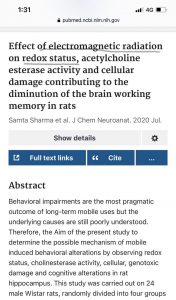
https://pubmed.ncbi.nlm.nih.gov/32205214/
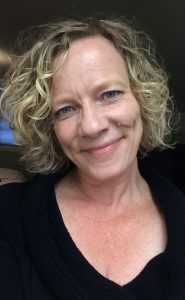
Yvonne Ator writes:
My friend Kerri Grote died this morning. While I am still processing, I wanted to share the words she left to be read upon her passing. Life is short. I hope they bring you perspective, inspiration and healing like they did for me. R.I.P Kerri. I love you.
“If you’re reading this, this fu$king brain cancer probably got me.
But let me be crystal clear while I’m able: I did not ”lose a battle” against cancer. This is a ridiculous, steamy pile of horse shit that society has dumped on cancer patients. Western medicine, and Western culture, especially, is so uncomfortable talking about death that instead it created this “battle” analogy that basically shames people who die from cancer.
News flash: None of us gets out alive from this rodeo called life.
There is no shame in dying from cancer – or any serious illness. And it doesn’t need to be a battle. It’s a transition that each of us will go through. I was asked by a shaman, whom I spoke to after my second brain surgery, “Are you running towards life or running away from death?”
Whoa! That got my attention.
There’s a BIG difference. I got it wrong more often than not.
Don’t let fear fuel your choices. Live fearlessly. Run TOWARDS life. Don’t worry about what people will think. Trust me, it doesn’t matter.
Focus on you. Be true to yourself. Be your own best friend. People who tell you you’re selfish are not your people. If the voice in your head says these unkind things, get a new voice. Honor your mental health and seek out a good therapist with the same vigor you’d search for a romantic partner.
Speaking of, be intentional about cultivating friendships that lift you up. As those friendships grow and change, don’t overlook them while you search for that “great love of your life.” (No, I’m not suggesting you sleep with your bestie. But you do you!)
Another unhelpful message that we get from society is that we need a “love of our life,” as a romantic partner.
Single and childless when I was diagnosed with terminal brain cancer, I looked around my life and came up sputtering and sobbing from the wave of grief washed over me. I thought I’d be doing this alone… no husband, no kids, no “great love.”
How wrong I was. At the first appointment with my neuro oncologists, one of the nurses diligently hauled in chair after chair for the great loves of my life who came with me that horrible day and many days after that.
I sat and listened while the doctor explained the 12-month treatment plan, focusing on my breathing, then looked around the room…. filled with great loves of my life: incredible women friends whom I had met at various stages of my life.
Surround yourself with people who contradict that unkind voice, people who see your light, and remind you who you are: an amazing soul.
Learn how to receive these reflections from your people. Because they are speaking the Truth.
Love yourself, no matter how weird and silly it might feel. Every morning, give yourself a hug before your feet hit the floor. Look deeply into your eyes in a mirror. Say to yourself, out loud, “I trust you.” That voice in your head might say you’re a dork. Ignore it.
As I prepare to leave this body and embark on this mysterious journey of my soul, I hope these observations from my deathbed are somehow useful.
What I know, deep in my bones, is that learning to love myself has led me to be able to say this: I’m so proud of how I lived.
May you, dear reader, feel the same when you head out on your soul journey, too. Until then, enjoy the ride. And always eat dessert first, especially if there’s pie!”