A thought provoking article on the necessity to understand and tackle the challenges of AI while still possible to do so.
https://www.malone.news/p/no-speciation-without-representation
Tom's Blog on Life and Livingness
A thought provoking article on the necessity to understand and tackle the challenges of AI while still possible to do so.
https://www.malone.news/p/no-speciation-without-representation
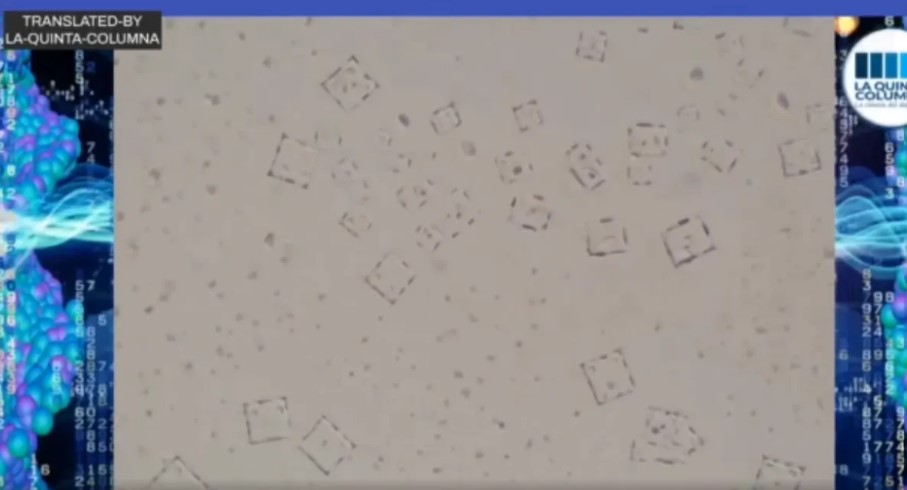
Ana Mihalcea writes: La Quinta Columna posted yesterday video footage mixing local anesthetics with a solution of tobacco. They showed disassembly of the microchips.
I have had extensive experience in looking at peoples blood who were using Nicotine patches or smoking pipe tobacco and my observations in live blood have shown that the Nicotine does not clear the blood alone, nor does it prevent the rubbery clot formation. I recommend it as an important adjunct to those who are able to tolerate it in addition to other detoxification strategies like EDTA, Vitamin C, Methylene Blue, NAC, Activated Charcoal and other molecules. I do not recommend smoking cigarettes or vaping, as there are significant amounts of metals inhaled which are not needed, including radioactive cesium in tobacco leaves. Patches or lozegens would be preferred for that reason.
Dr Ardis has provided extensive excellent education surrounding it and I have seen in clinical practice that 7mg patches are well tolerated.
Great work by La Quinta Columna!
https://anamihalceamdphd.substack.com/p/new-findings-by-la-quinta-columna
https://articles.mercola.com/sites/articles/archive/2024/08/22/diaper-pfas.aspx
Casey Means was a Stanford-educated surgeon. Her brother Calley was a lobbyist for pharma and the food industry. Both quit their jobs in horror when they realized how many people were being killed by the systems they participated in. This is an amazing story.
Watch here: https://rumble.com/v5b73od-calley-and-casey-means-the-truth-about-ozempic-the-pill-and-how-big-pharma-.html
This is a great article by Keith Scott-Mumby.
Today’s piece is based on a presentation I did in front of the Prime Minister of Malaysia, in Kuala Lumpur.
Bullet #1:
Losing focus by concentrating on isolated technical information and spurious quantitative measurements does not lead to a workable science of nutrition.
The present science of nutrition is a fraud and needs ousting in place of something with more wisdom and workability.
Bullet #2:
The creation, repair and maintenance of healthy body tissues cannot be reduced to itemized lists of figures, like a shopping list.
Bullet #3:
This kind of “nutrient accountancy”, as I call it, shows deplorable lack of understanding of the way Nature works and the meaning of holistic integration of health.
Bullets #4 and #5:
It’s no good studying ancestral foods when few people eat ancestral foods today! Besides, food contents mean nothing as farming methods change.
In other words, you can’t have meaningful accountancy when the balance side is bankrupt!
Bullet #6:
Every individual is different and varies in nutritional requirements from time to time and different individuals have highly disparate nutritional requirements at any one time. In other words, people differ in their needs but also, the SAME individual differs in his or her needs from time to time!
The Bigger Picture
Stepping back and looking at the “bigger picture” I feel is the way to teach people better nutrition and a fuller grasp of the concepts of holism and natural living. For this purpose I have devized the idea of 10 simple basic rules for nutrition:
Rule #1: No-one will cure anything to last, no matter how brilliant you are, or what healing paradigm, if the patient is in a negative nutritional balance.
Rule #2: Nothing in the body is fixed. It ALL changes over, every few months. Therefore nutrition is a vital construction factor.
Rule #3: What you are eating that you shouldn’t is of far more importance than what you not eating that you should.
This last is my unique contribution to nutrition and medicine. It fits with what I call my “180-degree rule”… Everything is backwards to conventional wisdom, a half clockwise turn around.
Rule #4. Natural foods in their natural state manifest energetic properties that bear no relation to their biochemical composition. The whole is more than the sum of the parts!
Rule #5: What is swallowed does not equate to nutrition. Malabsorption and dysbiosis are rampant. Digestive unwellness is the norm.
Rule #6: RDAs and the like take no account of different rates of absorption, individual biological variation, stress demands, or that the minimum requirement to avoid fatal avitaminosis is a totally different concept than the amount required for optimum health.
Rule #7: No nutrients act alone, they are all interdependent. All studies which purport to examine the effects of vitamins and minerals in isolation are likely to be misleading.
Rule #8: Nutrition supplementation for detoxification is a life-saving factor in the modern world. We cannot have functioning enzymes to keep our bodies healthy and poison-free if certain essential nutrients are lacking.
Rule #9. Foodstuffs, notably plants, contain an abundance of pharmacologically active substances. The effect of these drugs can rightly be seen as a sub-function of nutrition (complex, vast subject!)
Rule #10: What goes in doesn’t necessarily come out! (nutritional implosion?) I have had cases where years of colonic residues have emerged. One lady recognized coloured food grains she had eaten 40 years before (and never since)!
Set these facts (my experience) against the fact that more and more diseases have chronic infections and inflammation as their seat:
• Heart disease
• Arthritis
• Diabetes
• Cancer is inflammatory
There was somewhat more to the presentation than this but let me finish with these bullets:
• Choose a diet rich in a variety of plant-based foods.
• Eat plenty of vegetables and fruits.
• Maintain a healthy weight and be physically active.
• Drink alcohol only in moderation, if at all.
• Select foods low in fat and salt.
• Prepare and store food safely.
• Consume only nutritious books, jokes, movies etc…
And the last slide was about Vitamin L (love)!
• Love as a factor in health and longevity
• love of self and others
• love of life
• love is the healer of all ills
Well, I hope you found it interesting to have facts slung at you in this style. These are truly the basics and you need to keep them in mind at all times!
Vitamin L to you all!
Prof. Keith Scott-Mumby
The Official Alternative Doctor
No references: I am the source of this!
From: https://alternative-doctor.com/getting-down-to-nutritional-bullets/
Once again, we gain further understanding as to why Vitamin D is so critical in the battle against the Spike Protein.
Finish reading: https://wmcresearch.substack.com/p/friday-hope-vitamin-d-p53-and-the
With Nyema Hermiston; RN ND Adv Dip Hom BScHons
A seminar presented by the NSW Branch of the Australian Homeopathic Association
While investigating autism treatments for a major project to complete her science degree, Nyema Hermiston uncovered a surprising number of respected scientific and medical papers that help to explain the rapid increase world-wide in the number of recorded diagnoses of child autism.
In this seminar, Nyema succinctly presents her findings that are based on her many years of dedicated research. At the same time, Nyema proposes a variety of evidence-based strategies that can assist in promoting vital, healthy neuro-development in children.
This seminar is especially suitable for homeopaths and other health professionals who treat autistic children – as well as providing expectant parents and others who are genuinely interested in benefiting from this newly uncovered knowledge on how to reduce the risks of autism.
Video Links
(expire August 20 2025)
Part 1: What Affects Neurodevelopment? (1 hour) AUD $9.95
https://attendee.gotowebinar.com/register/9127216887867931479
Part 2: Autism Risk Factors (1 hour) AUD $9.95
https://attendee.gotowebinar.com/register/3284970649773921375
Part 3: Do Parents Wait & See If Their Child Develops Autism? (1 hour) AUD $9.95
https://attendee.gotowebinar.com/register/7273284152787218519
In part one of this series, we featured the medication-free ward at the Asgard Psychiatric Hospital in Norway, where the staff have been implementing a way of treating people with severe emotional health problems without coercing them to take medication. In part two, we visited the medication-free ward at Blakstad Psychiatric Hospital which pioneered Basal Exposure Therapy, a trauma-informed approach to treating the root causes of emotional disorder.
Despite the striking successes achieved by these programs, the Norwegian government is in the process of closing down all the country’s non-medication wards.
It has been a brief, yet important experiment in building a new mental health paradigm. In 2015, the Norwegian Health Minister ordered the country’s health authorities to create non-drug options for those incarcerated, willingly or not, in psychiatric hospitals. Another of the institutions that responded to the call was the Hurdalsjoen Recovery Center.
Hurdalsjoen was more ambitious than most other psychiatric hospitals. Instead of setting aside one small ward and maintaining the rest of the hospital on a “treatment as usual” protocol, it decided to transform the entire institution.
Hurdalsjoen’s founder, Ole Andreas Underland, had been inspired by a presentation at a conference that suggested a completely new approach. One particular graph told him a story that has been long known in certain circles but which psychiatry is not eager to promote. The graph (seen below) is from a study published in 2007 and yet six years passed before Underland heard of it.

The study, published in the Journal of Nervous and Mental Disease, demonstrated clearly that not only could “schizophrenics” recover, but that they were far more likely to do so if they stopped taking their “anti-psychotic” medication. In fact, they were eight times more likely to recover once off drugs.
Underland was taken aback by the findings.
The treatment we have used since the 1950s has been medication, and it has been proven wrong. We spend more and more money on medication, and yet there is the continued growth of mental disorders. Relying on medication obviously doesn’t work.
The program he created at Hurdalsjoen was modeled on what he knew patients wanted. How did he know? He asked them — he sought out opinions from user groups, people in psychiatric wards or taking psychiatric medication, and took their requests seriously. By the time the Health Minister issued his directive on drug-free options in 2015, Hurdalsjoen was already implementing what the minister had in mind, and more.
It turned out that people didn’t want drugs, nor did they want to be shut up in sterile institutions. They wanted healthy food, the opportunity to be in nature, exercise options, and time and facilities for creative projects. Underland made sure his institution provided it all. The hospital was situated on the banks of Lake Hurdal, and patients were free to wander around its grounds and even go on shopping trips in the nearby town.
They also had an unusual relationship with staff — which was one of Underland’s main aims when he selected staff with “lived experience” of being patients in a psychiatric institution. A full 50 percent of staff were former psychiatric inmates, and they ate together with the current patients, at the long wooden tables in the dining room that overlooked the lake.
There were 60 beds at Hurdalsjoen, and most of the time, all were occupied. Almost all the patients who came were defined as chronically “ill,” having suffered through years in psychiatric hospitals where they were drugged, often forcibly.
When Robert Whitaker, founder of the Mad In America website, visited Hurdalsjoen in 2019, he met some of the current and former patients, including Tonje Finsas, the first person to have been treated there. When Finsas arrived in Hurdalsjoen she was taking a total of 31 different drugs, including 3 antipsychotics. She was just 31 years old and had been in and out of psychiatric hospitals for 20 years — with a total of 220 separate hospitalizations.
Finsas had left Hurdalsjoen by 2019 and was living independently in a nearby village and working part-time for the hospital, running the activities room. There were plans for her to begin working full-time as what Underland called a “recovery pilot” — someone who helps to guide new patients. She was down to just 2 drugs from the original 31.
Finsas credits Hurdalsjoen for saving her life.
My story shows it is possible to get better. It is possible to get back out there. Yes, I am high and low still, but I control it, I know what triggers it, and I know what to do … Without [this place], I wouldn’t be alive today.
Finsas is one of around 650 who passed through Hurdaljoen over the years. Between 2013 and 2021, treatment was fully funded by the government, even though it was a private hospital. Underland, when interviewed by Whitaker a few years ago, was optimistic that his model of care could become the standard for mental health treatment in Norway, and even beyond.
This is going to be the most important psychiatric hospital that is making this revolution happen. We will show it can be done, and then the revolution will have to happen.
He had good reason to feel confident in the future. After all, a survey of former patients had shown that 80 percent were either “very satisfied” or “satisfied” with the treatment.
Eighty percent of these patients meet their personal goals of reducing or phasing out pharmaceuticals altogether. But phasing out drugs is very demanding for many, and it has to be customized because some patients will respond with quite heavy side effects even if the dosage is taken down very little. We see that especially on antidepressants that they are very, very tough to reduce for some patients, but some other patients can reduce without having any problems at all.
But Underland’s dream was not to be. In 2022, when the Labor Party came to power, public funding of private hospitals stopped. The Hurdalsjoen Recovery Center closed in early 2023.
Then, in June of 2023, the authorities announced that the Basal Exposure Therapy ward at Blakstad Psychiatric Hospital would be closing. In October, the University of North Norway Hospital, which runs Asgard Psychiatric Hospital, announced that its six-bed medication-free ward would be closing too.
The announcement that Blakstad’s BET ward would soon be no longer was a shock to all those who had invested so much in it. After all, it had gained international repute in a WHO document that singled it out for praise as one of the three programs that best embodied a human-rights approach to mental health care.
The only other psychiatric hospital in Norway that offers medication-free services to mental health patients, including those who are psychotic, is at Nedre Romerike. It too is scheduled to close its drug-free ward.
After so many years of extraordinary effort, giving renewed life and hope to hundreds of patients, these developments are “a tragic outcome,” according to Mette Ellingsdalen, a leader at We Shall Overcome, an organization of “users and survivors of psychiatry,” as it defines itself.
In the last year we have seen the Norwegian Psychiatric Association ramp up their public defense for biomedical psychiatry. While the opposition against the medication-free wards from many psychiatrists has been there all the time, it has now become a more public stance from the psychiatric association. We also have a government that has stated it’s “time to listen to the mental health professionals.”
Ellingsdalen was blunt when describing what she feels are the reasons why all the programs have been consigned to the psychiatric dustbin — the fears of “traditional” psychiatrists that their modes of treatment are being undermined by a successful competitor:
One of the main justifications for a treatment regimen that harms so many of its patients is that there are no viable alternatives. As a result, any place that demonstrates that it is possible to help people without infringing on their human rights is perceived as a fundamental threat to the system, rather than a place to learn from.
Professor Larsen of the department of psychiatry at Norway’s Stavanger University has been scathing in his criticism of drug-free programs, warning that they could cost lives. He has not provided any evidence to back up his assertion. Meanwhile, lives are ruined and lost due to the adverse effects of the psychiatric drugs he and almost all other psychiatrists dispense.
Robert Whitaker concluded his farewell tour of Norway’s “light in the north” with a poignant description of the Hurdalsjoen Recovery Center:
I paid a final visit to Hurdalsjoen which formed a lasting memory of the place. In a living room area, a small group of patients were gathered around a fireplace, and they were laughing about how earlier that day, several had climbed down a ladder into a hole cut in the thick ice of Lake Hurdal, and — surmounting their fears — had taken a quick dip in the ice-cold water.
Now Hurdalsjoen is shuttered, and patients no longer walk its grounds dreaming of a better future.
The information contained in this article is for educational and information purposes only and is not intended as health, medical, financial or legal advice. Always consult a physician, lawyer or other qualified professional regarding any questions you may have about a medical condition, health objectives or legal or financial issues. If you are struggling with suicidal thoughts, you can call a qualified free mental health helpline or seek help from a qualified therapist.