
Lose Yourself
Somebody spliced together Eminem’s “Lose Yourself” (2008) using only movie quotes, and it’s amazing video editing.
Blood Disorders Post COVID
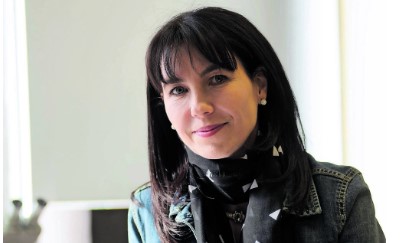
This lady has been very busy investigating blood abnormalities. Check out her work! https://pubmed.ncbi.nlm.nih.gov/?orig_db=PubMed&term=pretorius%20e%20%5Bau%5D&Go=Go&cmd=Search
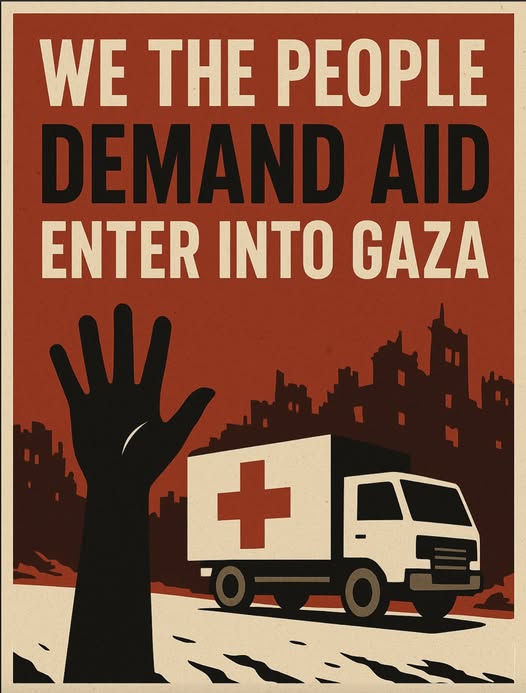
Aid For Gaza
Quote of the Day
“Let everyone sweep in front of his own door, and the whole world will be clean.” – Johann Wolfgang von Goethe, Writer (1749 – 1832)
Grace, Flexibility, Elegance, Agility, Skill – What does she not have?

Angelova Boyanka from Bulgaria shows red ball who is boss at the European Championship Final in Torino 2008.
Click to view the video: https://www.flixxy.com/gymnast-performer-boyanka-angelova.htm
No To Climate Totalitarianism
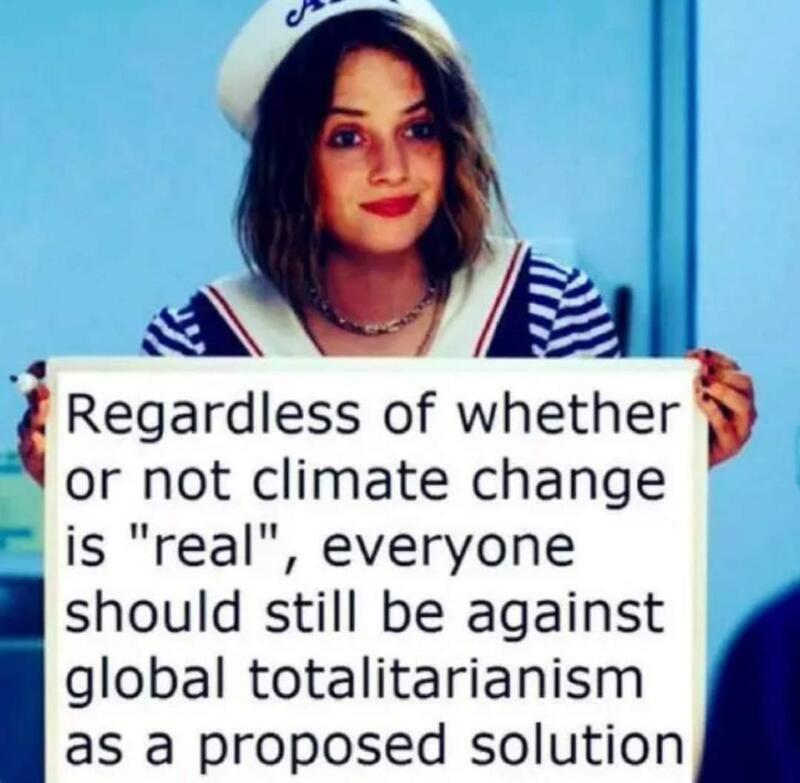
Personal Freedom IS The Greater Good!
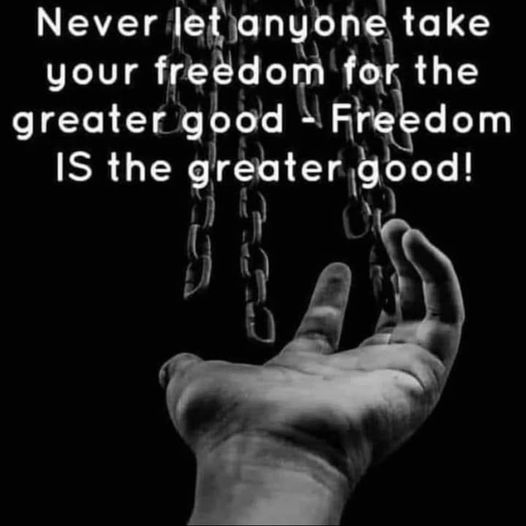
Some may not be aware of it but to attain and maintain personal freedom does require that the individual operate ethically and responsibility for himself and others.
Robert F Kennedy Jr Speech
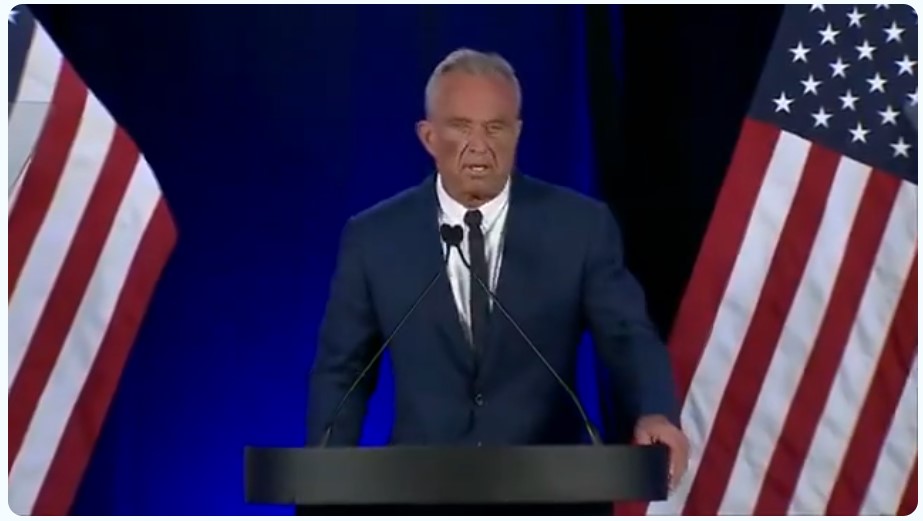
There is so much highly important health data in this I thought it worth sharing with you. The person he mentions, Calley Means, was recently interviewed by Tucker Carlson. That great interview will be in a newsletter soon. Look out for it. Oh heck! Might as well give you the link for it now: https://rumble.com/v5b73od-calley-and-casey-means-the-truth-about-ozempic-the-pill-and-how-big-pharma-.html
Sorry to keep everybody waiting.
Sixteen months ago, in April of 2023, I launched my campaign for president of the United States. I began this journey as a Democrat, which is the party of my father, and my uncle. It is the party which I pledge my own allegiance to. Long before I was old enough to vote, I attended my first democratic convention at the age of six in 1960, and back then, the Democrats were the champions of the Constitution and of civil rights.
The Democrats stood against authoritarianism, against censorship, against colonialism, imperialism, and unjust wars. We were the party of labor, of the working class. The Democrats were the party of government transparency and the champion of the environment. Our party was the bulwark against big money interests and corporate power. True to its name, it was the party of democracy.
As you know, I left that party in October because it had departed so dramatically from the core values that I grew up with. It had become the party of war, censorship, corruption, Big Pharma, big tech, big ag and big money when it abandoned democracy by canceling the primary to conceal the cognitive decline of the sitting president, I left the party to run as an independent.
The mainstream of American politics and journalism derided my decision. Conventional wisdom said that it would be impossible even to get on the ballot as an independent, because each state poses an insurmountable tangle of arbitrary rules for collecting signatures. I would need over a million signatures, something no presidential candidate in history had ever achieved, and then I’d need a team of attorneys and millions of dollars to handle all the legal challenges from the DNC.
The naysayers told us that we were climbing a glass version of Mount impossible. So the first thing I want to tell you is that we proved them wrong. We did it because beneath the radar of mainstream media organs, we inspired a massive independent political movement, more than 100,000 volunteers sprang into action, hopeful that they could reverse our nation’s decline. Many work 10 hour days, sometimes in blizzards and blazing heat.
They sacrificed family time, personal commitments and sleep, month after month, energized by a shared vision of a nation healed of its divisions, they set up tables at churches and farmers markets. They canvassed door to door in Utah and in New Hampshire.
Volunteers collected signatures in snowstorms, convincing each supporter to stop in the frigid cold, to take off their gloves and to sign legibly during a heat wave in Nevada. I met a tall, athletic volunteer who cheerfully told me that he had lost 25 pounds collecting signatures in 117 degree heat.
To finance this effort, young Americans donated their lunch money, and senior citizens gave up their part of their social security checks. Our 50 state organization collected those millions of signatures and more. No presidential campaign and his political, American political history has ever done that, and so I want to thank all of those dedicated volunteers and congratulate the campaign staff who coordinated this enormous logistical feat.
Your accomplishments were regarded as impossible. You carried me up that glass mountain. You pulled off a miracle. You achieved what all the pundits said could never be done. You have my deepest gratitude, and I’m never going to forget that, not just for what you did for my campaign, but for the sacrifices you made because you love our country.
You showed to everyone that democracy is still possible here, it continues to survive in the press and in the idealistic human energies that still thrive beneath a canvas of neglect and of official and institutional corruption.
Today, I’m here to tell you that. I will not allow your efforts to go to waste. I’m here to tell you that I will leverage your tremendous accomplishments to serve the ideals that we share, the ideals of peace, of prosperity, of freedom, of health, all the ideals that motivated my campaign.
I’m here today to describe the path forward that you’ve opened with your commitment and with your hard labors. Now in an honest system, I believe that I would have won the election, in a system that my father and my uncles thrived in a system with open debates, with fair primaries, with regularly scheduled debate, with fair primaries, and with a truly independent media, untainted by government propaganda and censorship and a system of nonpartisan courts and election boards, everything would be different.
After all, the polls consistently showed me beating each of the other candidates, both in favorability and also in head-to-head matchups. But I’m sorry to say that while democracy may still be alive at the grassroots, it has become little more than a slogan for our political institutions, for our media and for our government, and most sadly at all for me, the Democratic Party.
In the Name of saving democracy, the Democratic Party set itself to dismantling it, lacking confidence in its candidate that his candidate could win in a fair election at the voting booth.
The DNC waged continual legal warfare against both President Trump and myself. Each time that our volunteers turned in those towering boxes of signatures needed to get on the ballot, the DNC dragged us into court, state after state, attempting to erase their work and to subvert the will of the voters who had signed those petitions. It deployed DNC-aligned judges to throw me and other candidates off the ballot and to throw President Trump in jail,
It ran a sham primary that was rigged to prevent any serious challenge to President Biden. Then when a predictably bungled debate performance precipitated the palace coup against President Biden, the same shadowy DNC operatives appointed his successor, also without an election.
They installed a candidate who was so unpopular with voters that she dropped out in 2020 without winning a single delegate.
My uncle and my father both a relish debate. They prided themselves on their capacity to go toe to toe with any opponent and the battle over ideas, they would be astonished to learn of a Democratic Party presidential nominee who, like vice president Harris, has not appeared in a single interview or an unscripted encounter with voters for 35 days.
This is profoundly undemocratic. How are people to choose when they don’t know whom they are choosing, and how can this look to the rest of the world? My father and my uncle were always conscious of America’s image abroad because of our nation’s role as the template for democracy, the role model for democratic processes, and the leader of the free world, instead of showing us her substance and character, the DNC and its media organs engineered a surge of popularity for vice president Harris based upon nothing, no policies, no interviews, no debates, only smoke and mirrors and balloons in highly produced Chicago circus.
In Chicago, the democratic speakers mentioned Donald Trump 147 times just on the first day of the convention. Who needs a policy when you have Trump to hate?
In contrast, at the RNC convention, President Biden was mentioned only twice in four days.
I do interviews every day. Many of you have interviewed me. Anybody who asks gets to interview me. Some days, I do as many as 10. President Trump, who actually was nominated and won an election, also does interviews daily. How did the Democratic Party choose a candidate that has never done an interview or debate during the entire election cycle? We know the answer.
They did it by weaponizing the government agencies. They did it by abandoning democracy. They did it by suing the opposition and by disenfranchising American voters. What most alarms me isn’t how the Democratic Party conducts its internal affairs or runs its candidates.
What alarms me is they resort to censorship and media control, and the weaponization of the federal agencies. When a US president colludes with or outright coerces media companies to censor political speech, it’s an attack on our most sacred right, a free expression, and that’s the very right upon which all of our other constitutional rights rest.
President Biden mocked Vladimir Putin’s 88% landslide in the Russian elections, observing that Putin and his party controlled the Russian press and that Putin prevented serious opponents from appearing on the ballot.
Here in America, the DNC also prevented opponents from appearing on the ballot. Our television networks exposed themselves as Democratic Party organs over the course of more than a year. In a campaign where my poll numbers reached at times in the high 20s, the DNC-allied mainstream media networks maintained a near perfect embargo on interviews with me during this 10 month presidential campaign. In 1992 ROS perot gave 34 interviews on mainstream networks.
In contrast, during the sixteen months since I declared, ABC, NBC, CBS, MSNBC and CNN combined, gave only two live interviews from me. Those networks instead, ran a continuous deluge of hit pieces with inaccurate, often vile pejoratives and defamatory smears. Some of those same networks and colluded with the DNC to keep me off the debate stage.
Representatives of those networks are in this room right now, and I’ll just take a moment to ask you to consider the many ways that your institutions have abdicated this really sacred responsibility: the duty of a free press to safeguard democracy and to always challenge the party in power.
Instead of maintaining that posture of fierce skepticism toward authority, your institutions have made themselves government mouthpieces and stenographers for the organs of power. You didn’t alone cause the devolution of American democracy, but you could have prevented it.
The Democratic Party’s censorship of social media was even more of a naked exercise of executive power. This week, a federal judge, Terry Doughty, upheld my injunction against President Biden calling the White House’s censorship project, quote, “The most egregious violation of the First Amendment in the history of the United States of America.” ’ [The] 155 page decision details how just 37 hours after he took the oath of office, swearing to uphold the Constitution, President Biden and his White House opened up a portal and then invited the CIA, the FBI, and CISA, which is a censorship Agency.
It’s the center of the censorship industrial complex, DHS, the IRS and other agencies, they censor me and other political dissidents on social media. Even today, users who try to post my campaign videos to Facebook or YouTube get messages that this content violates community standards.
Two days after judge Doughty rendered his decision this week, Facebook was still attaching warning labels to an online petition calling on ABC to include me in the upcoming debate. They said that violates community standards, their community standards.
The mainstream media was once the guardian of the First Amendment and democratic principles, and has joined this systemic attack on democracy. The media justifies their censorship on the grounds of combating misinformation, but governments and and oppressors don’t censor lies. They don’t fear lies. They fear the truth, and that’s what they censor.
And I don’t want any of this to sound like a personal complaint, because it’s not. For me, it’s all part of a journey, and it’s a journey that I signed up with. But I need to make these observations, because I think they’re critical for us doing the thing that we need to do as citizens in a democracy, to assess where we are in this country and what our democracy still looks like and the assumptions about US leadership around the globe, and are we living up?
Are we really still a role model for democracy in this country, or have we made it a kind of a joke? And here’s the good news, while mainstream outlets denied me a critical platform, they didn’t shut down my ideas, which have especially flourished among young voters and independent voters thanks to the alternative media. Many months ago, I promised the American people that I would withdraw from the race if I became a spoiler that would alter the outcome of the election, but has no chance of winning.
In my heart, I no longer believe that I have a realistic path to electoral victory in the face of this relentless, systematic censorship and media control. So I cannot, in good conscience, ask my staff and volunteers to keep working their long hours, or ask my donors to keep giving when I cannot honestly tell them that I have a real path to the White House.
Furthermore, our polling consistently showed that by staying on the ballot and the battleground states, I would likely hand the election over to the Democrats with whom I disagree on the most existential issues, censorship, war and chronic disease.
I want everyone to know that I am not terminating my campaign. I am simply suspending it and not not ending it. My name, my name, will remain on the ballot in most states. If you live in a blue state, you can vote for me without harming or helping President Trump or vice president Harris and red states, just the same will apply. I encourage you to vote for me, and if enough of you do vote for me and neither of the major party candidates win 270 votes, which is quite possible. In fact, today, our polling shows them tying at 269 to 269 and I could conceivably still end up in the White House in a contingent election.
But in about 10 battleground states where my presence would be a spoiler, I’m going to remove my name, and I’ve already started that process and urge voters not to vote for me, it’s with a sense of victory and not defeat that I’m suspending my campaign activities.
Not only did we do the impossible by collecting a million signatures, we changed the national political conversation forever, chronic disease, free speech, government corruption, breaking our addiction to war have moved to the center of politics.
I can say to all who have worked so hard the last year and a half, thank you for a job well done.
Three great causes drove me to enter this race in the first place, primarily, and these are the principal causes that persuaded me to leave the democratic Democratic Party and run as an independent and now to throw my support to President Trump.
The causes were free speech, a war in Ukraine and the war on our children.
I’ve already described some of my personal experiences and struggles with a government censorship industrial complex. I want to say a word about the Ukraine war. The Military Industrial Complex has provided us with a familiar comic book justification, like they do on every war. At this one is a noble effort to stop a super villain, Vladimir Putin, invading the Ukraine, and then to thwart his Hitler like march across Europe.
In fact, tiny Ukraine is a proxy in a geopolitical struggle, initiated by the ambitions of the US neocons or American global hegemony. I’m not excusing Putin for invading Ukraine. He had other options. The war is Russia’s predictable response to the reckless neocon project of extending NATO to encircle Russia, a hostile act.
The credulous media rarely explained to Americans that we unilaterally walked away from two Intermediate Nuclear Weapons treaties with Russia and then put nuclear where any ages missile systems in Romania and Poland. This is is a hostile, hostile act the white the and that the Biden White House repeatedly spurned Russia’s offer to settle this war peacefully.
Ukraine war began in 2014 when US agencies overthrew the democratically elected Government of Ukraine and installed a hand picked pro Western government that launched a deadly civil war against ethnic Russians in Ukraine. In 2019 America walked away from a peace treaty, the Minsk agreement, that had been negotiated between Russia and Ukraine by European nations.
And then in April of 2022 we wanted the war. In April of 2022 President Biden sent Boris Johnson to Ukraine to force President Zelensky to tear up a peace agreement that he and the Russians had already signed, and the Russians were withdrawing troops Kyiv and Donbas and Luhansk.
And that peace agreement would have brought peace to the region, and would have allowed Donbas and Luhansk to remain part of Ukraine. President Biden stated that month that this object, that his objective in the war was regime change in Russia, his defense secretary, Lloyd Austin simultaneously explained that America’s purpose in the war was to exhaust the Russian army, to degrade its capacity to fight anywhere else in the world.
These objectives, of course, have nothing to do with what they were telling Americans about protecting Ukraine’s sovereignty. Ukraine is a victim in this war, and it’s a victim of the West. Since then, we end of Russia, and both Russia and the West.
Since then, we have since tearing up that agreement, forcing Zelensky to tear up the agreement, we’ve squandered the flower of Ukrainian youth, as many as 600,000 Ukrainian kids and over 100,000 Russian kids, none of whom, all of whom we should be mourning, have died, and the Ukraine’s infrastructure is destroyed. The war has been a disaster for our country as well. We squandered nearly $200 billion already, and these are badly needed dollars in our communities, suffering communities all over our country.
Nord Stream pipeline sabotage and the sanctions have destroyed Europe’s industrial base, which form the bulwark of us, national security, a strong Germany with a strong industry is a much, much stronger deterrent to Russia, and a Germany that is is deindustrialized and turned into a just an extension of US military base, we push Russia into a disastrous alliance with China and Iran were closer to the brink of nuclear exchange than at any time since 1962 and the neocons and the White House don’t seem to care at all. Our moral authority and our economy are in shambles, and the war gave rise to the emergence of brics, which now threatens to replace the dollar as the global reserve currency.
This is a first class calamity for our country. Judging by her bellicose, belligerent speech last night in Chicago, we can assume that President Harris will be an enthusiastic advocate for this and other neocon military adventures, and President Trump says that he will reopen negotiations with President Putin and end the war overnight as soon as he becomes president, this alone would justify my support for his campaign.
Last summer, it looked like no candidate was willing to negotiate a quick end of the Ukraine war, to tackle chronic disease epidemic, to protect free speech, our constitutional freedoms, to clean corporate influence out of our government, or to defy the neocons and their agenda of endless military adventurism. Yes, but now one of the two candidates has adopted these issues as his own, to the point where he has asked to enlist me in his administration. I’m speaking of course, of Donald Trump.
Less than two hours after President Trump narrowly escaped assassination. Calley Means called me on my cell phone I was then in Las Vegas. Calley is arguably the leading advocate for food safety, for soil regeneration and for ending the chronic disease epidemic that is destroying America’s health and ruining our economy. Calley has exposed the insidious corruption at the FDA and the NIH, the HHS and the USDA that has caused the epidemic.
Calley had been working on and off for my campaign, advising me on those subjects since the beginning, and those subjects have been my primary focus for the last 20 years, I was delighted when Calley told me that day that he had also been advising President Trump.
He told me, President Trump was anxious to talk to me about chronic disease and other subjects and to explore avenues of cooperation. He asked if I would take a call from the President. President Trump telephoned me a few minutes later, and I met with him the following day.
A few weeks later, I met again with President Trump and his family members and closest advisers in Florida in a series of long, intense discussions. I was surprised to discover that we are aligned on many key issues.
In those meetings, he suggested that we join forces as a Unity Party. We talked about Abraham Lincoln’s Team of Rivals. That arrangement would allow us to disagree publicly and privately and furiously, if need be on issues over which we differ while working together on the existential issues upon which we are in concordance.
I was a ferocious critic of many of the policies during his first administration. There are still issues and approaches upon which we continue to have very serious differences. Still, we are aligned with each other on other key issues, like ending the Forever wars, ending the childhood disease epidemics, securing the border, protecting freedom of speech, unraveling the corporate capture of our regulatory agencies, getting the US intelligence agencies out of the business of propagandizing and censoring and surveilling Americans and interfering with Our elections.
Following my first discussion with President Trump, I tried unsuccessfully to open similar discussions with Vice President Harris. Vice President Harris declined to meet or even to speak with me. Suspending my candidacy is a hard rending decision for me, and I’m convinced that it’s the best hope for ending the Ukraine war and ending the chronic disease epidemic that is eroding our nation’s vitality from the inside, and for finally, protecting free speech.
I feel a moral obligation to use this opportunity to save millions of American children above all things. In case, some of you don’t realize how dire the condition is our children’s health and chronic disease in general, I would urge you to view Tucker Carlson’s recent interview with Calley means and his sister, Dr Casey means, who is the top graduate of her class at Stanford Medical School.
This is an issue that affects all of us far more directly and urgently than any culture war issue and all the other issues that we obsess on and that are tearing apart our country, this is the most important issue, therefore it has the potential to bring us together.
So let me share a little bit about why I believe it’s so urgent today, we spend more on health care than any country on Earth, twice what they pay in Europe, and yet we have the worst health outcomes of any nation the world.
We’re about 79th and health outcomes behind Costa Rica, Nicaragua and Mongolia and other countries. Nobody has a chronic disease burden like we have. And during a covid epidemic, we had the highest body count of any country in the world. We had 16% of the covid deaths, and we only have 4.2% of the world’s population. And CDC says that’s because we are the sickest people on Earth.
We have the highest chronic disease rate on earth, and the average American who died covid had 3.8 chronic diseases. So these were people who had immune system collapse, who had mitochondrial dysfunction, and no other country has anything like this. Two thirds of American adults and children suffer from chronic health issues 50 years ago, that. Number was less than 1%
Oh, we’ve gone from 1% to to 66% in America. 74% of Americans are now overweight or obese, and 50% of our children 120 years ago, when somebody was obese. They were. They were sent to the circus. They were literally there were case reports done about them.
Obesity was almost unknown in Japan, childhood obesity rate is 3% compared to 50% a year. Half of Americans have pre-diabetes or type two diabetes. When my uncle was president, I was a boy, juvenile diabetes was effectively non existent.
A typical pediatrician would see one case of diabetes during his entire career, a 40 or 50 year career today, one out of every three kids who walks through his office door is diabetic or pre-diabetic, and the mitochondrial disorder caused diabetes, also causing Alzheimer’s, which is now classified as diabetes, and it’s causing this country more than our military budget.
Every year there’s been an explosion of neurological illnesses that I never saw as a kid, ADD, ADHD, speech delay, language delay, Tourette’s Syndrome, narcolepsy, ASD, Asperger’s, Autism. In the year 2000, the Autism rate was one in 1500. Now, autism rates in kids are one in 36, according to CDC; nationally, nobody’s talking about this.
One in every 22 kids in California has Autism, and this is a crisis that 77% of our kids cannot are too disabled to serve in the United States military. What is happening to our country, and why isn’t this in the headlines every single day?
There’s nobody else in the world that is experiencing this. This is only happening in America about 18% and by the way, you know there has been no change in diagnosis, which the industry sometimes like to say there has been no change in screening.
This is a change in incidents. In my generation, 70-year-old men, the autism rates are about one in 10,000. In my kids’ generation, one in 34. I’ll repeat in California, one and 22. Why are we letting this happen? Why are we allowing this to happen to our children?
These are the most precious assets that we have in this country. How can we let this happen to them? About 18% of American teens now have fatty liver disease. That’s like one out of every five that disease when I was a kid, only affected late stage alcoholics who were elderly, cancer rates are skyrocketing, and the young and the old, young adult cancers are up 70 79%,
One in four American women is on antidepressant medication. 40% of teams have a mental teens have a mental health diagnosis, and 15% of high schoolers are on Adderall, and half a million children on SSRIs.
So what’s causing this suffering? I’ll name two culprits, first and the worst is ultra processed food. About 70% of American children’s diet is ultra processed that means industrial manufactured in a factory. These foods consist primarily of processed sugar, ultra-processed grains, and seed oils.
Laboratory scientists who form many of them formerly worked for the cigarette industry, which purchased all the big food companies in the 1970s and 80s, deployed 1000s of scientists to figure out chemicals, new chemicals, to make the food more addictive. And these ingredients didn’t exist 100 years ago. They humans aren’t biologically adapted to eat them.
Hundreds of these chemicals are now banned in Europe, but ubiquitous in American processed foods. The second culprit is toxic chemicals in our food, our medicine, in our environment, pesticides, food additives, pharmaceutical drugs and toxic waste permeate every cell of our bodies.
These assault on our children’s cells and hormones is unrelenting and name just one problem, many of these chemicals increase estrogen because young. Children are ingesting so many of these hormone disruptors. America’s puberty rate is now occurring at age 10 to 13, which is six years earlier than girls were reaching puberty in 1900 our country has the earliest puberty rates of any continent on the earth.
And no, this isn’t because of better nutrition is not normal. Breast cancer is also estrogen driven, and now strikes one in eight women. We are mass poisoning all of our children and our adults, considering the grievous human cause of this tragic epidemic of chronic disease, it seems almost crass to mention the damage it does to our economy, but I’ll say it is crippling the nation’s finances.
When my uncle was President, our country has spent $0 on chronic disease. Today, government health care spending is almost all for chronic disease, and it’s double the military budget, and it is the fastest budget, a growing budget item in the federal budget, chronic disease costs more to the economy as a whole, cost at least $4,000,000,000,000. 5 times our military budget.
And that’s a 20% drag on everything we do and everything we aspire to. Or in minority communities suffer disproportionately people who worry about DEI or about, you know, bigotry of any kind, this dwarfs anything. We are poisoning the poor. We are systematically poisoning minorities across this country.
Industry lobbyists have made sure that most of the food stamp lunch program, about 70% of food stamps and 70 or 77% of school lunches are processed foods. There’s no vegetables. There’s nothing that you would want to eat. We are just poisoning the poorest citizens, and that’s why they have the highest chronic disease burden of anybody, any demographic, in our country, and the highest in the world.
The same food industry lobbied to make sure that nearly all agricultural subsidies owed to commodity crops that are the feedstock of the processed food industry. These policies are destroying small farms, and they’re destroying our soils. We give, we give about, I think, eight times as much in subsidies to tobacco and we do to fruits and vegetables.
It makes no sense if we want a healthy country. The good news is that we can change all this. We can change it very, very quickly. America can get healthy again. To do that, we need to do three things.
First, we need to root out the corruption in our health agencies. Second, we need to change incentives in our health care system. And third, we need to inspire Americans to get healthy again.
80% of NIH grants go to people who have conflicts of interest. These, these, the people, virtually everybody who says, Joe Biden just appointed a new panel to NIH to decide the food recommendations. And they’re all people who are from the industry. They’re all people who are from the processed food companies. They’re deciding what Americans you know here is healthy and the recommendations on the food pyramid and the Rec and what goes to our school lunch programs, which go, what go to the, you know, the program, the Swiss program, the Food Stamp programs.
They are all corrupted and conflicted individuals. These agencies—the FDA, USDA, and CDC—are all controlled by giant for-profit corporations. Seventy-five percent of the FDA funding doesn’t come from taxpayers; it comes from pharma, and pharma executives, consultants, and lobbyists cycle in and out of these agencies.
With President Trump’s backing, I’m going to change that. We’re going to staff these agencies with honest scientists and doctors who are free from industry funding. We’re going to make sure the decisions of consumers, doctors and patients are informed by unbiased science. A sick child is the best thing for the pharmaceutical industry on American children or adults get sick with a chronic condition, they’re put on medications for their entire life.
Imagine what happened when. Medicare starts paying for Ozempic, which costs $1,500 a month, and it’s being recommended for children as young as six. To offer it for the condition of obesity that is completely preventable and barely even existed 100 years ago, and 74% of Americans are obese.
The cost if all of them took their Ozempic prescription is $3 trillion a year. This is a drug that is made by Novo Nordisk, the biggest company in Europe. It’s a Danish company, and the Danish government does not recommend it. It recommends change in diet to treat obesity and exercise.
And in our country, the recommendation now is for ozempic to children at age six. Novo Nordisk is the biggest company in Europe, and virtually its entire value is based upon its projections of what it’s going to sell, of the ozempic it’s going to sell to America and we have the food lobbyists have a bill in front of Congress today that is backed by the White House, backed by Vice President Harris and President Biden to allow this to happen, this $3 trillion cost that is going to bankrupt our country.
We for a fraction of that amount, we could buy organic food for every American family three meals a day, and eliminate diabetes altogether. We’re we’re going to bring healthy food back to school lunches. We’re going to stop subsidizing the worst foods with our agricultural subsidies. We’re going to get toxic chemicals out of our food we’re going to reform the entire food system, and for that, we need new leadership in Washington, because unfortunately, both the Democrats and the Republican parties are in cahoots with the big food producers, Big Pharma and big ag, which are among the dncs major donors.
Vice President Harris has expressed no interest in addressing this issue. Four more years of democratic rule will complete the consolidation of corporate and neocon power, and our children will be the ones who suffer most.
I got involved with chronic disease 20 years ago, not because I chose to or wanted to. It was essentially thrust upon me. It was an issue that should have been central to the environmental movement. I was a central leader at that time, but it was widely ignored by all the institutions, including the NGOs, who should have been protecting our kids against toxins.
It was an orphaned issue, and I had a weakness for orphans. I watched generations of children get sicker and sicker. I had 11 siblings and I had seven kids myself. I was conscious of what was happening in their classrooms and to their friends, and I watched these Sick Kids, these damaged kids in that generation, almost all of them are damaged, and nobody in power seemed to care or to even notice.
For 19 years, I prayed every morning that God would put me in a position to end this calamity. The Chronic Disease crisis was one of the primary reasons for my running for president, along with ending censorship in the Ukraine war, it’s the reason I’ve made the heart-wrenching decision to suspend my campaign, and to support President Trump.
This decision is agonizing for me because of the difficulties it causes my wife and my children and my friends, but I have the certainty that this is what I’ve meant to do, and that certainty gives me internal peace, even in storms. If I’m given the chance to fix the Chronic Disease crisis and reform our food production, I promise that within two years, we will watch chronic disease burden lift dramatically.
We will make Americans healthy again. Within four years, America will be a healthy country. We will be stronger, more resilient, more optimistic and happier. I won’t fail in doing this.
Ultimately, the future, however it happens, is in God’s hands and in the hands of the American voters and those of President Trump.
If President Trump is elected and honors his word, the vast burden of chronic disease that now demoralizes and bankrupts the country will disappear. This is a spiritual journey for me, I reached my decision through deep prayer, through hard-nosed logic, and I asked myself, What choices must I make to maximize my chances to save America’s children and restore national health?
I felt that if I refused this opportunity, I would not be. To look myself in the mirror, knowing that I could have saved lives of countless children and reversed this country’s chronic disease epidemic. I’m 70 years old. I may have a decade to be effective.
I can’t imagine that President Harris, a president Harris, would allow me or anyone, to solve these, these dire problems. After eight years of President Harris, any opportunity for me to fix the problem will be out of my reach forever.
President Trump has told me that he wants this to be his legacy. I’m choosing to believe that this time he will follow through on this, his biggest donors, his closest friends and all support this objective.
My joining the Trump campaign will be a difficult sacrifice or my wife and children, but worthwhile if there’s even a small chance of saving these kids. Ultimately, the only thing that will save our country and our children is if we choose to love our kids more than we hate each other.
That’s why I launched my campaign to unify America.
My dad and uncle made such an enduring mark on the character of our nation, not so much because of any particular policies that they promoted, but because they were able to inspire profound love for our country and to fortify our sense of ourselves as a national community held together by ideals.
They were able to put their love into the intentions and hearts of ordinary Americans and to unify a national populist movement of Americans: blacks and whites, Hispanics, urban and rural Americans, and inspired affection and love and high hopes and a culture of kindness that continue to radiate among Americans from their memory.
That’s the spirit on which I ran my campaign, and that I intend to bring into the campaign of President Trump. Instead of vitriol and polarization, I will appeal to the values that unite us, the goals that we could achieve if only we weren’t at each other’s throats.
Most unifying theme for all Americans is that we all love our children, if we all unite around that issue now, we can finally give them the protection, health, and the future that they deserve.
Thank you all very much. Thank you.
Running On Empty
The whole world paused this morning.
Do you know why? Because an 8 year old’s tank was empty.
The boys had already started their school day at their desks and I was preparing to leave for work when I noticed my littlest standing in the bathroom wiping his face.
I paused at the door and asked if he was okay. He looked up with tears silently dripping and shook his head. When I questioned if something happened, again he shook his head.
So I sat on the side of the tub and pulled him in my lap. I told him sometimes our heart tanks feel empty and need to be refilled.
He cried into my chest and I held tight.
I asked if he could feel my love filling him up?
A nod, and tears stopped…
I waited a minute…
‘Has it reached your toes yet?’
He shook his head no…
‘Okay man. We will take as long as you need. Work doesn’t matter right now. School isn’t important either. This right here, is the most important thing today, okay? Filling you back to the top. Is that good?’
*nods*
One more minute…
‘Is your heart full of mamas love now?’
‘Yeah…’
*looks in his eyes* I see it shining in there, you’re full to the top, and you’re smiling!
Y’all. You may not be 8- you may be 28, 38, 48 or whatever- but ALL of us run on empty just like he did. His weekend was so busy and so full and his little soul was just dry!!!
We all have to pause, and take a moment to refill with the good things. Scripture, prayer, sunshine, worship, song, laughter, friends, hugs. Refill your empty, or you’ll find those emotions (tears, anger, snappy words) overflowing with no reason why.
Take a moment. Refill. It’s the most important part of your day!