Overshot Water Wheel
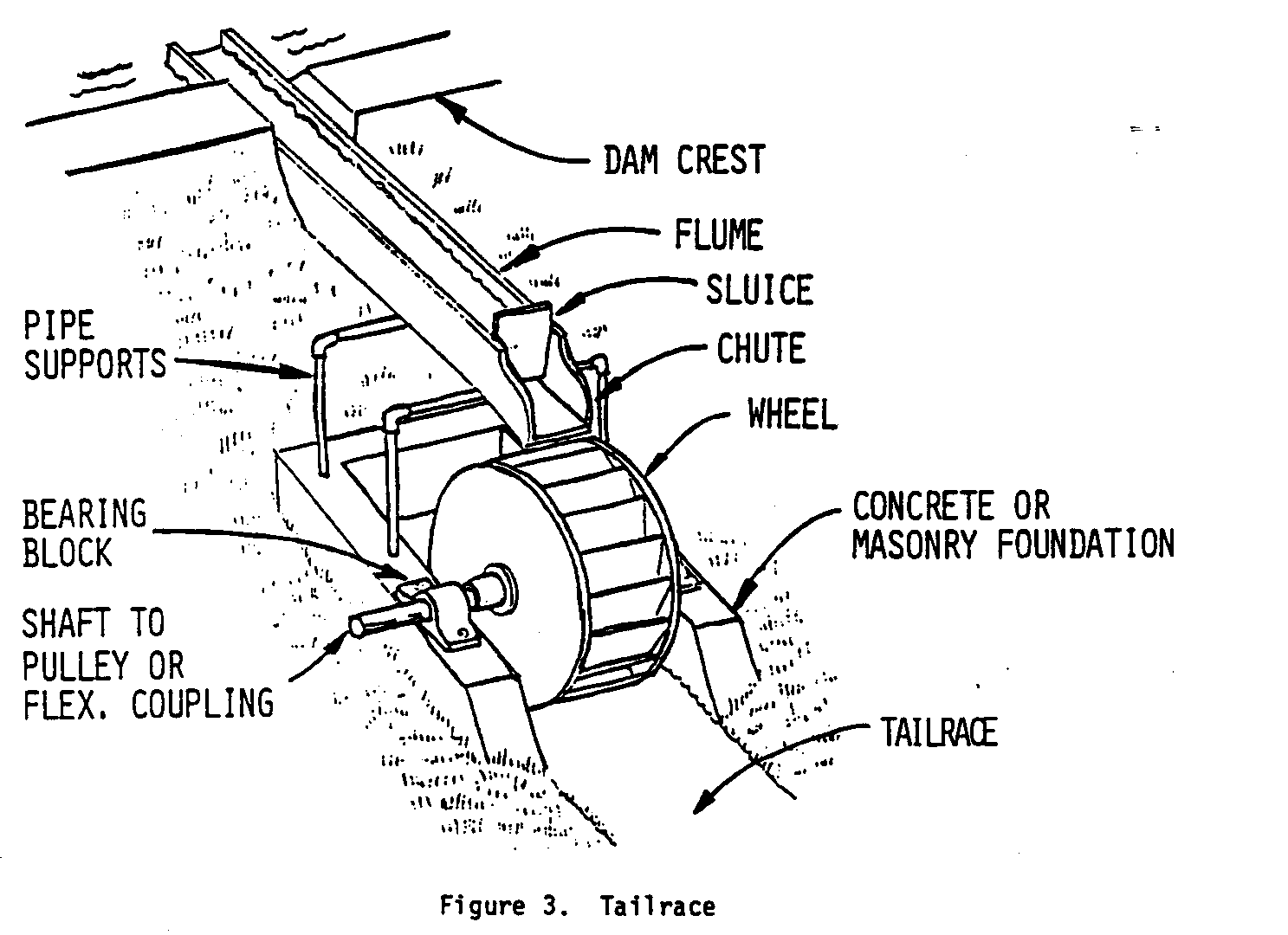
Waterwheel (Overshot or Undershot):
Ideal for streams. Build wooden frame with paddles/buckets. Mount on axle with bearings (wood or scavenged metal). Connect via gears/shafts to grind grain, pump water, or run bellows. Efficiency: overshot best if you have drop.
How To Make Activated Charcoal
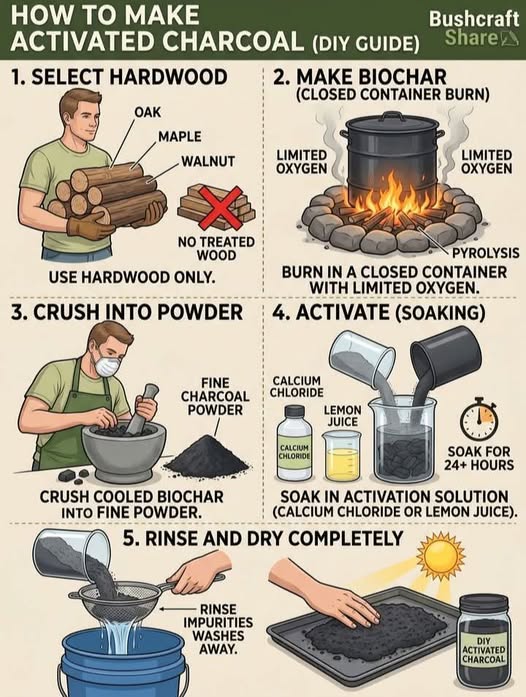
How To Make Biochar
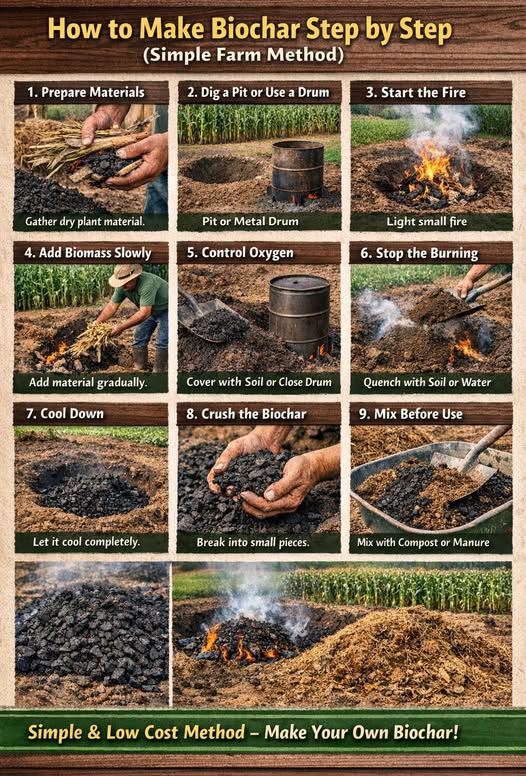
Biochar can be made using simple materials found on the farm. The goal is to burn plant material with very little oxygen so it turns into charcoal, not ash.
Materials needed
Dry plant materials like maize stalks, rice husks, groundnut shells, dry grass, or small wood pieces
A pit in the ground or a metal drum
Matches or fire source
Water or soil for covering
Step 1: Prepare the materials
Collect dry biomass. Cut large pieces into smaller sizes so they burn evenly. Make sure the material is dry for good results.
Step 2: Dig a pit or use a drum
Pit method: Dig a shallow pit about 1 meter wide and 0.5 meter deep
Drum method: Use a metal drum with small holes at the bottom for limited air flow
Step 3: Start the fire
Light a small fire at the bottom using dry leaves or grass. Let it burn until you have a steady flame.
Step 4: Add biomass slowly
Add the plant material little by little. Do not dump everything at once. This helps control oxygen and prevents full burning into ash.
Step 5: Control oxygen
This is the most important step. When the material starts turning black (char), reduce air by:
Covering partly with soil, or
Closing the drum
The aim is to allow heating without too much air. This is what makes biochar instead of ash.
Step 6: Stop the burning
When most of the material has turned black, stop the fire by covering with soil or sprinkling a small amount of water. Do not let it turn into white ash.
Step 7: Cool down
Leave the biochar to cool completely. Do not expose hot char to air, as it may continue burning.
Step 8: Crush the biochar
Break the biochar into small pieces or powder. This makes it easier to mix with soil.
Step 9: Mix before use
Before applying, mix biochar with manure, compost, or animal waste. Let it stay for a few days. This helps it absorb nutrients and become more effective.
Application in the field
Apply about 2 to 5 tons per hectare for normal soils
Up to 10 tons per hectare for poor soils
Mix well into the topsoil before planting
Important tips
Do not use wet materials
Do not allow full burning into ash
Always mix with organic matter before use
In summary, making biochar is simple and low cost. With proper control of fire and oxygen, farmers can produce a useful soil amendment that improves crop growth.
Terra Preta-Amazon Dark Earth
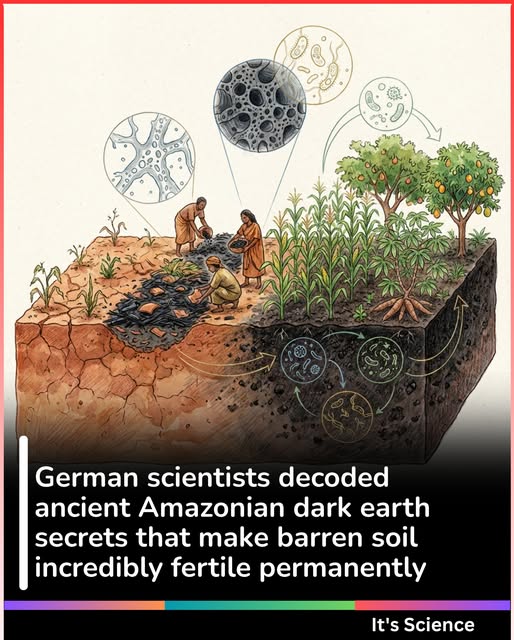
German scientists decoded ancient Amazonian dark earth secrets that make barren soil incredibly fertile permanently — cracking a 2,000-year-old agricultural mystery with implications for modern food security, carbon sequestration, and the regeneration of degraded farmland across the world’s most climate-stressed regions.
Terra Preta — Portuguese for “dark earth” — is an extraordinarily fertile black soil found in patches throughout the Amazon basin, created by pre-Columbian civilizations between 500 BCE and 1000 CE through processes that modern soil science has been attempting to fully decode since its serious investigation began in the 1990s.
Unlike surrounding tropical soils, which are notoriously nutrient-poor and rapidly depleted by cultivation, Terra Preta maintains its extraordinary fertility for centuries without any further amendment. Crops grown in it outperform modern fertilized soil in productivity comparisons, and crucially, the soil appears to regenerate its properties over time rather than depleting.
Researchers at the University of Bayreuth resolved the final pieces of the formation puzzle using advanced geochemical isotope analysis combined with ancient DNA sequencing of the microbial communities preserved within the soil. They found that Terra Preta formation required three simultaneous components: biochar from slow combustion of organic matter as a mineral skeleton, concentrated organic waste including bones, feces, and food scraps as nutrient sources, and — critically — a specific community of microorganisms including specialized fungi and bacteria that colonize the biochar structure and permanently lock nutrients against leaching. The microbial community, not just the biochar, is the key to the permanence.
Recreating Terra Preta at scale could restore agricultural productivity to the 2 billion hectares of degraded farmland worldwide. The Amazon’s ancient farmers discovered something extraordinarily valuable. We just fully understood it.
Source: University of Bayreuth, Nature Sustainability 2025
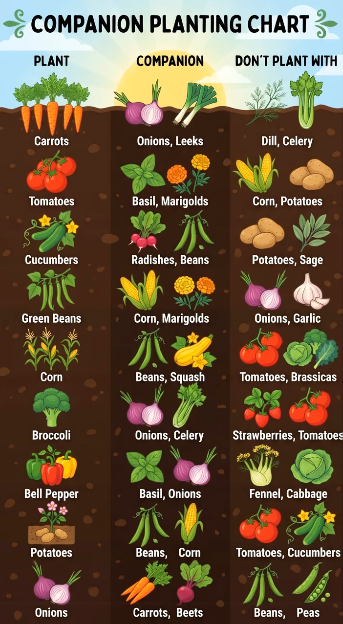
Companion Planting Chart
Perennial Berries
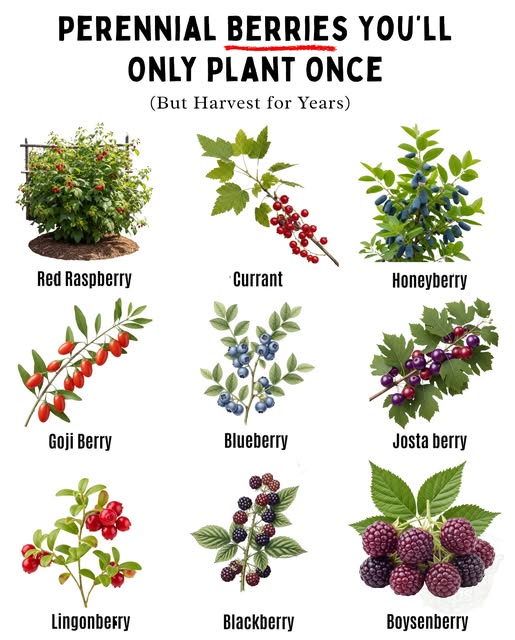
These perennial berries are hardy, productive, and packed with flavor — perfect for home gardens
• Red Raspberry
Full sun | Starts year 1 | Up to 20 years
Sweet, classic flavor that thrives in many climates.
• Goji Berry
Full sun | Starts year 3 | Up to 15 years
A sun-loving superfood powerhouse rich in antioxidants.
• Currant
Part shade | Starts year 3 | Up to 20 years
Tart, juicy clusters perfect for jams and edible hedges.
• Honeyberry (Haskap)
Part shade | Starts year 3 | Up to 50 years
Cold-hardy and early-producing — needs a pollination partner.
• Blueberry (Highbush or Rabbiteye)
Full sun | Starts year 3 | Up to 30 years
America’s favorite berry — loves acidic soil and steady moisture.
• Blackberry (Thornless varieties)
Full sun | Starts year 2 | Up to 15 years
Vigorous, easy-care canes with rich flavor and high yields.
• Lingonberry
Part shade | Starts year 2 | Loves acidic soil
Great ground cover with tart berries for sauces and preserves.
• Jostaberry
Part sun | Starts year 4
A gooseberry–currant hybrid with a deep, complex taste.
• Boysenberry
Full sun | Starts year 2–3 | 15–20 years
A raspberry–blackberry hybrid — sweet, tangy, and perfect for pies.
Tips:
• Most need 6+ hours of sun
• Mulch well and prune yearly
• Choose 2 compatible varieties for pollination when needed
Grow once. Harvest for decades.
Work With Your Soil
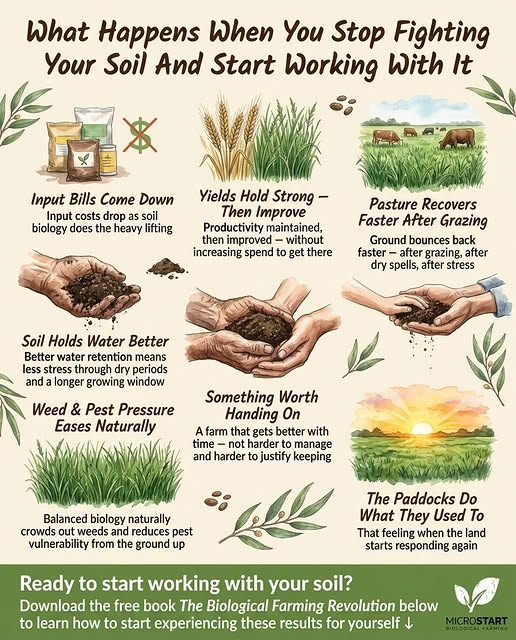
What happens when you stop fighting your soil… and start working with it?
Everything changes.
Your input bills start coming down.
Because the soil biology is doing the heavy lifting FOR you now.
Yields hold strong at first… then they start improving.
Productivity maintained, then improved… without increasing spend to get there.
Your pasture bounces back faster after grazing.
After dry spells.
After stress.
The ground just RECOVERS quicker.
Water retention improves.
Which means less stress through dry periods… and a longer growing window.
Weed and pest pressure? It eases naturally.
Balanced biology crowds out weeds… and reduces pest vulnerability from the ground up.
You’re building something worth handing on.
A farm that gets BETTER with time.
Not harder to manage.
Not harder to justify keeping.
The paddocks start doing what they used to.
That feeling when the land starts responding again.
Ready to start working with your soil?
Download the FREE ebook “The Biological Farming Revolution” below to learn how to start experiencing these results for yourself.
Seed Planting Depth
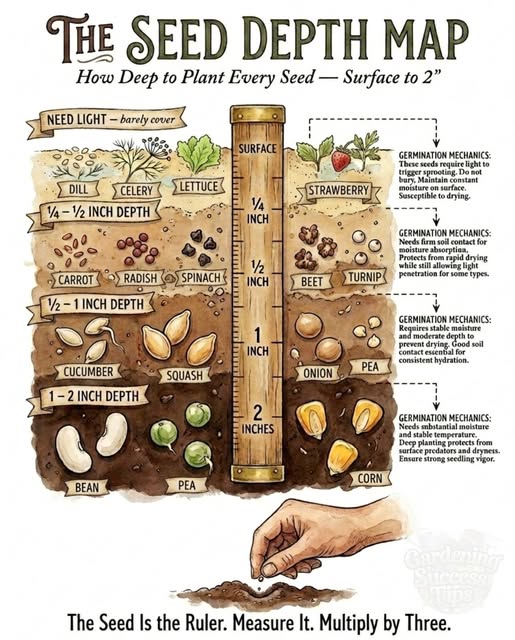
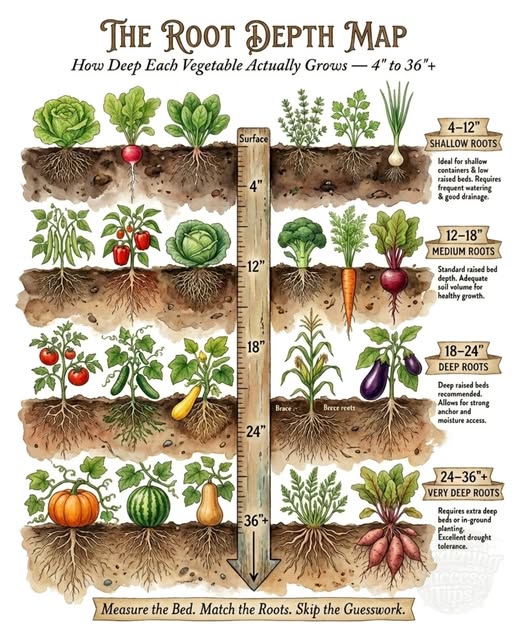
Root Depth Map