Ten years ago, I learned the truth about our food system and it broke my heart. But it also planted a seed that changed my life.
The Radical Garden is my current passion project, or maybe it’s more of a mission. A living, breathing response to the ecological crises we face and a personal act of resistance and regeneration.
I first learned about the scale of environmental destruction while studying at university in Wisconsin. Like many, I was shocked by the reality: climate change, deforestation, mass species loss and at the center of it all, the industrial food system. I felt overwhelmed, anxious, even hopeless. And perhaps worst of all, I felt I was participating in the problem every time I ate.
Alongside that despair at the same time, I discovered a lifeline. A solution so simple and powerful that it changed the course of my life: growing our own food. I joined a local community garden and began learning from my first mentor, Wes. From there, I dove into studying regenerative agriculture, working on organic farms, WWOOFing, and taking permaculture courses.
All of that has led to this: The Radical Garden.
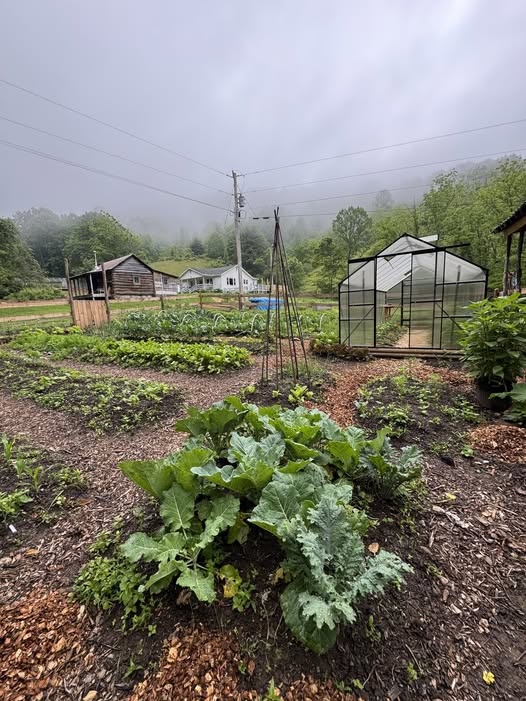
A small-scale, regenerative garden (just 50 x 50 feet) designed to show what’s possible in a fraction of an average American lawn. This is a living experiment in what any family can grow and manage with intention and consistency.
It’s a closed-loop system, a soil-building, biodiversity-boosting, food-producing powerhouse. My goal is to generate at least 80% of the compost needed from within the system itself, and to grow enough food to feed myself and my partner year-round. (Honestly, I think it could feed more.)
But this isn’t just all about food. It’s about reclaiming power. Healing disconnection. Taking real, tangible steps toward a more regenerative way of living. My hope is to make this as replicable as possible to share with others.
The Radical Garden is really my simple message to the world. It’s where I turn eco-anxiety into action. It’s where I become the kind of person I believe the future needs.
And I hope it inspires you to do the same.